
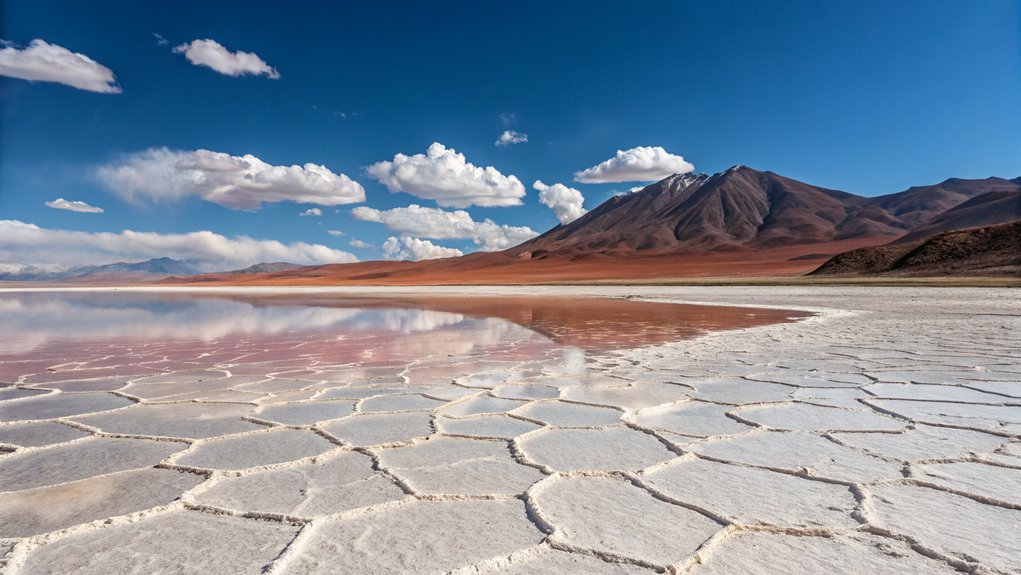
When planning your salt flat tour in Bolivia, you’ll find more than just the Uyuni Salt Flats. Each destination boasts its own unique charm, from the surreal landscapes of the Dali Desert to the serene hot springs at Aguas Calientes. You might want to capture the stunning views of the night sky or spot Andean flamingos in vibrant lagoons. Curious about what else awaits you on this unforgettable journey?
Key Takeaways
- Uyuni Salt Flats: The largest salt flats in the world offer breathtaking panoramic views and unique geological formations ideal for photography.
- Isla Incahuasi: This island features towering cacti and striking rock formations, providing a stunning contrast against the salt flats backdrop.
- Laguna Colorada: Known for its vivid red hues, this lagoon attracts flamingos and enhances the beauty of the salt flat region.
- Dali Desert: Characterized by surreal landscapes and geological formations, it provides exciting photo opportunities and showcases Bolivia’s natural wonders.
- Aguas Calientes Hot Springs: These natural hot springs offer a relaxing retreat surrounded by picturesque Andean scenery, perfect after salt flat explorations.
Must-See: The Uyuni Salt Flats in Bolivia
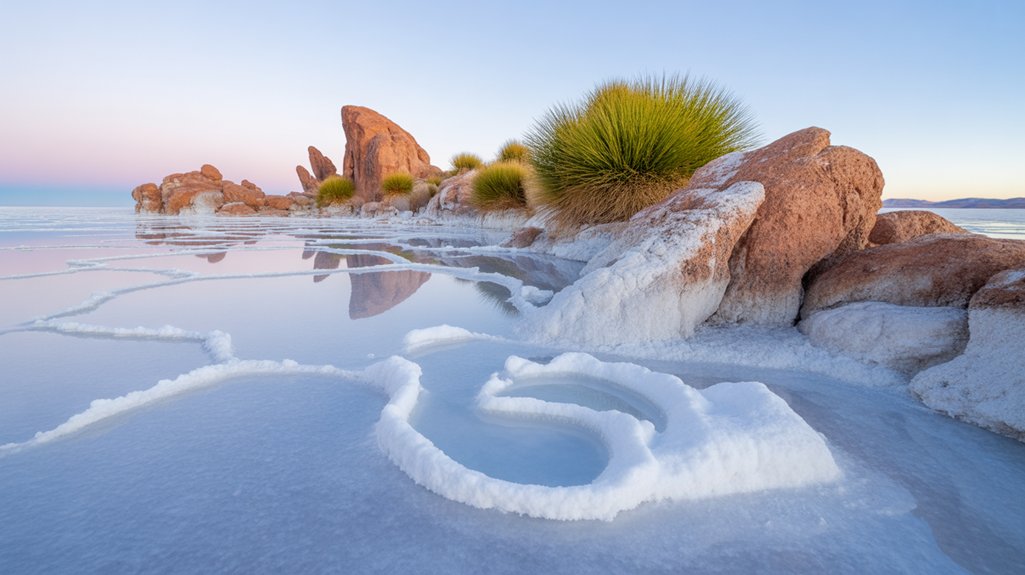
The Uyuni Salt Flats, a breathtaking expanse in southwest Bolivia, should be at the top of your travel list. Covering over 10,582 square kilometers, these are the largest salt flats on Earth, formed from ancient lakes that have long since dried up.
Beneath the surface lies a brine pool rich in lithium, holding an impressive 50-70% of the world’s reserves. You’ll love experimenting with creative photography here, as the immense landscape creates stunning visual illusions, especially in perspective shots.
Be aware that you’ll be at an altitude of 3,650 meters, so prepare for potential altitude sickness and chilly nights.
Don’t miss popular spots like the Train Cemetery, Isla Incahuasi with its unique cacti, and the vibrant Laguna Colorada!
Capture Stunning Views of the Milky Way in San Juan
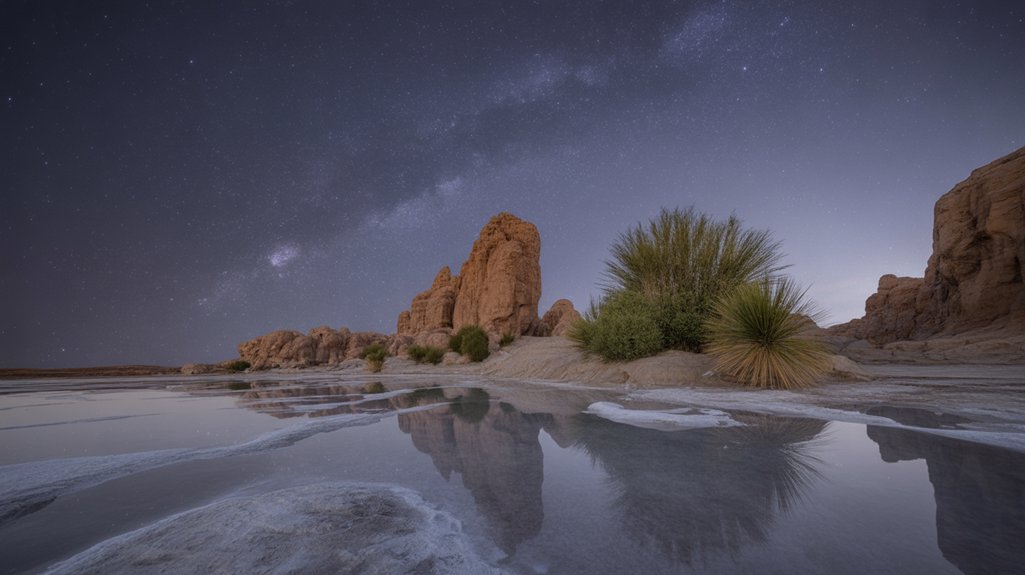
While many places offer beautiful night skies, San Juan stands out as a premier destination for capturing breathtaking views of the Milky Way. This small town, with fewer than 500 residents, boasts some of the clearest skies thanks to low light pollution and high altitude.
After dinner, as travelers rest early, you’ll catch pristine visibility. For the best star photography, set your camera to an aperture of f/2.8, an exposure time of 8 seconds, and an ISO of 4000.
A night walk outside San Juan reveals stunning celestial views painted against Bolivia’s expansive deserts. Observing the Milky Way here isn’t just another activity; it’s an unforgettable experience for any photography enthusiast longing for pristine conditions.
Unique Landscapes of the Dali Desert
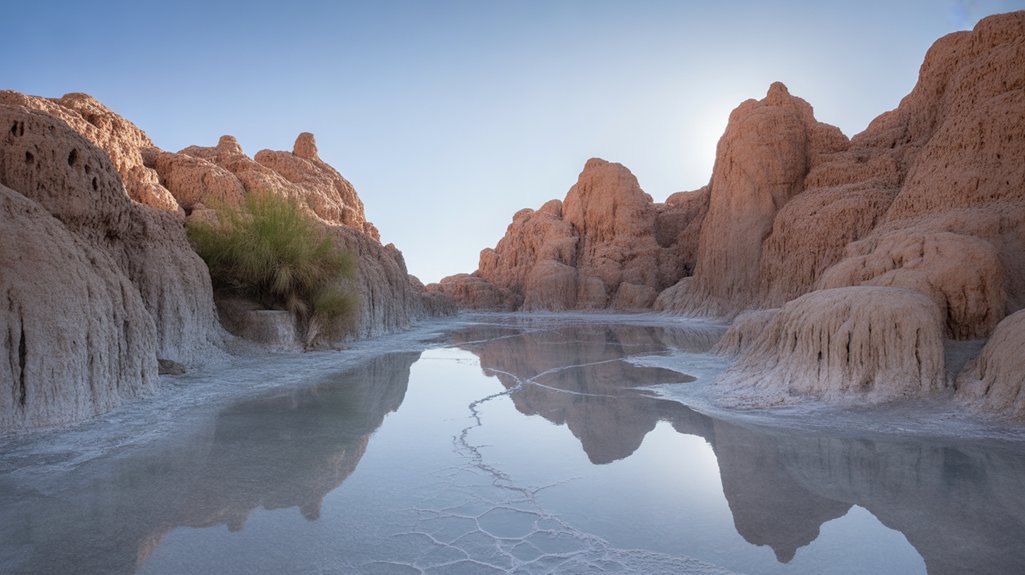
Immerse yourself in the surreal beauty of the Dali Desert, where the dry ecosystem and extraordinary geological formations evoke the artistic visions of Salvador Dalí.
Exploring this mesmerizing landscape by 4×4 vehicle gives you an intimate connection to its vast expanses. Dust trails left by other adventurers enhance the iconic visuals, creating striking photographic opportunities at every turn.
Keep an eye out for vicunas gracefully traversing the terrain, their presence adding to the desert’s charm. As you drive, you’ll be captivated by unusual rock formations, dramatically contrasting against the expansive blue sky.
Each moment spent here reveals the artistry of nature, inviting you to appreciate the uniqueness of this Bolivian gem amid a dream-like setting.
Relaxing Hot Springs at Aguas Calientes
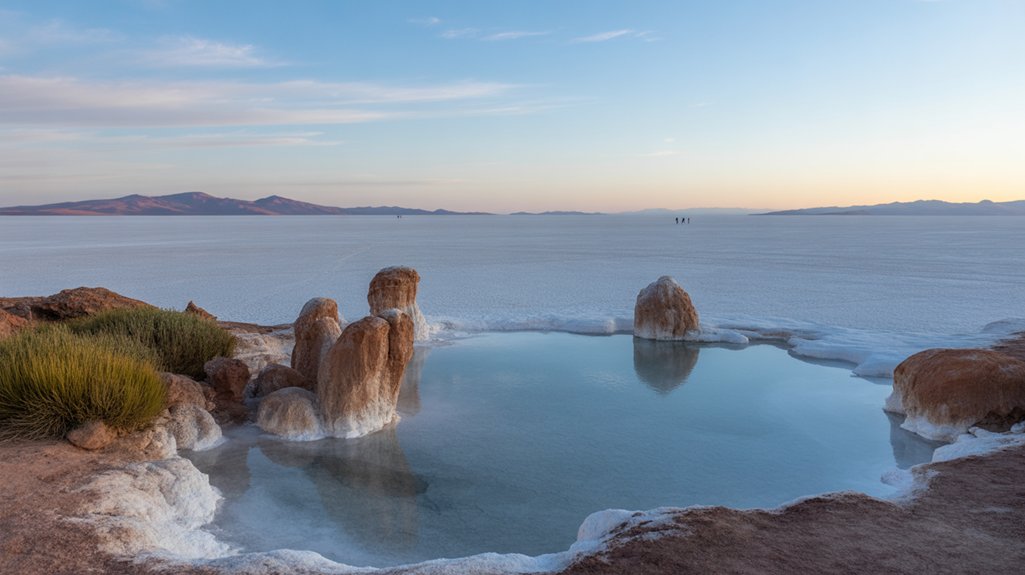
After exploring the surreal landscapes of the Dali Desert, you’ll find Aguas Calientes offers a perfect escape into relaxation.
This hidden gem features natural hot springs with water temperatures around 40°C, providing a soothing contrast to the morning chill of 13°C. You can unwind in geothermal-heated pools, surrounded by the stunning Andean landscape, making it an ideal stop before crossing into Chile.
It’s a fantastic opportunity to rejuvenate after your adventurous outings, like traversing the salt flats. Many visitors find that Aguas Calientes is the last site they want to visit before leaving Bolivia, allowing them to soak in the beautiful views while basking in the calming waters.
Don’t miss this tranquil oasis!
Historical Significance of the Dakar Rally Monument
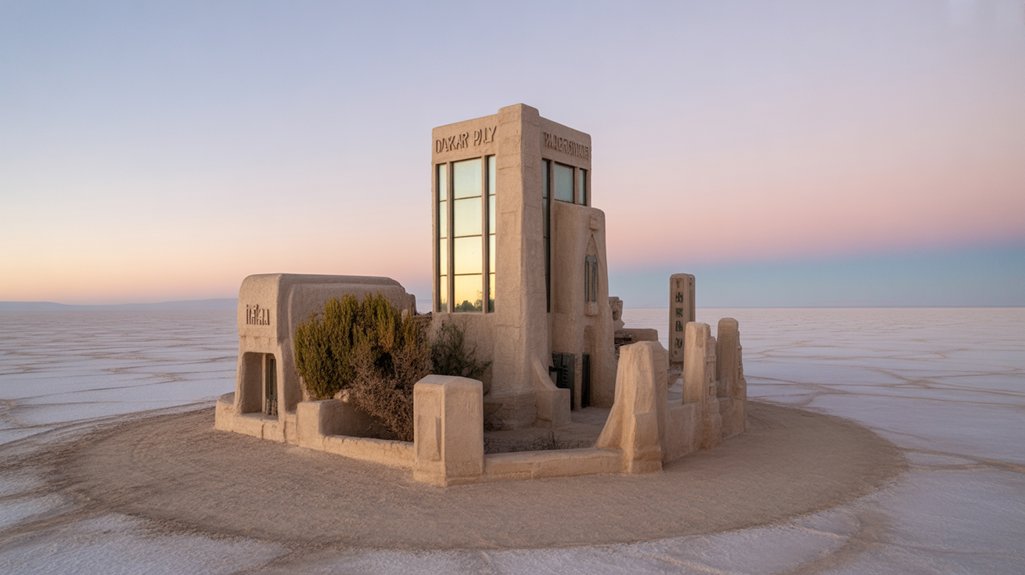
When you visit the Dakar Rally Monument in Uyuni, you’re stepping into a piece of motorsport history that transformed the rally’s route in 2009.
This monument not only represents the adventurous spirit of the rally but also highlights the significant impact it had on Bolivia’s tourism and economy.
Understanding its historical context enriches your experience in this beautiful region of the country.
Rally Route Changes Explained
Although the Dakar Rally originally traced a route through Africa, its relocation to South America in 2009 marked a significant turning point in motorsport history. The Dakar Rally Monument in Bolivia stands as a tribute to this monumental shift, reflecting the race’s cultural and geographical adaptation.
Here are three remarkable aspects of the rally’s route changes:
- New Landscapes: The 2017 route showcased territories in Paraguay, Bolivia, and Argentina, exposing racers to diverse terrains and stunning vistas.
- Cultural Impact: This shift introduced the rally to South America’s unique cultures, enriching the event’s history.
- Tourism Boost: The monument highlights how the rally contributes to local tourism and community engagement in Bolivia, fostering a lasting connection with the event.
Adventure Spirit Representation
The Dakar Rally Monument in Bolivia captures the essence of adventure that the rally represents, highlighting the historic shift from Africa to South America. Established after the rally’s route change in 2009, it symbolizes a new era in motorsport, blending treacherous exploration with cultural appreciation.
The monument marks the 2017 rally route, showcasing Bolivia’s unique position within the South American landscape and its connection to this thrilling event.
When you visit the monument, you’ll feel the adventurous spirit that defines Bolivia. Despite missing the race itself, it serves as a reflection of the lasting impact of rally racing on the country’s identity, drawing adventure tourists enthusiastic to experience the thrill and beauty that Bolivia has to offer.
Historical Context and Impact
As you stand before the Dakar Rally Monument in Bolivia, you can sense the historical importance it holds, marking a crucial shift in the rally’s legacy. Erected in recognition of the Dakar Rally’s move to South America in 2009, this monument embodies several important aspects:
- Cultural Impact: It highlights the connection between Uyuni’s rich local culture and international sporting events.
- Tourism Boost: The event’s presence has greatly enhanced adventure tourism in the region, attracting visitors to Bolivia’s stunning landscapes.
- Economic Benefits: The rally’s route through Paraguay, Bolivia, and Argentina has played a crucial role in boosting local economies.
Visiting the monument allows you to appreciate how the Dakar Rally transformed this area into a hub for adventure seekers.
Discovering History at Uyuni’s Train Cemetery
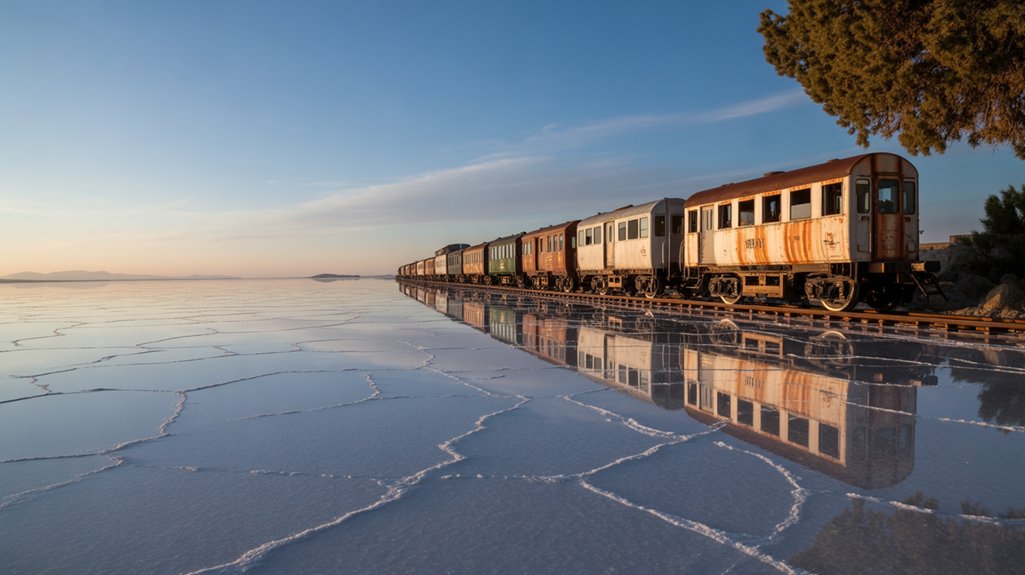
Just 3 kilometers from Uyuni, you’ll find the intriguing Train Cemetery, a hauntingly beautiful site filled with abandoned trains that date back to the late 1800s.
Once a key transportation hub in Bolivia, these rust-covered locomotives now stand as remnants of a once-thriving mining industry. The decline of mining led to their abandonment, making this cemetery not only picturesque but also a crucial historical site.
As you walk among the trains, you’ll feel the stories they hold, capturing stunning photographs against the backdrop of the vast salt flats.
It’s an essential stop for anyone wanting to immerse themselves in Bolivia’s industrial past, and it’s conveniently located on your way to the mesmerizing salt flats.
Nature’s Wonders on Inka Wasi (Incahuasi) Island
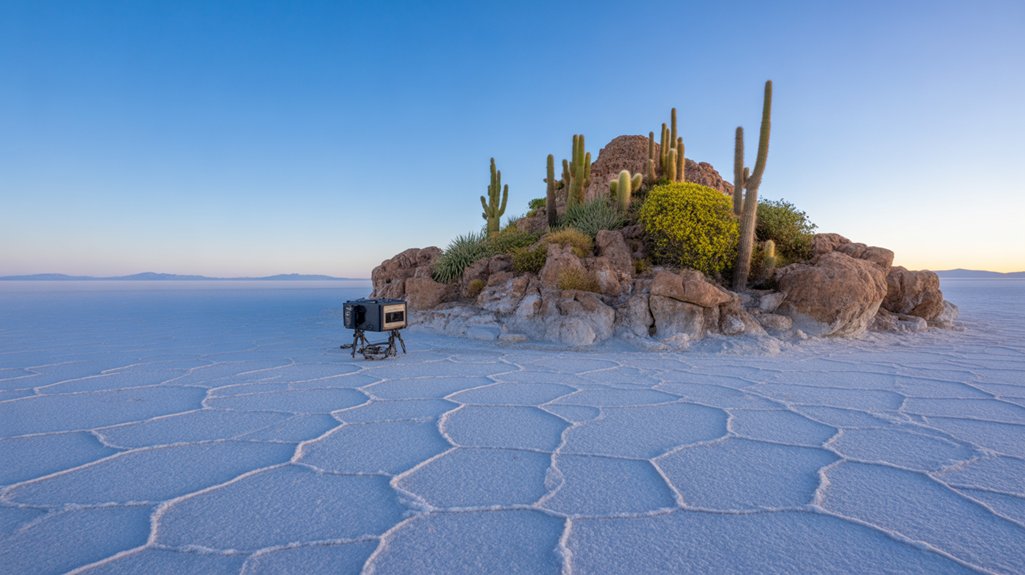
Inka Wasi (Incahuasi) Island is a stunning oasis amidst the Uyuni Salt Flats, surrounded by an endless expanse of white. This unique landscape offers numerous wonders for you to enjoy:
- Towering Cacti: Wander among several hundred towering cacti, some reaching heights of up to 10 meters, creating a striking contrast against the salt crust.
- Transformative Views: Don’t be discouraged if you feel uninspired at first—after about 45 minutes of exploring, you’ll discover stunning perspectives perfect for photography.
- Rock Formations: Check out the large opening in the rocks, which enhances your viewing experience and connects you with the breathtaking landscape.
Inka Wasi is a must-visit spot, offering both beauty and a sense of tranquility in the heart of Bolivia.
Wildlife Photography and Flamingos at Laguna Canapa
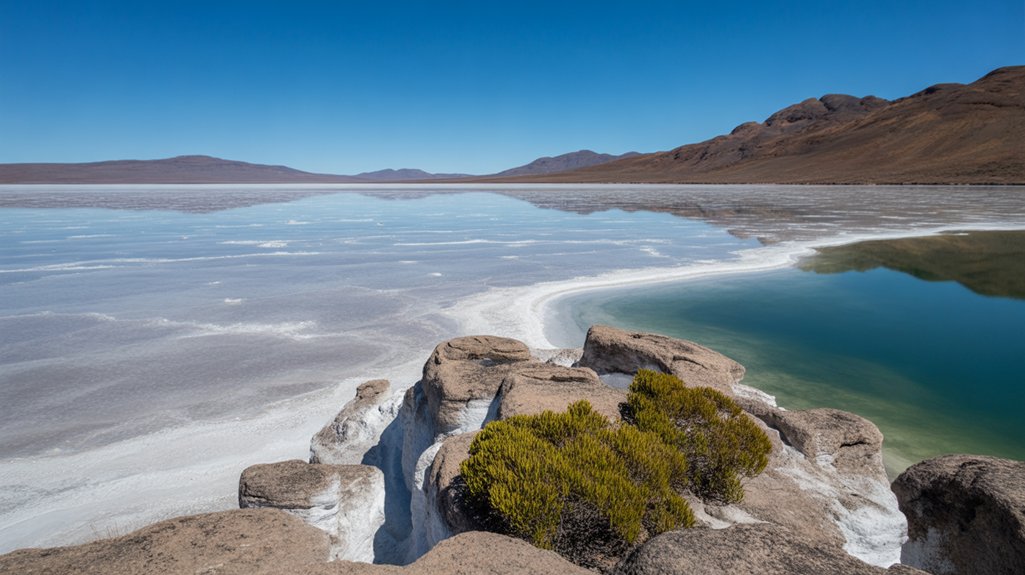
Laguna Canapa offers an inspiring backdrop for wildlife photography, especially for capturing the grace of James’s flamingos in their natural habitat. Covering under 2 square miles, this scenic lagoon provides unique opportunities to snap stunning reflections and the challenges of capturing flamingos in flight.
You’ll find yourself immersed in the beauty around you, with the close proximity to swampy waters adding a bit of adventure to the experience. Just be prepared for muddy conditions!
A telephoto lens will be your best friend, enabling you to effectively capture the graceful movements of these elegant birds soaring above the lagoon. This picturesque setting attracts both wildlife enthusiasts and photographers keen to showcase Bolivia’s diverse avian species.
The Striking Red Colors of Laguna Colorada
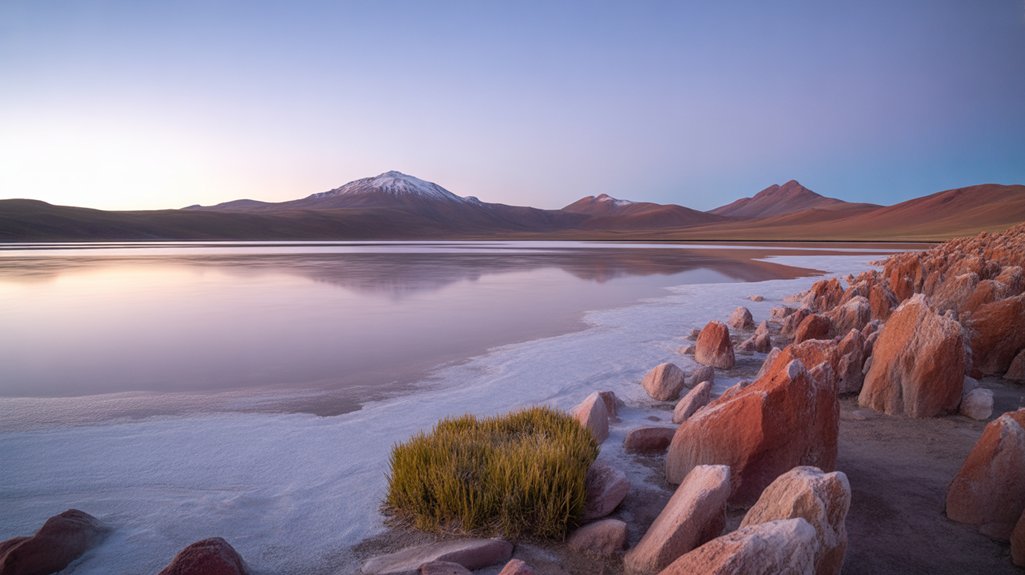
As you explore the breathtaking landscapes of Bolivia, you’ll certainly be captivated by the vivid colors of Laguna Colorada. This unique lagoon is famous for its striking red hues, caused by algae thriving in its shallow waters.
With an average depth of about 40 centimeters, you can even walk across its vibrant surface. Here are three reasons to enjoy this stunning destination:
- Wildlife Haven: It’s home to various bird species, including flamingos, making it a photographer’s paradise.
- Visual Contrast: The rich red water beautifully contrasts with the surrounding landscapes, offering incredible photo opportunities.
- Ecological Importance: Located within the Eduardo Avaroa Andean Fauna National Reserve, the lagoon supports diverse ecosystems.
Don’t miss this unforgettable spot on your Bolivian adventure!
Andean Flamingos at Laguna Hedionda and Geiser Sol De Mañana
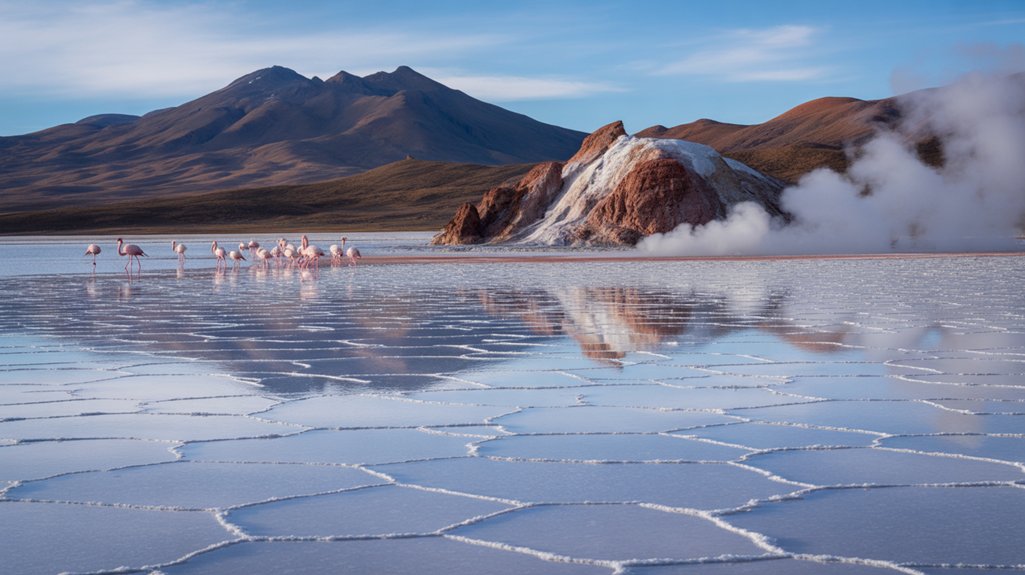
When you visit Laguna Hedionda, you’ll be amazed by the sight of over 100,000 Andean flamingos, thriving in their unique habitat.
The sulfurous odor in the air hints at the geothermal wonders around you, like the impressive Geiser Sol de Mañana.
Experiencing these remarkable ecosystems will deepen your appreciation for Bolivia’s natural beauty and diversity.
Andean Flamingo Habitat Importance
Nestled within Bolivia’s striking high-altitude landscapes, Laguna Hedionda and Geiser Sol de Mañana serve as fundamental habitats for the Andean flamingo, a species uniquely adapted to thrive in these extreme conditions.
Their presence in these areas emphasizes the significance of protecting these environments. Here’s why these habitats are essential:
- Population: With over 100,000 Andean flamingos at Laguna Hedionda, it plays a key role in sustaining this species.
- Breeding Grounds: Geiser Sol de Mañana’s geothermal features create a unique ecosystem indispensable for breeding and feeding.
- Biodiversity: The high sulphur content in Laguna Hedionda supports diverse wildlife and highlights the intersection of geological and biological diversity in Bolivia.
Preserving these habitats is vital for the continued survival of the Andean flamingo.
Unique Geothermal Features Experience
While exploring the stunning landscapes of Bolivia, you’ll encounter the unique geothermal features at Laguna Hedionda and Geiser Sol de Mañana, where the vibrant ecosystems coexist with dramatic geological phenomena.
At Laguna Hedionda, the unpleasant sulfur odor becomes a backdrop for over 100,000 Andean flamingos, known for their striking black triangle patterns on their rear feathers. This lagoon is a birdwatcher’s paradise, surrounded by breathtaking scenery and diverse wildlife.
Just a short trip away, Geiser Sol de Mañana bursts with geothermal activity. Early mornings reveal its sulfuric gas emissions and colorful mineral landscapes, creating a surreal atmosphere.
Together, these sites embody Bolivia’s rich geothermal wonders, compelling travelers to explore and experience these stunning natural marvels.
Frequently Asked Questions
What Is the Best Time to Visit the Salt Flats?
The best time to visit the salt flats is during the dry season, from May to November. You’ll enjoy clear skies and stunning landscapes, making your experience unforgettable. So, plan your trip around those months!
Are There Guided Tours Available for the Salt Flats?
Yes, there are plenty of guided tours available for the salt flats. You’ll find options ranging from day trips to multi-day adventures, ensuring you experience the stunning landscapes and unique wildlife in the area.
What Should I Pack for a Salt Flat Tour?
You should pack sunscreen, a wide-brimmed hat, sturdy shoes, warm layers, and sunglasses. Bring plenty of water and snacks too; staying hydrated and energized is essential while exploring the breathtaking salt flats. Enjoy your adventure!
How Do I Get to Uyuni From La Paz?
You can take a bus from La Paz to Uyuni, which usually takes about 10-12 hours. Alternatively, book a flight for a quicker trip. Just remember to check schedules and book in advance!
Is It Safe to Travel to the Salt Flats Alone?
Yes, it’s generally safe to travel to the salt flats alone, but you should always stay aware of your surroundings, keep your belongings secure, and follow local advice to guarantee a trouble-free experience.
Leave a Reply