
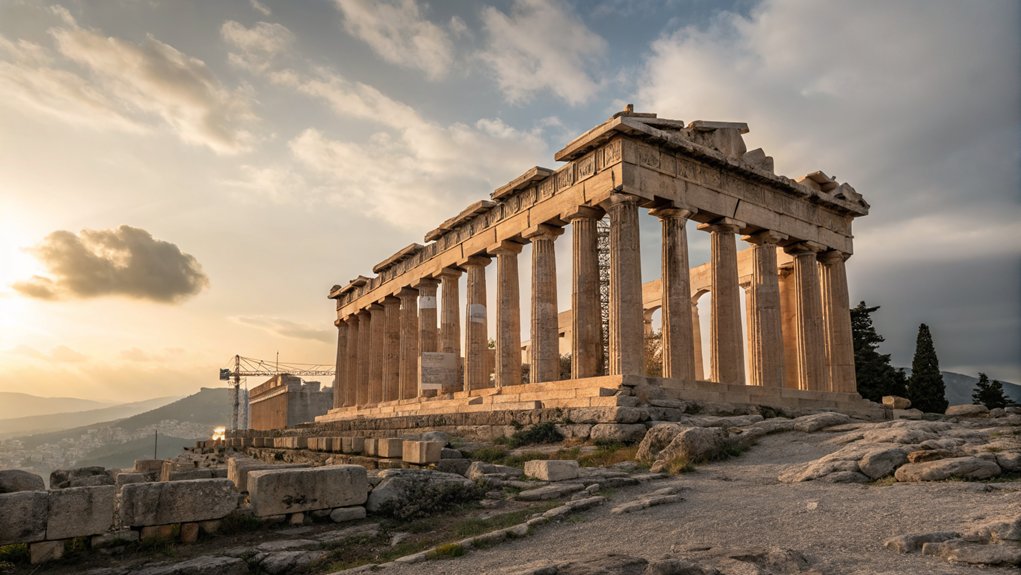
When you think of Athens, Greece, history comes alive in its stunning landmarks. Each site offers a glimpse into the past, from the Parthenon’s towering presence to the bustling spirit of the Ancient Agora. You’ll find echoes of ancient debates and Olympic glory at every turn. But there’s more to uncover beyond these well-known treasures. Let’s explore the lesser-known gems that enrich this remarkable city’s narrative.
Key Takeaways
- The Parthenon, a 5th-century BC temple, offers stunning views from the Acropolis and showcases remarkable architectural illusions.
- The Ancient Agora, a historical marketplace, features the Temple of Hephaestus and reflects the philosophical discussions of Socrates and Plato.
- Hadrian’s Library, built in 134 AD, reveals Roman architectural sophistication and the cultural exchange between Greece and Rome.
- The Panathenaic Stadium, an ancient marble stadium, hosted the first modern Olympic Games and offers insights into athletic traditions.
- The Temple of Olympian Zeus, with its towering Corinthian columns, exemplifies ancient Greek architectural grandeur and provides scenic views of the Acropolis.
Discover the Majestic Parthenon: Explore Athens’ Iconic Treasure
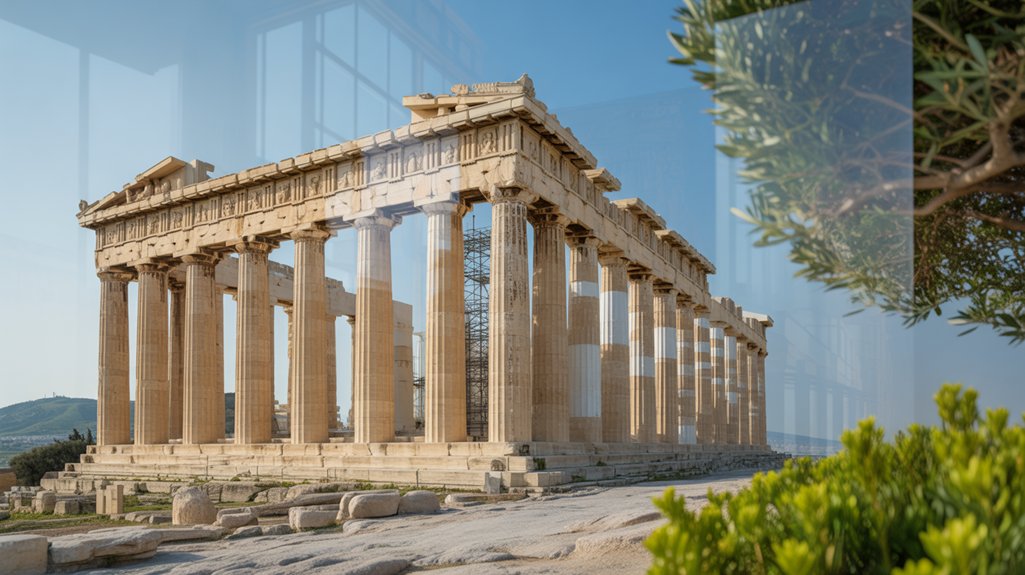
As you wander through the heart of Athens, discovering the majestic Parthenon is a must, since it’s not just an architectural marvel but also a profound symbol of ancient Greek culture.
Built in the 5th century BC, this extraordinary temple is dedicated to Athena, showcasing the brilliance of ancient craftsmanship. You’ll notice the optical illusions, like the curved columns, designed to enhance its grandeur.
Perched atop the Acropolis, the Parthenon offers breathtaking views of the city, and it’s been a UNESCO World Heritage Site since 1987.
If you visit, try to go early morning or late afternoon to avoid crowds and immerse yourself in its beauty.
The ongoing restoration, started in 1975, aims to preserve its historical significance for generations to come.
Ancient Agora: The Heart of Athenian Social Life
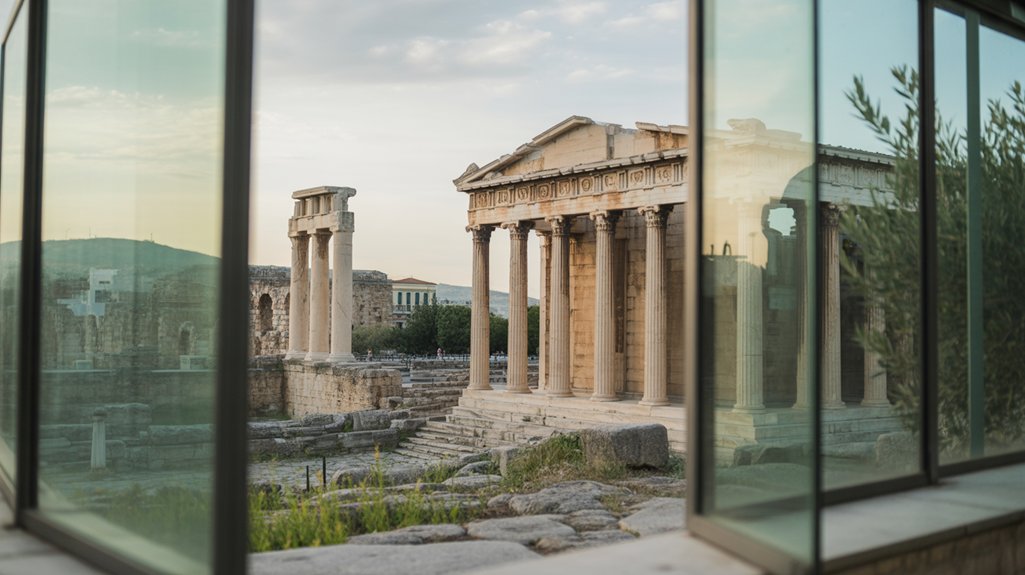
Just a short walk from the iconic Parthenon lies the Ancient Agora, the vibrant heart of Athenian social life.
This bustling hub served as a marketplace and a gathering place where citizens engaged in social, political, and philosophical discussions.
As you explore, don’t miss the well-preserved Temple of Hephaestus, which dates back to the 5th century BC, and the Stoa of Attalos, now a museum showcasing artifacts from the Agora.
Here, you’ll feel the essence of ancient Athens, knowing that philosophers like Socrates and Plato once stood where you’re walking, thriving on dialogue and teaching.
Take a couple of hours to fully immerse yourself in this significant site, conveniently located just a 15-minute stroll from the Acropolis.
Insights at Hadrian’s Library: Understanding Roman Influence in Athens
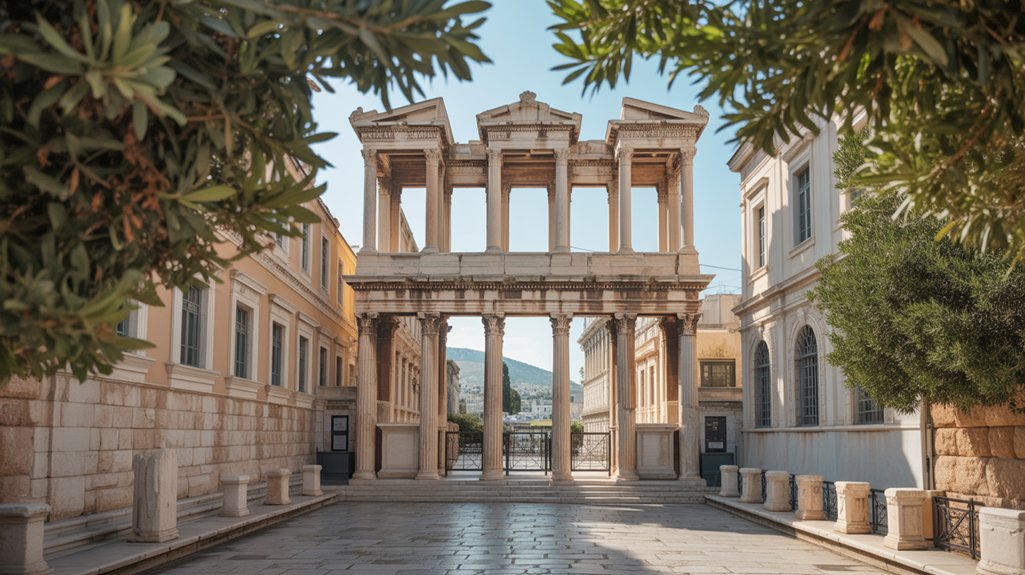
Hadrian’s Library stands as a reflection of the cultural and intellectual prowess of ancient Athens during Roman rule. Built in 134 AD, this grand library wasn’t just an architectural marvel; it was a significant center for knowledge and culture, illustrating the harmonious coexistence of Greek and Roman civilizations.
You can explore the remnants of its imposing West Wall and other structures that showcase Roman architectural sophistication. As you stroll through the site, you’ll gain insights into the broader Roman influence on Athenian society, from customs to governance.
Visiting Hadrian’s Library today offers a unique glimpse into the cultural exchange that shaped modern Western civilization, highlighting the lasting impact of both Roman and Greek traditions on our world.
Walk the Panathenaic Stadium: Where Ancient Sports Come to Life
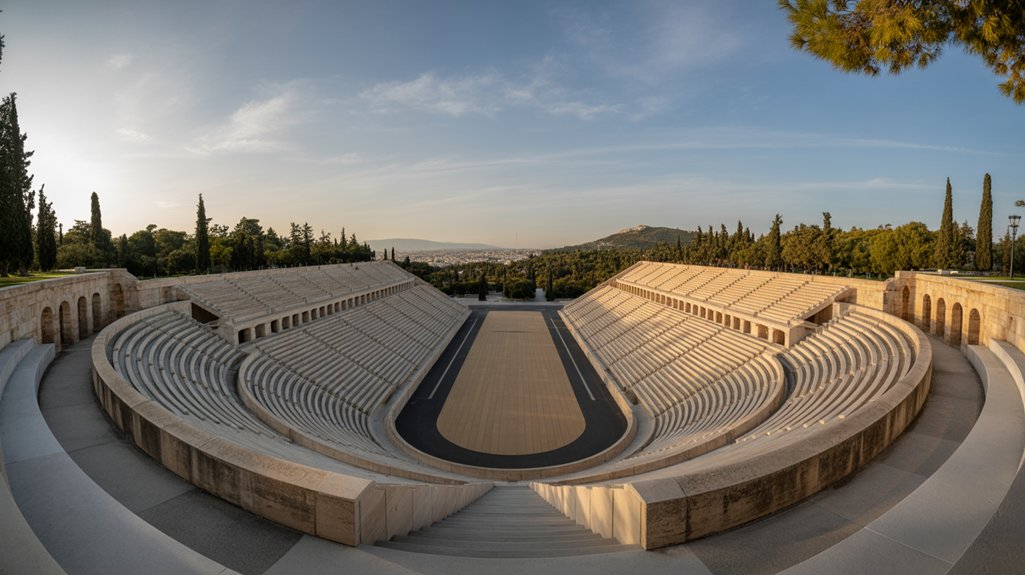
Stepping into the Panathenaic Stadium transports you back to the glory days of ancient athletics. Built in 330 BC and reconstructed in 144 AD, it’s the only stadium worldwide crafted entirely from marble.
You’ll be amazed by its impressive seating capacity of nearly 50,000, as it hosted the first modern Olympic Games in 1896. As you walk on the arena floor, imagine the fierce competitions that took place here.
Explore the athlete tunnels leading into the stadium and picture the excitement of ancient Greek sports. The stadium’s design mirrors traditional horse racing tracks, providing a unique glimpse into the athletic culture.
Don’t forget to visit the small museum showcasing Olympic history, further enriching your experience.
Marvel at the Temple of Olympian Zeus: A Testament to Ancient Grandeur
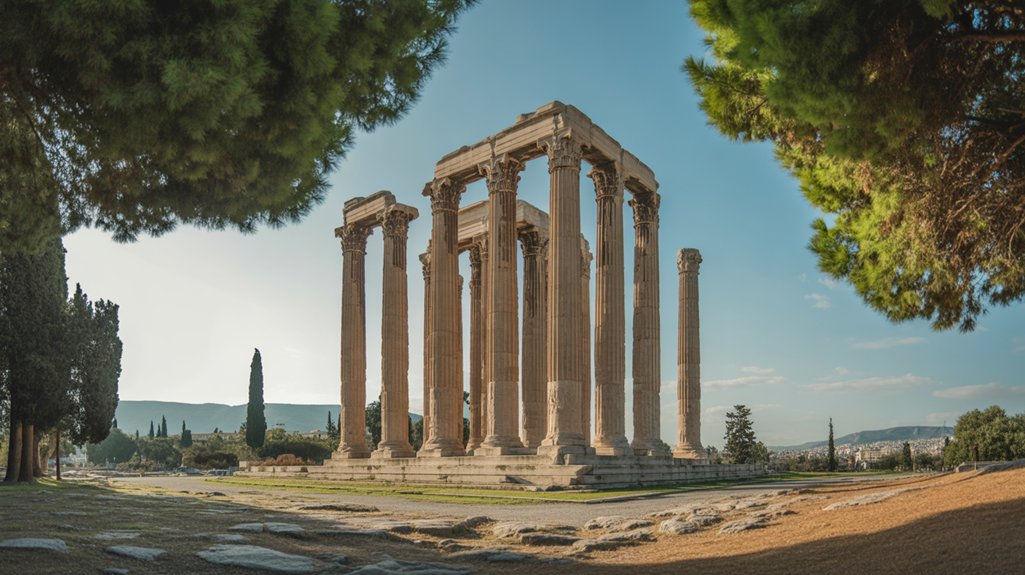
As you stand before the Temple of Olympian Zeus, you can’t help but marvel at the architectural wonders that have withstood the test of time.
The impressive Corinthian columns invite you to explore their intricate designs and imagine the techniques used in their construction.
Wandering through the expansive ruins, you’ll gain unique insights into the grandeur that once defined ancient Athens.
Architectural Marvels Remain Standing
The Temple of Olympian Zeus stands as a magnificent monument to ancient grandeur, inviting you to marvel at its impressive remains.
Originally conceived as one of the largest temples in the ancient world, its columns stretch 17 meters high, exemplifying Corinthian elegance.
Though only 15 of its original 104 columns stand today, they still captivate visitors with their majesty.
Construction spanned over 600 years, beginning in the 6th century BC and culminating during Emperor Hadrian’s rule in the 2nd century AD.
As you explore this spacious site, the ruins offer a glimpse into the architectural prowess of ancient Greece while the stunning view of the Acropolis adds to the historical allure.
Researching its history will deepen your appreciation of this remarkable site.
Insights Into Construction Techniques
While exploring the Temple of Olympian Zeus, you’ll quickly appreciate the remarkable construction techniques that shaped this ancient marvel.
Begun in the 6th century BC, the temple was designed to dazzle with 104 colossal columns, yet only 16 remain, soaring at about 17 meters (56 feet) tall. These columns, crafted from local Pentelic marble, highlight the advanced masonry skills of the time.
The construction journey lasted over 600 years, revealing the immense dedication and ambition of ancient builders. You’ll also notice the elegant Corinthian column designs, which not only exemplify Greek artistry but paved the way for Roman architecture.
This site truly offers a unique insight into the architectural prowess of ancient Greece, inviting you to marvel at its enduring grandeur.
Expansive Ruins To Explore
Exploring the Temple of Olympian Zeus offers a breathtaking glimpse into ancient grandeur. Once the largest temple in Greece, it boasts 16 Corinthian columns, 15 of which still stand tall today. Construction began in 506 BC and wasn’t completed until the 2nd century AD, showcasing the ambition of its builders. This site, dedicated to Zeus, served as a crucial religious hub in ancient Athens.
| Feature | Details |
|---|---|
| Construction Period | 506 BC – 2nd century AD |
| Column Style | Corinthian |
| Total Columns | 16 |
| Columns Still Standing | 15 |
| Historical Significance | Major religious center |
Wander through the expansive area and reflect on the ruins against modern Athens, deepening your appreciation for this remarkable site.
Unearth Secrets at the Theater of Epidaurus: The Cradle of Ancient Drama
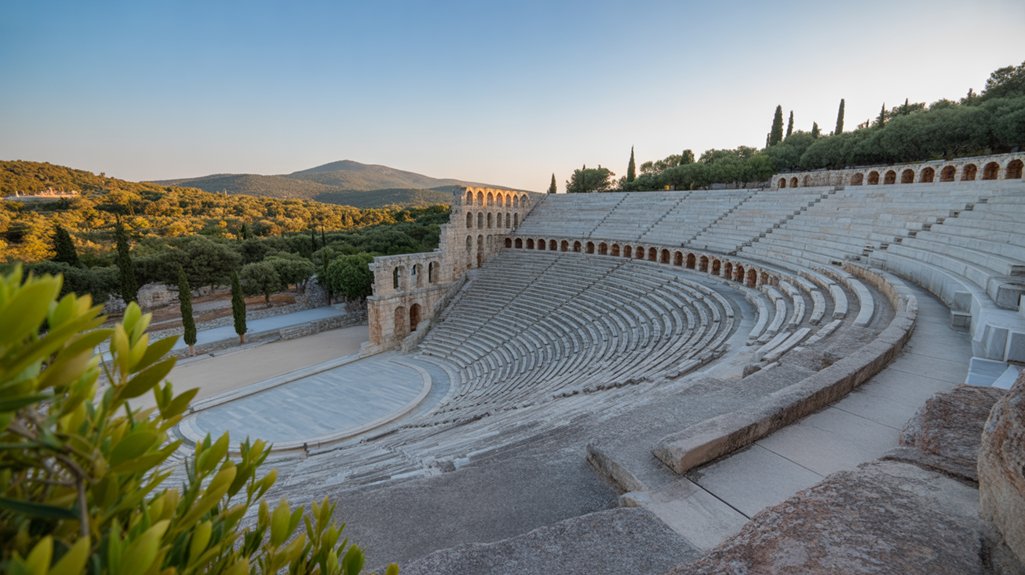
Are you ready to step back in time and experience the awe-inspiring Theater of Epidaurus?
Built in the 4th century BC, this UNESCO World Heritage Site showcases exceptional acoustics and preservation, seating around 16,000 spectators.
Originally part of a sanctuary dedicated to Asclepius, the theater was the stage for dramatic competitions during ancient festivals.
As you wander through its circular orchestra and semi-circular seating, you’ll marvel at the architectural brilliance of ancient Greece.
From June to August, Epidaurus comes alive with an annual arts festival, where traditional plays and performances continue its legacy.
Feel the echoes of history as you soak in the atmosphere of this cradle of ancient drama, where every seat offers a view of timeless artistry.
Visit Olympia: Birthplace of the Olympics With Timeless Significance
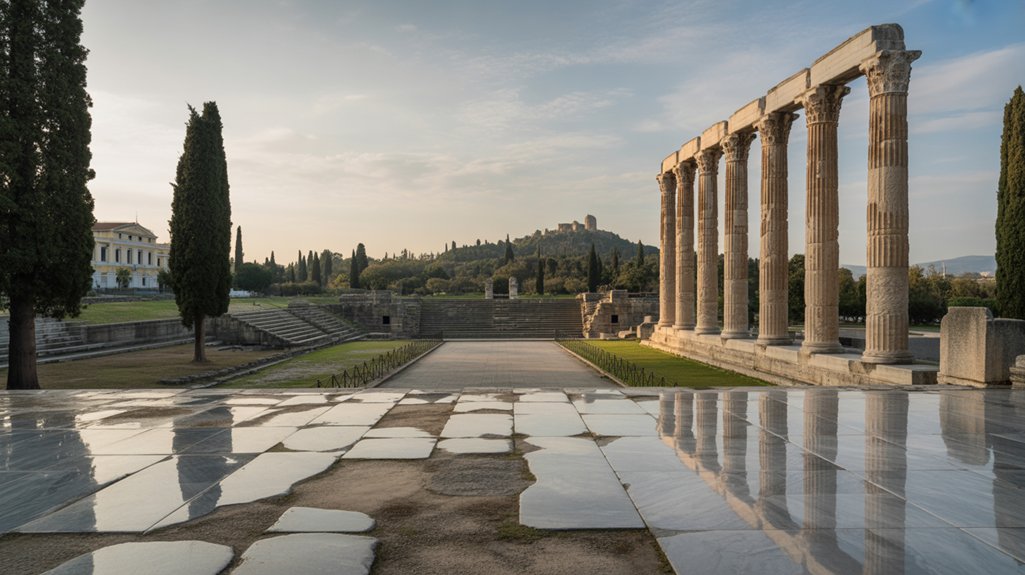
When you visit Olympia, you step into the birthplace of the Olympics, where athletic competition first flourished in 776 BC.
The site’s architectural marvels, like the ancient stadium and the Temple of Zeus, showcase stunning remnants of history.
Don’t miss the on-site museums, where you can explore fascinating artifacts that connect you to the legacy of this iconic place.
Historical Significance of Olympia
Nestled in the scenic Peloponnese region, Olympia stands as a remarkable tribute to ancient Greece’s rich history, serving as the birthplace of the Olympic Games that first took place in 776 BC.
This site is home to the magnificent Temple of Zeus, which once housed the Statue of Zeus, one of the Seven Wonders of the Ancient World. As you explore the well-preserved Ancient Stadium, where athletic contests thrilled up to 45,000 spectators, you’ll feel the echoes of history.
Olympia’s archaeological park reveals numerous ruins and hosts three museums that illustrate ancient sports and religious practices.
This iconic site reminds us of the Olympic Games’ legacy in promoting peace and unity among city-states, a tradition that endures to this day.
Architectural Marvels To Explore
As you step into Olympia, the architectural marvels that greet you instantly convey the grandeur of ancient Greece. Wander among the impressive ruins, and you’ll discover the Temple of Zeus, once home to one of the Seven Wonders of the Ancient World: the Statue of Zeus. Stroll through the ancient stadium, where the Olympic Games thrived for centuries.
| Landmark | Description |
|---|---|
| Temple of Zeus | A grand structure dedicated to the king of gods, showcasing remarkable artistry. |
| Ancient Stadium | Preserved site where athletes competed, still reflecting its original shape. |
| Scenic Surroundings | Breathtaking landscapes provide a serene backdrop, enhancing the historical ambiance. |
Olympia’s architecture invites you to grasp the societal values of ancient Greece.
Museums Showcasing Ancient Artifacts
Visiting the museums in Olympia offers a fascinating glimpse into ancient Greek culture, especially if you’re keen to understand the significance of the Olympic Games’ birthplace.
Olympia features three on-site museums that encapsulate both ancient and modern Olympic history. You’ll find artifacts that highlight the societal values of the time, including significant ruins like the Temple of Zeus and the Ancient Stadium.
Don’t miss the chance to learn about the Statue of Zeus, once hailed as one of the Seven Wonders of the Ancient World. As you explore, you’ll gain insight into ancient athletic competitions and religious ceremonies, all of which illustrate Olympia’s timeless significance as a key religious site in ancient Greece.
Frequently Asked Questions
Where to Go in Greece for History Lovers?
If you’re a history lover in Greece, head to Athens for the Acropolis, explore Delphi for ancient oracles, and visit Crete for Minoan ruins. Each site immerses you in the rich tapestry of Greece’s past.
What Historical Monuments to Visit in Athens?
You shouldn’t miss the Acropolis, Ancient Agora, Temple of Olympian Zeus, Panathenaic Stadium, and Hadrian’s Library. Each monument offers a unique glimpse into Athens’ rich historical and cultural heritage, making your visit truly unforgettable.
What Is Athens Famous for Historically?
Athens is famous for its birthplace of democracy, ancient philosophers, and remarkable architecture. You’ll discover iconic sites like the Acropolis, the Agora, and the Temple of Zeus, each reflecting the city’s profound historical significance.
Leave a Reply