
Planning your 10-day adventure in Japan can feel overwhelming, but it doesn’t have to be. You’ll explore the energetic streets of Tokyo and the tranquil temples of Kyoto, all while uncovering hidden gems along the way. From savoring delicious cuisine to experiencing the efficient Shinkansen, there’s so much to cover. Ready to discover what makes this itinerary essential for an unforgettable journey?
Key Takeaways
- Start your trip in Tokyo, exploring iconic sites like Shibuya Crossing and Tsukiji Outer Market over a leisure-filled three days.
- Travel to Kyoto for four days, immersing yourself in cultural experiences and visiting famous attractions like temples and traditional markets.
- Utilize the efficient Shinkansen for fast travel between cities, with potential day trips to nearby destinations like Nara or Hiroshima.
- Pack essentials like comfortable shoes, a power adapter, and yen, as smaller vendors often don’t accept credit cards.
- Book accommodations and attractions in advance, especially during peak seasons, to ensure a smooth travel experience.
What to Know Before Traveling to Japan
Before you commence your journey to Japan, it’s essential to understand a few key aspects that can enhance your experience.
First, check the visa requirements for your nationality; many travelers can enter visa-free for short stays. While you might rely on credit cards, it’s smart to carry yen, as smaller restaurants and shops often only accept cash.
You may find English spoken in tourist areas, but learning a few basic Japanese phrases can greatly improve your interactions with locals. Familiarize yourself with cultural etiquette, like bowing and removing shoes in certain places.
Finally, consider the Shinkansen, Japan’s bullet train, for swift travel between cities, and think about getting a Japan Rail Pass if you plan multiple trips.
10-Day Japan Itinerary Highlights
Having a well-planned itinerary can transform your trip to Japan into an unforgettable adventure. Start your journey in Tokyo, where you’ll find the bustling Tsukiji Market, perfect for seafood lovers, and Harajuku, the heart of vibrant youth culture. Spending at least three days here allows you to dive deep into its unique offerings.
Next, head to Kyoto, renowned for its rich cultural heritage. Explore iconic sites like Kiyomizu-dera Temple and the tranquil Arashiyama Bamboo Grove over four days. Consider day trips to Nara or Hiroshima to broaden your experience of Japan’s history and cuisine.
Don’t forget the Shinkansen! It makes traveling between cities like Kyoto and Osaka incredibly efficient, maximizing your exploration time.
The Ultimate Packing List for Your Japan Trip
Packing for your trip to Japan can greatly enhance your experience, guaranteeing you’re ready for any adventure that comes your way.
Start with comfortable walking shoes, as exploring cities like Tokyo and Kyoto on foot is a must. Don’t forget a power adapter for Japan’s two-prong outlets, keeping your devices charged.
A lightweight waterproof jacket or an umbrella is essential, especially since rain can surprise you during the season. Bring portable chargers and a power bank to guarantee you can navigate and capture every moment without running out of battery.
Finally, pack cash, as many small vendors and restaurants may not accept credit cards, making yen necessary for hassle-free transactions.
Happy travels!
Must-See Tokyo Attractions and Experiences
When you visit Tokyo, the city bursts with attractions and experiences that demand your attention. Start at the iconic Shibuya Crossing, where thousands converge in a mesmerizing urban dance.
Next, plunge into the Tsukiji Outer Market for fresh seafood, and don’t miss a delicious sushi breakfast. For a taste of youth culture, stroll down Takeshita Street in Harajuku, filled with trendy shops and quirky food stalls.
Seek tranquility at Meiji Jingu Shrine, a serene escape nestled in nature. Finally, engage your senses at teamLab Planets in Toyosu with interactive art installations that blend technology and creativity.
Each experience offers a glimpse into Tokyo’s vibrant soul, ensuring your trip is unforgettable. For a deeper appreciation of island adventures, the dry season in the Philippines is the best time for beach weather and outdoor exploration.
Top Tokyo Restaurants You Can’t Miss
When you’re in Tokyo, you can’t miss out on the city’s must-try local dishes that showcase its rich culinary culture.
From sizzling yakitori to exceptional sushi, each restaurant offers an iconic dining experience that’ll leave you craving more.
Get ready to explore these vibrant flavors and memorable meals!
Must-Try Local Dishes
Exploring Tokyo’s culinary scene is a must for any traveler, as the city offers a delightful array of local dishes that truly showcase Japanese cuisine.
Start your journey at Tsukiji Outer Market, where fresh sushi at Sushizanmai will leave your taste buds dancing.
For an authentic yakitori experience, FUKU Yakitori serves perfectly charred skewers in a vibrant setting.
Don’t miss Karaage-ya Oshu Iwai, where you can indulge in crispy, juicy karaage that’s a Korean comfort favorite.
Head to Sakura-Tei for a fun DIY okonomiyaki experience, cooking your savory pancake right at the table.
Finally, treat yourself at Butagumi for premium tonkatsu, where succulent pork cutlets are fried to golden perfection with a range of sauces.
Iconic Dining Experiences
Tokyo’s vibrant food scene isn’t just about local dishes; it’s also home to some iconic dining experiences that every visitor should embrace.
Start your culinary adventure at FUKU Yakitori, where expertly grilled skewered chicken is a must-try.
For a fresh sushi feast, head to Sushizanmai Main Branch at Tsukiji Market, where the vibrant atmosphere enhances the quality seafood.
If you’re craving tonkatsu, Butagumi offers reservation-only access to premium pork cutlets paired with delicious dipping sauces.
For ramen lovers, Ramen Jiro Mita Honten serves hearty bowls of thick noodles in rich broth, though expect some waiting time.
Don’t miss out on Karaage-ya Oshu Iwai, loved for its perfectly seasoned, crispy fried chicken that locals adore.
Enjoy these unforgettable dining experiences!
Kyoto Itinerary: Highlights of Culture and Scenic Sights
When you explore Kyoto, you’ll uncover a treasure trove of must-visit temples and shrines that showcase the city’s rich history.
Don’t miss the chance to soak in breathtaking views and wander through nature, like the serene Arashiyama Bamboo Grove.
Plus, indulge in traditional dining experiences that reflect Kyoto’s culinary artistry, making your visit truly unforgettable.
Must-Visit Temples and Shrines
Kyoto, a treasure trove of culture and history, boasts an impressive collection of over 1,600 Buddhist temples and 400 Shinto shrines, making it a must-visit destination for any traveler.
Start your journey at Kiyomizu-dera Temple, a UNESCO World Heritage Site with its famous wooden stage offering breathtaking views of cherry blossoms and autumn foliage. Don’t miss Fushimi Inari Taisha, where thousands of iconic vermilion torii gates lead you up Mount Inari.
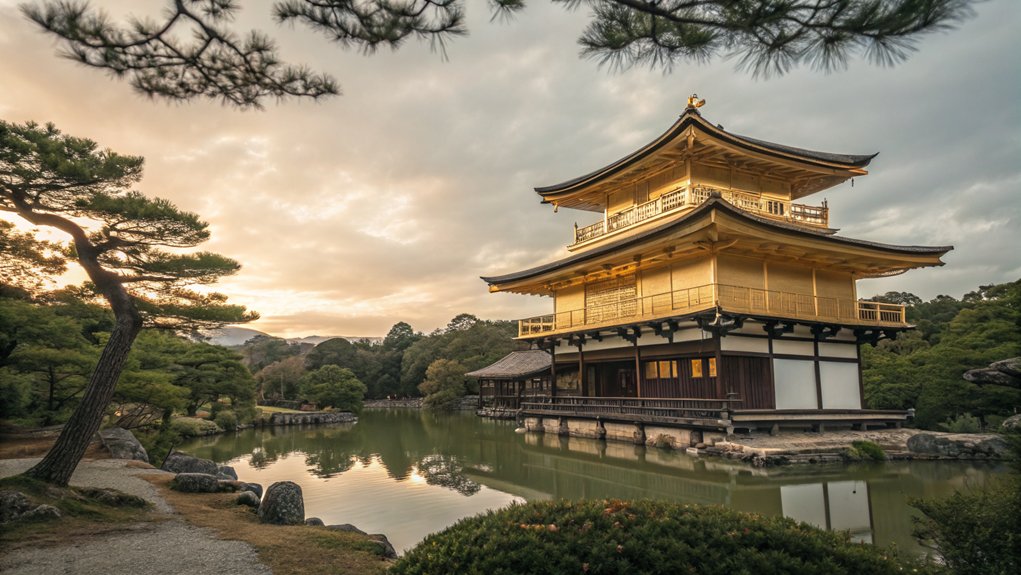
The stunning Golden Pavilion (Kinkaku-ji), wrapped in gold leaf, reflects elegantly in its surrounding pond.
Finally, visit Tō-ji Temple, home to a historic five-story pagoda and a lively flea market on the 21st of each month. Each site deepens your understanding of Japan’s rich heritage.
Scenic Views and Nature
After exploring the must-visit temples and shrines of Kyoto, it’s time to immerse yourself in the city’s stunning natural landscapes and scenic views. Start your day at Arashiyama Bamboo Grove, where the towering stalks provide a serene escape. Next, visit Kiyomizu-dera Temple for breathtaking views of cherry blossoms or autumn foliage. Stroll along the Philosopher’s Path, especially beautiful in sakura season, linking various temples amidst picturesque scenery. Finally, experience Fushimi Inari Taisha with its iconic vermilion torii gates winding through lush trails.
| Location | Highlights | Best Time to Visit |
|---|---|---|
| Arashiyama Bamboo Grove | Serene atmosphere | Early morning |
| Kiyomizu-dera | Scenic views | Spring and autumn |
| Philosopher’s Path | Canal-side cherry trees | Sakura season |
| Fushimi Inari Taisha | Unique hiking trails | All year |
Traditional Dining Experiences
Indulging in Kyoto’s vibrant culinary scene is a must for any traveler.
Start with kaiseki at Gion Karyo, where you’ll savor a multi-course meal showcasing seasonal ingredients and stunning presentation.
Experience an authentic tea ceremony at Jotoku-ji Temple, where you’ll learn the art of matcha preparation in a peaceful setting.
For an interactive twist, head to Gyukatsu Motomura, where you grill your own wagyu steak on hot stones.
Don’t miss Nishiki Market, known as Kyoto’s kitchen, featuring over 100 stalls with local delicacies like 100-yen sake and tempura shrimp.
Finally, dining at local ryokans lets you enjoy unique, regional dishes crafted from fresh, local produce, offering a taste of Kyoto’s rich culinary heritage.
Unique Dining Experiences in Kyoto
When you think of unique dining experiences, Kyoto offers an extraordinary culinary landscape that goes beyond traditional meals. From exquisite presentations to interactive dining, there’s something for everyone.
- Indulge in kaiseki at historic restaurants, where each multi-course meal showcases seasonal ingredients and artful plating in serene gardens.
- Enjoy an intimate omakase experience at Sushi Uraonikai, where chefs craft personalized menus based on the freshest catches.
- Explore vibrant Nishiki Market with over 100 stalls, tasting local delights like yudofu, tsukemono, and wagyu beef.
- Experience whimsical themed cafes, like Anakuma Cafe, and savor matcha desserts in a creatively curated setting.
- Grill your own wagyu steak at Gyukatsu Motomura, making for a flavorful, hands-on dining adventure.
Tips for Traveling Between Tokyo and Kyoto
When you’re traveling between Tokyo and Kyoto, the Shinkansen is your best bet for speed and convenience.
Be sure to book your tickets in advance, especially during busy seasons, to secure the best options.
With a travel time of around 2 hours and 30 minutes, you’ll have plenty of time to enjoy the beautiful views along the way.
Best Transportation Options
Traveling between Tokyo and Kyoto is a breeze, especially if you take advantage of the Shinkansen, Japan’s iconic bullet train. This speedy service covers the distance in about 2 hours and 30 minutes on the Nozomi line.
Here are some options to contemplate:
- Reserve your Shinkansen tickets via the SmartEX website for an easy booking experience.
- If you plan on making several long-distance trips, a JR Rail Pass could save you money.
- The N700 series provides comfort with great amenities, including food service and power outlets.
- For budget travelers, highway buses are cheaper, but they take 8 to 10 hours and lack reserved seating.
- Always check train schedules to maximize your travel time.
Booking Shinkansen Tickets
Booking your Shinkansen tickets ahead of time is essential, especially during peak seasons when seats fill up fast. You can easily book your tickets through the SmartEX website or at designated ticket counters throughout Japan.
If you plan to take multiple Shinkansen rides, consider purchasing a Japan Rail Pass in advance; it can save you a decent amount compared to regular fares.
Keep in mind that while the Nozomi and Mizuho trains offer the quickest service, they’re not covered by the Japan Rail Pass. Instead, opt for the Hikari or Kodama services.
For a more comfortable journey, think about reserving a Green Car or first-class seat to enjoy extra legroom and enhanced comfort during your travels between Tokyo and Kyoto.
Travel Time Considerations
Traveling between Tokyo and Kyoto is efficient thanks to the Shinkansen, which connects the two cities in just about 2 hours and 30 minutes on the fastest Nozomi service.
To make your journey smoother, consider these tips:
- Book in advance: Reservations are recommended, especially during peak seasons like cherry blossom time.
- Ticket options: A one-way ticket costs around ¥14,000, but the Japan Rail Pass can save you money on multiple trips.
- Scenic views: Enjoy breathtaking landscapes, including glimpses of Mount Fuji on clear days.
- Frequent departures: Nozomi trains leave every 10-15 minutes, providing flexibility for your travel plans.
- Luggage considerations: Be aware of luggage restrictions to avoid extra fees.
Transportation Options Within Japan: Making the Most of Your Journey
When exploring Japan, you’ll quickly discover that efficient transportation options are key to maximizing your experience.
The Shinkansen, or bullet train, is your best bet for speedy travel between major cities, reaching up to 320 km/h (199 mph) while ensuring comfort on long journeys.
Consider the Japan Rail Pass, offering unlimited travel on most JR trains, including the Shinkansen, over 7, 14, or 21 consecutive days—perfect for those with multiple itineraries.
In urban centers like Tokyo and Osaka, local subways and buses run on excellent schedules, and prepaid cards like Suica or Pasmo make hopping on and off a breeze.
Don’t forget express buses for affordable intercity travel, especially for night journeys that save on accommodation costs.
Must-Know Tips for First-Time Travelers in Japan
How do you prepare for an unforgettable journey in Japan? Start by securing a JR Rail Pass upon arrival for efficient travel between major cities like Tokyo and Kyoto.
Don’t forget to grab a Suica card and preload it with at least ¥20,000 to simplify public transport and shopping at convenience stores. Fill out your immigration forms online ahead of time to speed up airport check-in.
Also, consider packing a reliable pocket WiFi device or arranging for an eSIM to guarantee you have internet access throughout your trip.
Finally, book your accommodations and must-see attractions well in advance, especially during peak seasons like Cherry Blossom or Golden Week.
- Activate your JR Rail Pass
- Get a Suica card
- Complete immigration forms online
- Pack a pocket WiFi device
- Book in advance
Frequently Asked Questions
What Is the Best Time of Year to Visit Japan?
The best time to visit Japan is during spring (March to May) when cherry blossoms bloom or autumn (September to November) for vibrant foliage. Both seasons offer pleasant weather and stunning scenery you’ll absolutely love.
How Can I Access Free Wi-Fi in Japan?
You can find free Wi-Fi in Japan by using public networks at trains, airports, and cafes. Download apps like WiFi Map or use portable Wi-Fi routers for easy internet access while exploring the country.
What Are the Tipping Customs in Japan?
In Japan, you usually don’t tip. It can be seen as disrespectful or unnecessary. Instead, focus on showing gratitude with polite language and a smile, which is appreciated much more than any monetary gesture.
Are There Public Restrooms Available in Japan?
Yes, you’ll find public restrooms available throughout Japan, especially in cities and parks. They’re usually clean and well-maintained, so don’t hesitate to use them when you need a quick break or restroom stop.
Can I Use My Credit Card Everywhere in Japan?
You can’t use your credit card everywhere in Japan. Many small restaurants, shops, and rural areas prefer cash. It’s best to carry some yen with you to avoid potential issues during your travels.
Leave a Reply