
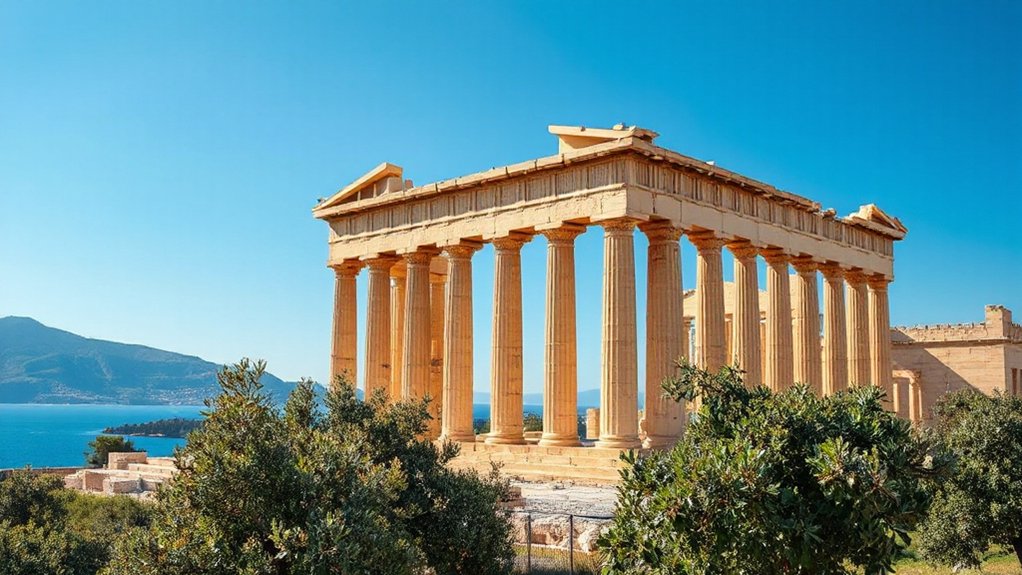
You might not know that Greece’s history stretches back over 3,000 years, making it one of the oldest continuously inhabited places in Europe. With its diverse array of archaeological sites, ancient ruins, and enchanting stories, you’ll find countless treasures waiting to be explored. From the iconic Acropolis to the mysterious ruins of Delphi, each location offers a unique glimpse into the past that can change your understanding of ancient civilization. Discovering these beautiful places might surprise you.
Key Takeaways
- The Acropolis of Athens showcases ancient Greek artistry with stunning structures like the Parthenon, reflecting the pinnacle of classical architecture.
- Delphi, home to the Oracle, served as a spiritual and political center, rich with archaeological wonders like the Temple of Apollo.
- The Palace of Knossos in Crete reveals the advanced Minoan civilization through its intricate architecture and impressive frescoes.
- Vergina features royal tombs, including that of Philip II, offering insights into ancient Macedonian culture and royal burial customs.
- Epidaurus Theatre is renowned for its exceptional acoustics and serves as a historical venue for performances intertwined with healing rituals.
The Acropolis of Athens: A Showcase of Classical Art and Architecture
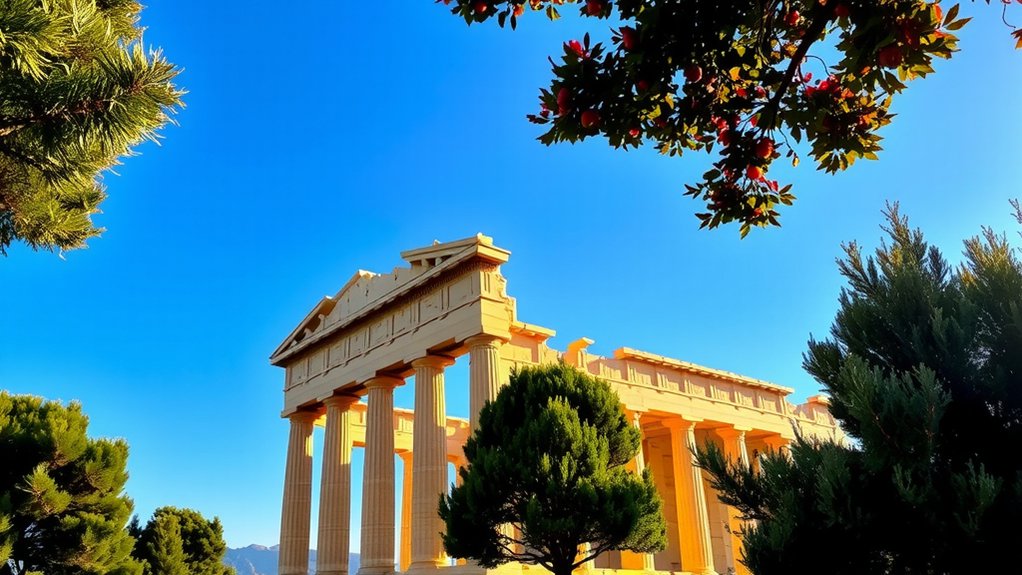
Perched on a rocky outcrop above Athens, the Acropolis stands as a symbol of ancient Greek civilization and its artistic mastery. Constructed between 447 and 432 BCE under Pericles, this iconic site showcases remarkable structures like the Parthenon, Erechtheion, and Propylaea.
The Parthenon, dedicated to Athena Parthenos, features intricate sculptures designed by Phidias, including metopes and a frieze that narrates epic tales. You can’t miss the striking Caryatids of the Erechtheion, which add a unique touch to the temple. The Acropolis complex also includes the Dionysus Theatre, historically significant as a venue for Greek dramas that could hold up to 16,000 spectators.
The Acropolis also endured various transformations and damage over centuries, yet it remains a UNESCO World Heritage site since 1987. Visiting the Acropolis immerses you in history and reveals Greece’s incredible architectural achievements.
The Enigmatic Ruins of Delphi: Home of the Sacred Oracle
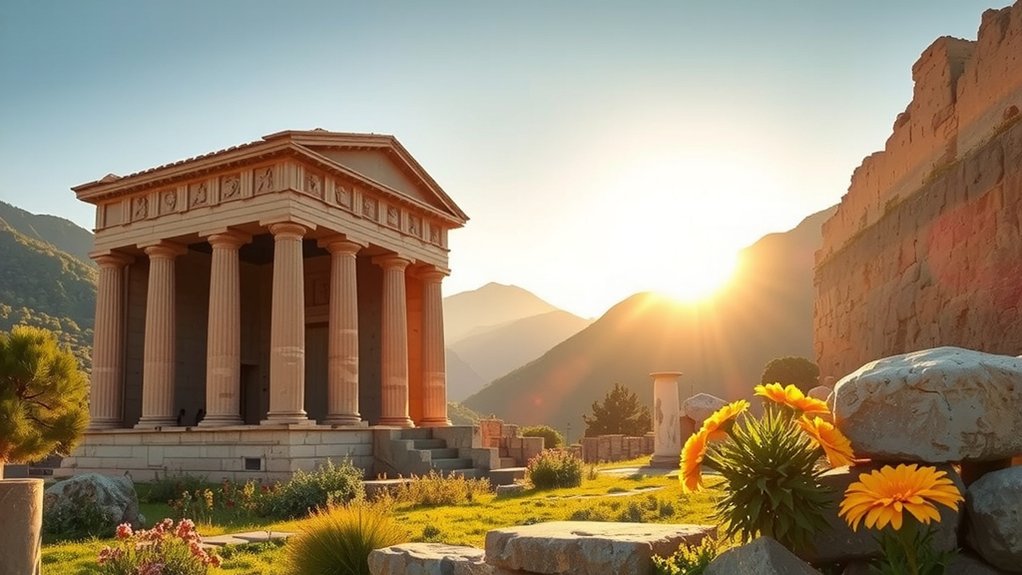
When you visit Delphi, you’re stepping into a world where the Oracle of Apollo once shaped destinies with her cryptic pronouncements. You can’t help but marvel at the architectural wonders surrounding this historic site, from the majestic Temple of Apollo to the unique Tholos of Athena. Each structure tells a story of ancient influence and the significance of Delphi as a center for cultural and religious life in Greece, which was once considered the center of the Earth in Greek mythology.
Oracle of Apollo’s Influence
Nestled in the foothills of Mount Parnassus, the Oracle of Apollo at Delphi has captivated visitors for centuries with its profound historical significance.
As a pan-Hellenic sanctuary dating back to the 8th century BCE, it served as an essential political and spiritual hub. City-states consulted the oracle before major decisions, legitimizing their actions through cryptic prophecies delivered by the Pythia. The Pythia’s trance-like state allowed her to communicate divine messages that influenced decisions across various facets of society.
Ritual preparations, including sacrifices and purifications, were fundamental for gaining Apollo’s favor. The sanctuary’s influence extended beyond Greece, guiding even non-Greek elites in their pursuits. Declaring war or forming alliances often involved seeking Delphic validation, showcasing Delphi’s critical role in shaping ancient world dynamics. Its cultural legacy remains significant, recognized as a UNESCO site since 1987.
Architectural Marvels of Delphi
The architectural marvels of Delphi stand as a monument to ancient Greece’s ingenuity and religious devotion. At the heart of this site is the Temple of Apollo, which showcases a Doric peripteral design with striking columns and a rich construction history. You’ll notice the Sacred Way, lined with treasuries and monumental dedications illustrating the wealth of city-states. The Sanctuary of Athena Pronaia features the iconic Tholos, a circular structure that captivates visitors with its elegant façade. Additionally, the theater and stadium, built into the slopes, highlight the cultural heartbeat of Delphi, hosting the Pythian Games and performances. With each step, you’ll feel the ancient energy that once pulsed through this sacred space.
The Legendary Kings of Mycenae: Journey Through History
Although many tales of ancient Greece draw from myth, the story of Mycenae’s legendary kings reveals a rich historical tapestry woven with fate, power, and tragedy.
The House of Atreus, primarily represented by Agamemnon and his brother Menelaus, is central to this narrative. Agamemnon led the Achaean forces in the Trojan War, while Menelaus’ tale intertwines with themes of honor and desire.
Key aspects of their legacy include:
- Dramatic cycles of revenge and familial curses, as seen in the tragic works of Aeschylus and others.
- Archaeological evidence showcasing elite burials and immense wealth, signifying their formidable status.
- Mycenae’s strategic military and economic power reflected in its palatial center and control of trade routes. The Mycenaean civilization is noted for its development of Linear B, the earliest known writing system in Europe, which played a crucial role in recording its rich history.
Exploring the Architectural Wonders of Knossos and Their Cultural Significance
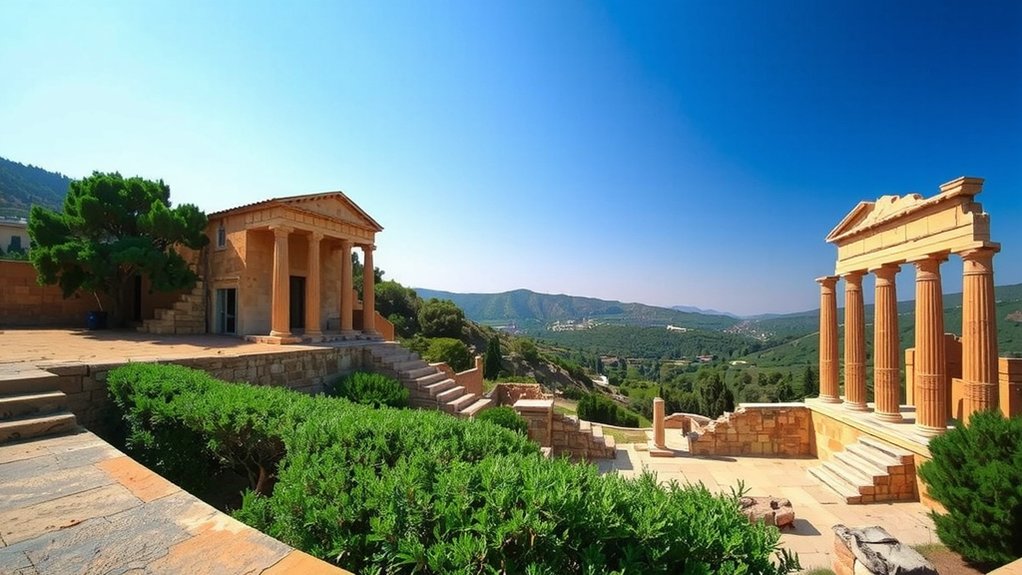
At the heart of Minoan civilization lies Knossos, a site that fascinates history buffs with its intricate architectural designs and cultural significance. Here, you’ll find a multi-level palace complex sprawling over 20,000–25,000 m², featuring essential elements like the Grand Staircase and ornate frescoes. The polythyra system and tapered wooden columns showcase advanced architectural innovations. Each space serves a purpose, illustrating the blend of governance and ritual. The palace of Knossos served as the political center of Minoan Crete, highlighting its importance in shaping the region’s history.
Explore Knossos, and you’ll uncover the depths of its remarkable history.
The Acoustics and Aesthetics of Epidaurus Theatre
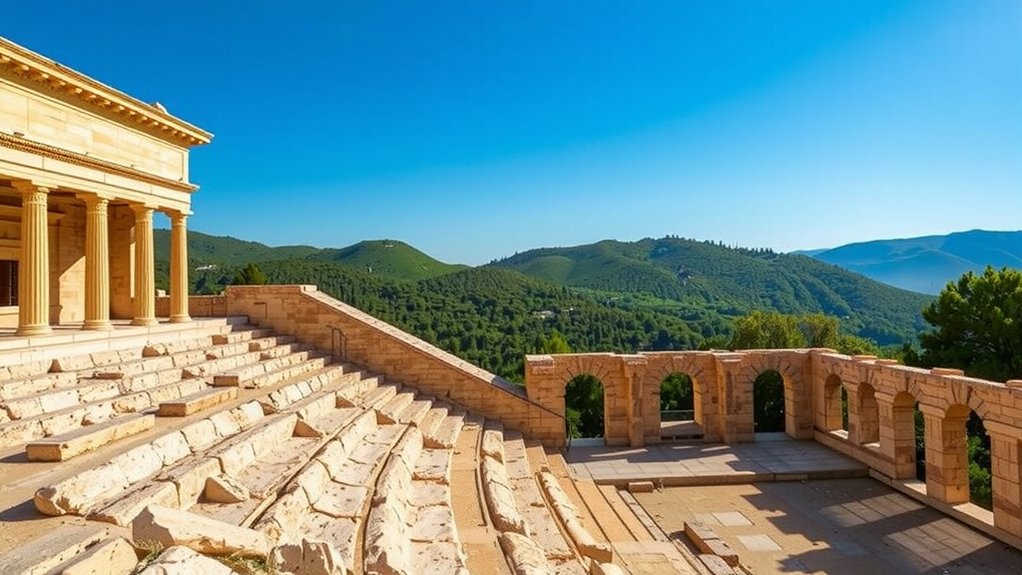
When you step into the Epidaurus Theatre, you can’t help but admire its architectural brilliance, meticulously designed to create a stunning visual and auditory experience. The exceptional acoustic properties allow even the faintest whispers to carry to the highest seats, bringing performances to life. This remarkable blend of aesthetics and function highlights the cultural significance of the theatre in ancient Greek society. The theater, built in a healing sanctuary dedicated to Asclepius, the god of medicine, exemplifies the belief in the therapeutic power of performance art in ancient Greece.
Architectural Brilliance and Design
As you step into the Epidaurus Theatre, its architectural brilliance immediately captivates, revealing how ancient Greeks harmonized function with beauty. Built in the late 4th century BCE, the design showcases Hellenistic ideals of symmetry and proportion. The semi-circular seating, constructed from locally sourced limestone, supports nearly 14,000 spectators and integrates seamlessly with the natural slope of Mount Kynortion.
- The theatre’s layout reflects very deliberate geometric principles, ensuring unobstructed views for all.
- It utilizes the local landscape to create a harmonious composition between built form and nature.
- Minimal ornamentation amplifies the visual scale, focusing attention on monumental simplicity.
The theatre’s extraordinary acoustics, a result of its limestone seat construction, further enhance the overall aesthetic and historical significance of this remarkable site.
Exceptional Acoustic Properties
The exceptional acoustic properties of the Epidaurus Theatre guarantee that every whisper and grand soliloquy can be heard with clarity, even from the farthest seats. This is due to the limestone seating, which acts as a high-pass filter, reflecting higher speech frequencies while suppressing low frequencies. The theater’s capacity reaches up to fourteen thousand spectators, showcasing its significance as a gathering space in ancient times.
The stepped geometry of the theater creates surfaces that amplify these high frequencies, reinforcing sound directed towards the audience. Additionally, the arrangement minimizes reverberation, preserving speech intelligibility. The interaction of sound waves, including creeping waves along stone terraces, enhances high-frequency transmission without dampening. Together, these features assure sound travels efficiently, making your experience in this historic venue truly remarkable, immersing you in every performance as if you were front row.
Cultural Significance in Performances
Having explored the remarkable acoustics of the Epidaurus Theatre, it’s clear that its significance extends beyond technical excellence; it embodies a rich cultural fabric interwoven with performance traditions.
This ancient theatre served not only as a venue for entertainment, but also as a sanctuary for healing and communal bonding. You’d find that performances during religious festivals were essential for psychological catharsis, reinforcing the connection between art and wellness. The theatre’s design reflects Hellenistic ideals, enhancing both sound and sight. Modern revivals continue the tradition, emphasizing works by classical playwrights. Community gatherings at the theatre strengthen civic identity and cultural memory. Additionally, the theater’s unique acoustics allow performers to engage deeply with their audience, creating a dynamic and immersive experience.
Visiting Epidaurus allows you to experience this extraordinary blend of history and artistry firsthand.
The Enduring Legacy of the Ancient Olympic Games
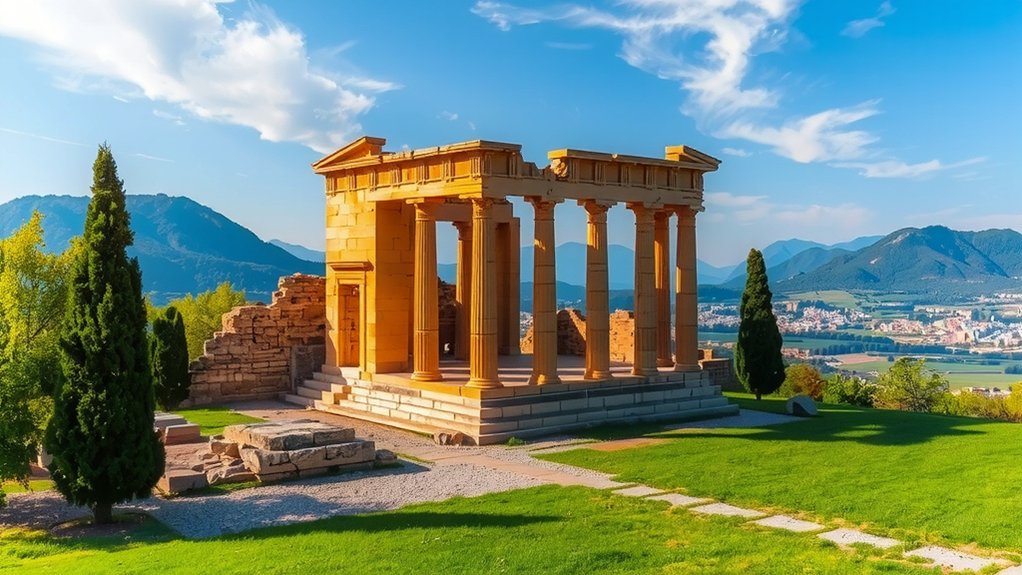
From the sacred grounds of Olympia to modern stadiums worldwide, the legacy of the Ancient Olympic Games continues to inspire and captivate. First recorded in 776 BC, the games initiated a four-year cycle that uniquely chronicled time for the ancient Greeks.
These competitions weren’t just athletic events; they fostered a sense of community through the sacred truce, Ekecheiria, allowing safe travel for participants and spectators alike. Events like wrestling, boxing, and chariot racing offered not just olive wreaths but also immense honor.
As a Pan-Hellenic gathering, the games served as a diplomatic platform, promoting unity among city-states. This rich cultural heritage laid the groundwork for the modern Olympic Movement, reflecting enduring values of competition, community, and celebration. The construction of the Temple of Zeus in Olympia around the 5th century B.C. exemplified the importance of these games in ancient Greek society.
Discover the Stunning Monasteries of Meteora
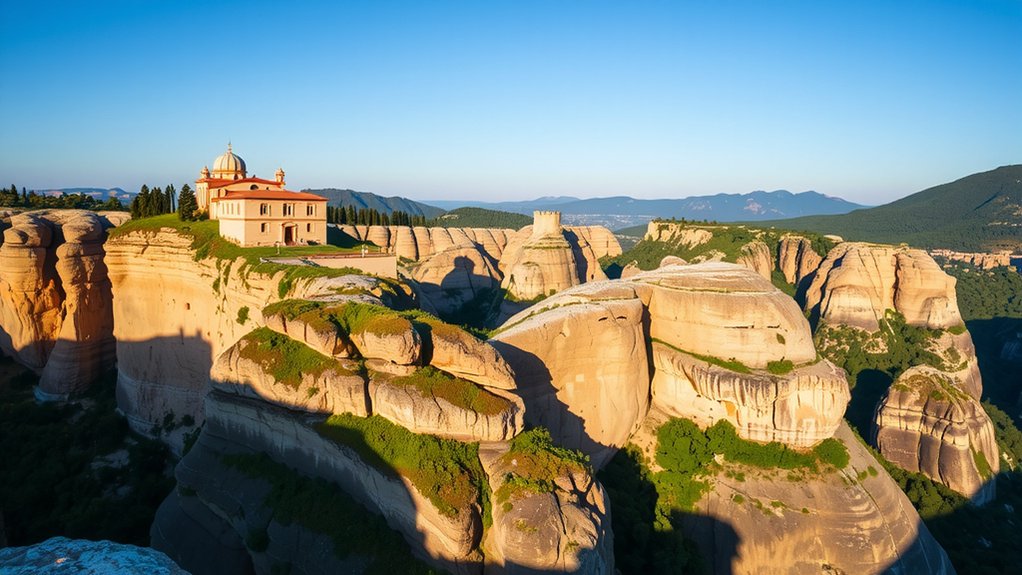
When you visit Meteora, you’ll be amazed by the unique sandstone pillars that rise dramatically from the landscape. The formations, which are approximately 60 million years old, create a spectacular backdrop for the monastic sites. Each monastery showcases stunning Byzantine architecture and intricate frescoes that illustrate the rich monastic history still alive today. Immerse yourself in the traditions and daily life of the monks who’ve called this breathtaking place home for centuries.
Unique Sandstone Pillar Formation
Few places in Greece evoke a sense of wonder quite like Meteora, where towering sandstone pillars rise dramatically from the landscape.
Formed around 60 million years ago, these impressive structures result from tectonic uplift and erosion, reaching heights of up to 400 meters. The unique formations, shaped by freeze-thaw cycles and wind, create an astonishing array of steep faces and rounded tops. The Meteora monasteries, established between the 14th and 16th centuries, highlight the region’s historical significance as a center of Orthodox monasticism.
Here are some fascinating aspects of Meteora’s sandstone pillars:
- Geological Origins: Formed from river delta and marine sedimentation during the Paleogene period.
- Visual Contrast: Pillars soar from the Thessalian plain, providing breathtaking views and distinct topographical relief.
- Historical Use: Early hermits utilized these natural fortresses for isolation and spiritual reflection.
Byzantine Architecture and Frescoes
Meteora’s majestic sandstone pillars not only captivate with their natural beauty but also support some of the most remarkable examples of Byzantine architecture in Greece. The monasteries, built directly into the rock, showcase exquisite frescoes that reflect both Orthodox iconography and Western Renaissance influences. Of the original 24 monasteries, only six remain active today, providing a unique opportunity to witness Orthodox Christianity preserved in stunning architectural forms.
Explore these stunning sites and let the history and artistry of Meteora envelop you.
Monastic Life and Traditions
Exploring the stunning monasteries of Meteora offers a unique glimpse into monastic life and traditions that have flourished for centuries.
You’ll discover how these sacred sites became refuges for Orthodox monasticism, especially during the Ottoman period. Daily routines consist of communal prayers, agricultural work, and hospitality, emphasizing humility and community.
- Experience the rigorous prayer schedule, including night office, matins, and vespers. This spiritual haven is also a UNESCO World Heritage Site, reflecting its historical and cultural significance in Greece.
- Learn about the monks’ meticulous labor in maintaining the grounds and creating religious artifacts.
- Engage in regulated interactions, respecting their traditions and observing designated visiting hours.
Witnessing this ancient way of life amid breathtaking landscapes is both humbling and enlightening, showcasing a crucial aspect of Greece’s cultural heritage.
Ancient Corinth: Insights Into a Thriving Trade Hub
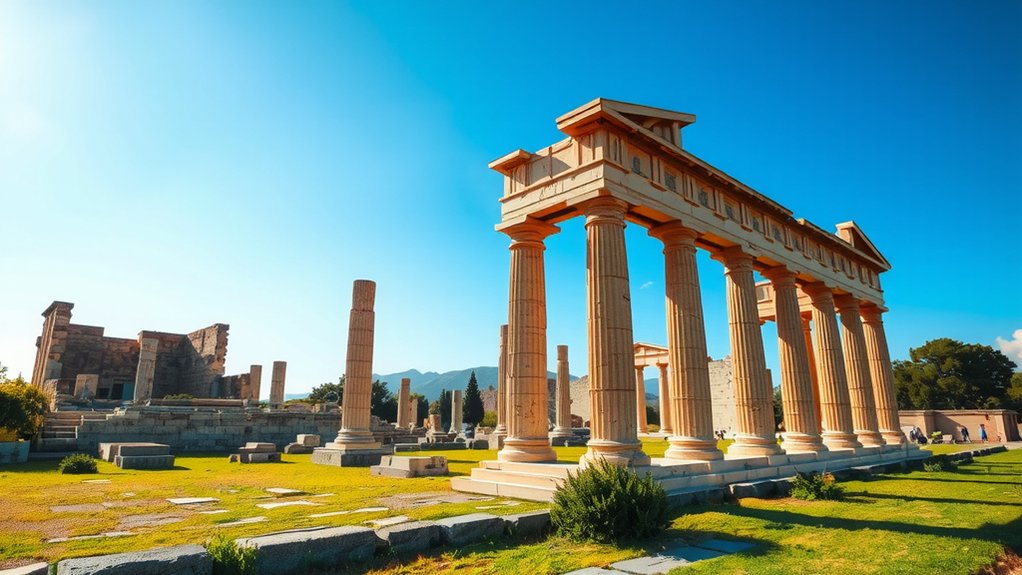
Ancient Corinth stands as one of Greece’s most significant trade hubs, showcasing its exceptional strategic position on the Isthmus of Corinth. This narrow land bridge allowed control over the vital overland route between the Aegean and Ionian seas, linking diverse markets.
The city thrived through its exports of renowned pottery and prized Corinthian bronze, while its bustling ports at Lechaion and Cenchreae facilitated trade across the Mediterranean. With its defensive Acrocorinth fortress and advanced infrastructure like the Diolkos, Corinth was a commercial powerhouse. Ancient urban planning is evident in the city’s well-organized streets and public squares, which supported its thriving economy.
Following its Roman refounding in 44 BCE, it became the capital of Achaia, further cementing its status. The city’s vibrant social dynamics and cultural events, including the Isthmian Games, attracted people and commerce, enriching its legacy.
Vergina: How the Royal Tombs Redefine Macedonian History
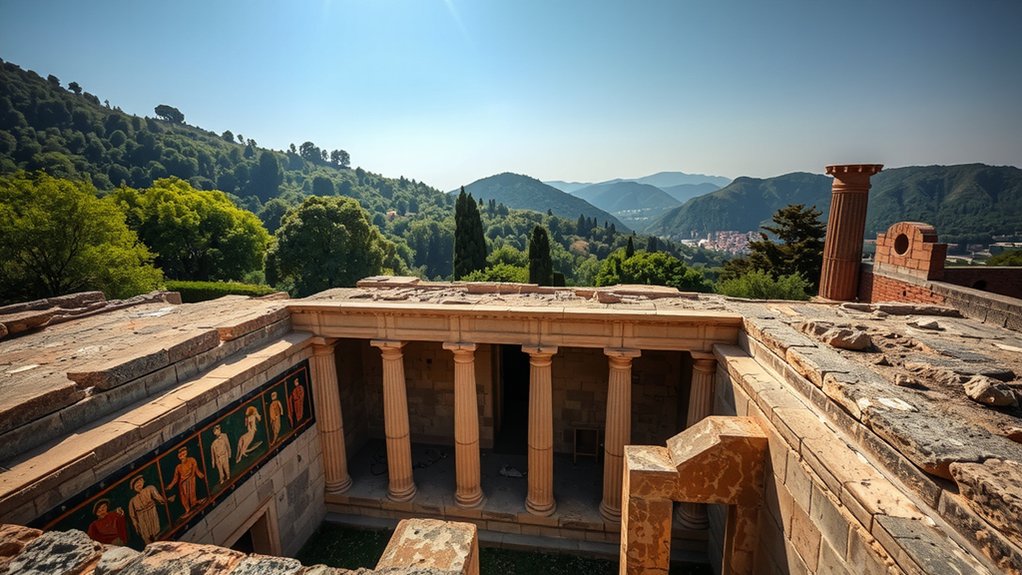
Located not far from the historical marvels of Ancient Corinth, Vergina presents a fascinating chapter in Macedonian history with its remarkable royal tombs. Discovered in 1977, these tombs, including the one attributed to Philip II, redefine our understanding of the Argead dynasty. Their exquisite artifacts reveal a rich material culture that symbolizes royal power and complex funerary practices.
- The gold oak-leaf wreath, a stunning piece of craftsmanship, highlights the artistry of this era.
- Wall paintings of hunting scenes provide insight into their cultural narratives.
- The lavish burial goods, such as weapons and intricate textiles, illustrate the martial status of Macedonian royalty. Additionally, the tombs’ unlooted state upon discovery offers invaluable information about ancient burial customs.
These tombs are essential for comprehending Macedonian heritage and royal ideology.
Thessaloniki: The Intersection of Roman, Byzantine, and Ottoman Cultures
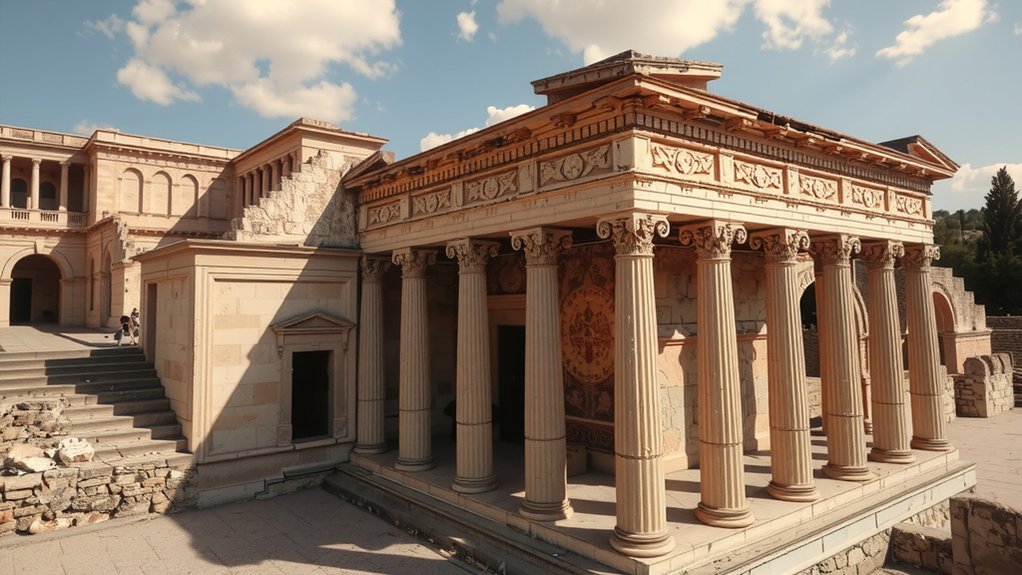
While wandering through Thessaloniki, you’ll find a city that beautifully reflects the layers of its Roman, Byzantine, and Ottoman past.
You’ll discover major Roman features like the Agora and Forum, showcasing a bustling civic life. Byzantine heritage shines through with iconic churches, like the Rotunda and Hagios Demetrios, adorned with breathtaking mosaics that highlight the city’s role in the development of hesychasm.
As you navigate the city, observe the impressive walls dating back to the 4th century, testimony to its extensive military history. The Ottoman influence, apparent in transformed mosques and culturally rich markets, adds to the city’s vibrant tapestry.
Each layer narrates its unique story, inviting you to explore the profound intersection of cultures that defines Thessaloniki.
Delos: A Hub of Ancient Trade and Religion
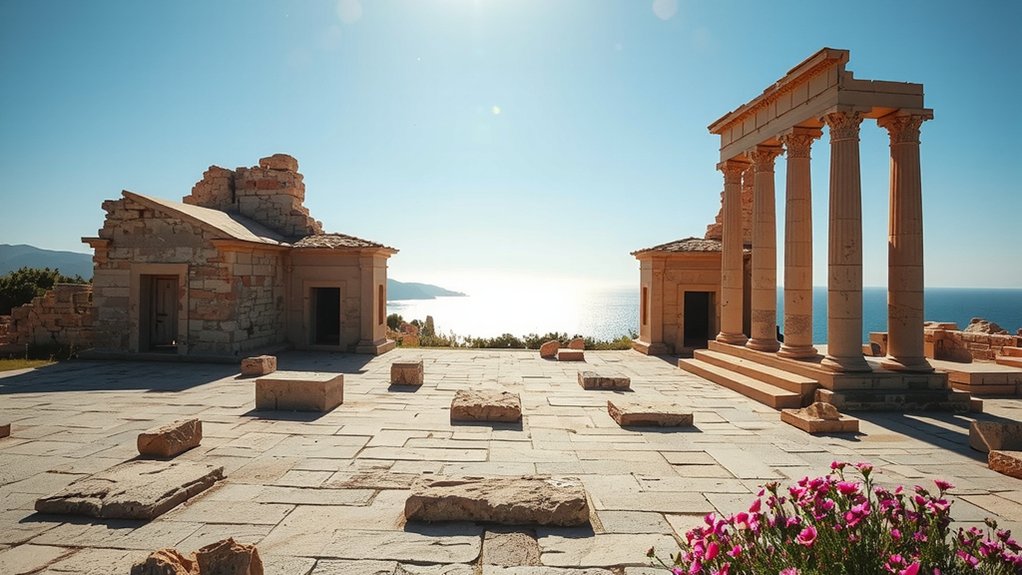
Steeped in myth and history, Delos serves as a pivotal crossroads of trade and religion in the ancient world. As the reputed birthplace of Apollo and Artemis, it became a sacred site with vibrant festivals drawing pilgrims and merchants from across the Mediterranean. Delos is regarded as the birthplace of Apollo and Artemis and is considered one of the most sacred sites in the ancient Hellenic world.
You’ll find evidence of its bustling commercial past in the ruins of warehouses and docks.
- Explore the multiple sanctuaries and temples dedicated to foreign deities.
- Walk the processional ways and admire the iconic Terrace of the Lions.
- Experience the remnants of a major free port that thrived during the Hellenistic and Roman periods.
Delos’ archaeological significance showcases its longstanding influence on both spiritual and economic landscapes.
Unraveling the Mysteries of Ancient Thera
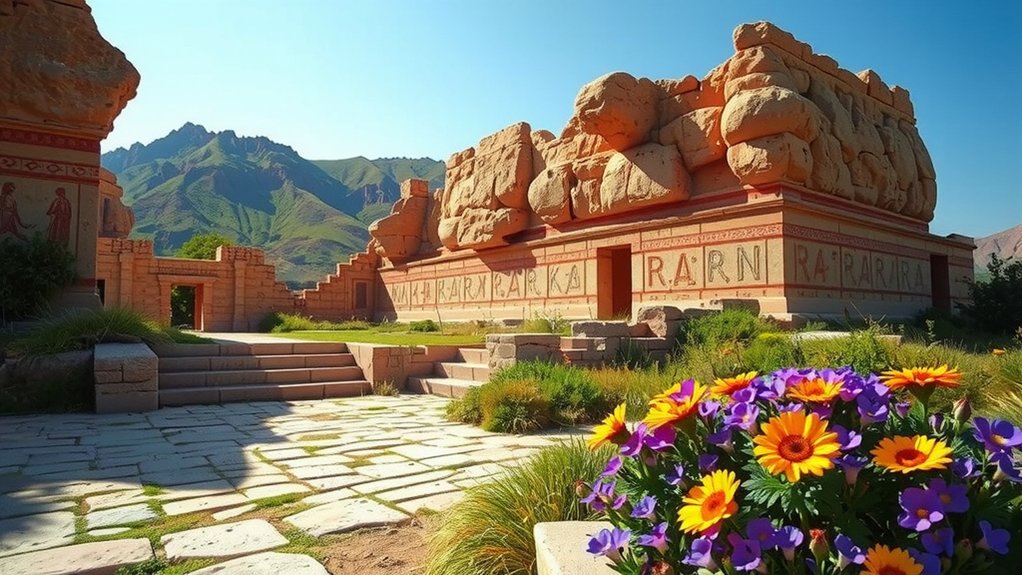
As you venture into the ancient city of Thera, you’ll find an enchanting blend of history and mystery nestled on the volcanic cliffs of Santorini. Founded by Dorian colonists from Sparta, Thera’s strategic position at 365 meters above sea level offered both visibility and defense. The city was established in the 9th century BC, making it one of the oldest urban centers in the region. You’ll walk through its compact layout, where a principal street led to the agora, flanked by the impressive Basilike Stoa and bustling administrative buildings. Marvel at the theatre carved into the slope, where locals gathered for cultural events.
As you explore, notice the remnants of temples and rock sanctuaries that tell tales of worship and daily life. The archaeological finds, from pottery to coins, vividly illustrate Thera’s vibrant past as a critical hub in ancient trade networks.
Akrotiri: a Glimpse Into Daily Life in the Bronze Age
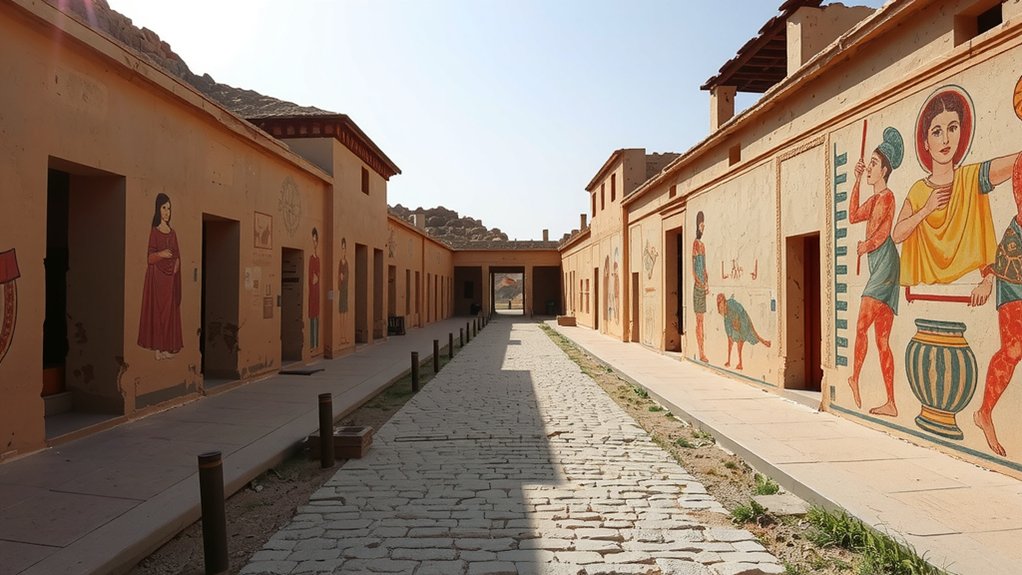
Akrotiri stands as a remarkable window into the daily life of the Bronze Age, enchanting visitors with its sophisticated urban layout and intricate household artifacts. This ancient city, buried by a volcanic eruption, showcases a thriving society that flourished around 1700-1600 BCE. The systematically designed neighborhoods within Akrotiri highlight the advanced urban planning of the Minoan civilization.
As you wander through its multi-story houses and organized streets, you’ll encounter vibrant frescoes and evidence of textile production.
- Discover cooking pottery and storage jars that reveal culinary practices.
- Explore workshops that indicate local craft and trade activities.
- Admire beautiful murals depicting rituals and daily life, showcasing artistic skill.
Akrotiri’s well-preserved remains offer an unparalleled glimpse into a civilization filled with innovation and culture.
Frequently Asked Questions
What Is the Best Time of Year to Visit These Historical Sites?
The best time of year to visit these historical sites is during spring or autumn. You’ll enjoy mild weather, fewer crowds, and a more comfortable experience while exploring rich history. Don’t forget to go early!
Are Guided Tours Available at These Archaeological Locations?
Yes, guided tours are widely available at these archaeological locations. You can choose from various options, including group tours, private experiences, and themed tours, ensuring a rich exploration tailored to your interests and needs.
How Can I Get to the More Remote Sites in Greece?
You’ll find remote sites in Greece accessible by rental car, public transport, or guided tours. Ironically, these beautiful locales often demand significant hiking, with rough terrain and limited routes, adding adventure to your historical journey!
What Are Some Recommended Accommodations Near These Historical Attractions?
You’ll find great accommodations near historical attractions across Greece, from budget hostels in Athens to luxurious estates in Monemvasia. Opt for family-run inns or boutique hotels that enhance your experience with local charm and historical ambiance.
Are There Any Entrance Fees for These Ancient Sites?
Yes, there are entrance fees for ancient sites. You’ll pay around €10–€30, depending on the location and season, with discounts for students and seniors. It’s smart to check for free entry days as well.
Leave a Reply