
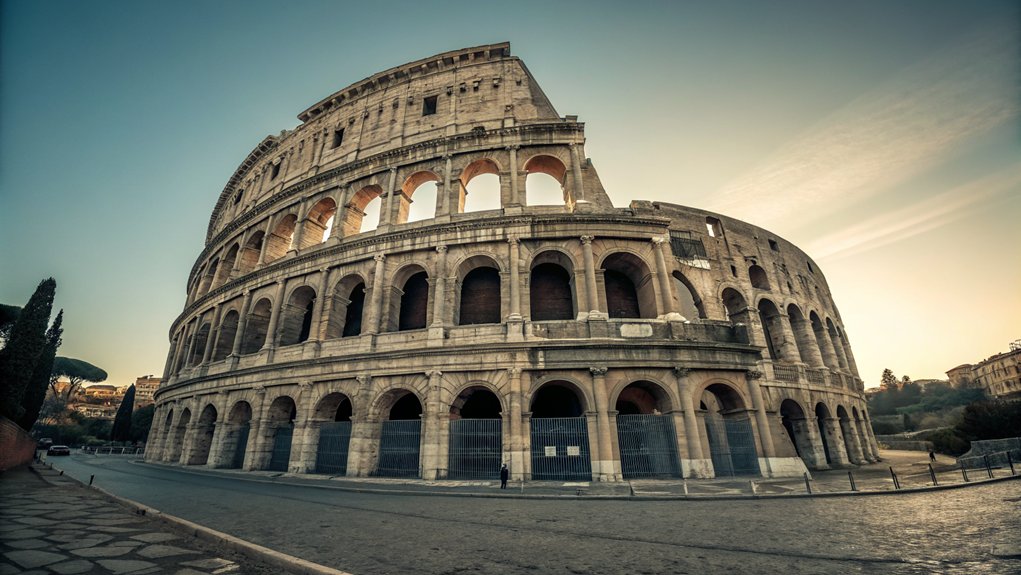
When you think of ancient Rome, the grandeur of its gladiatorial arenas and historical sites come to mind. You’ll find that the city is dotted with remarkable spots that bring these fierce tales to life. Each location not only showcases stunning architecture but also deep-rooted stories of bravery and competition. Join this journey as we uncover seven of the most beautiful places that echo the legacy of gladiators and invite you to explore their fascinating histories.
Key Takeaways
- The Colosseum showcases ancient engineering and the thrilling history of gladiatorial battles, essential for any gladiator tour in Rome.
- The Roman Forum offers insights into ancient social, political, and economic life, making it a crucial component of the gladiatorial experience.
- Palatine Hill provides stunning views and links to Rome’s legendary founding, enriching the understanding of gladiatorial traditions.
- The Arch of Constantine, near the Colosseum, commemorates military victories and features intricate reliefs depicting gladiatorial combat, enhancing the tour’s historical context.
- The Capitoline Museums house invaluable artifacts and artworks related to gladiatorial history, crucial for appreciating Rome’s cultural legacy.
The Colosseum: Heart of Gladiatorial History
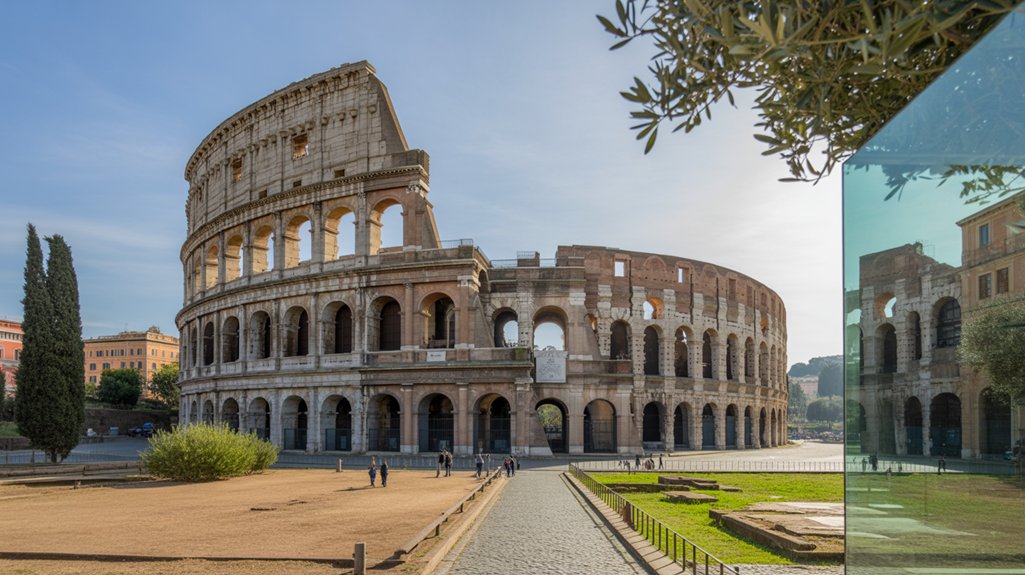
The Colosseum, often regarded as the heart of gladiatorial history, stands as a tribute to the grandeur of ancient Rome. Built between AD 70 and 80, this architectural marvel showcases the brilliance of Roman engineering.
With a capacity of around 50,000 spectators, it hosted thrilling spectacles, from gladiatorial battles to public executions and even naval combat. When you think of gladiators, you envision courage and resilience, as they fought for survival in front of massive crowds, pivotal to Roman society and politics.
Unique guided tours offer you exclusive access to special areas, like the Arena floor and the Gate of Death, enhancing your connection to its storied past. Millions flock here each year, keen to relive its remarkable history.
The Roman Forum: Social Epicenter of Ancient Rome
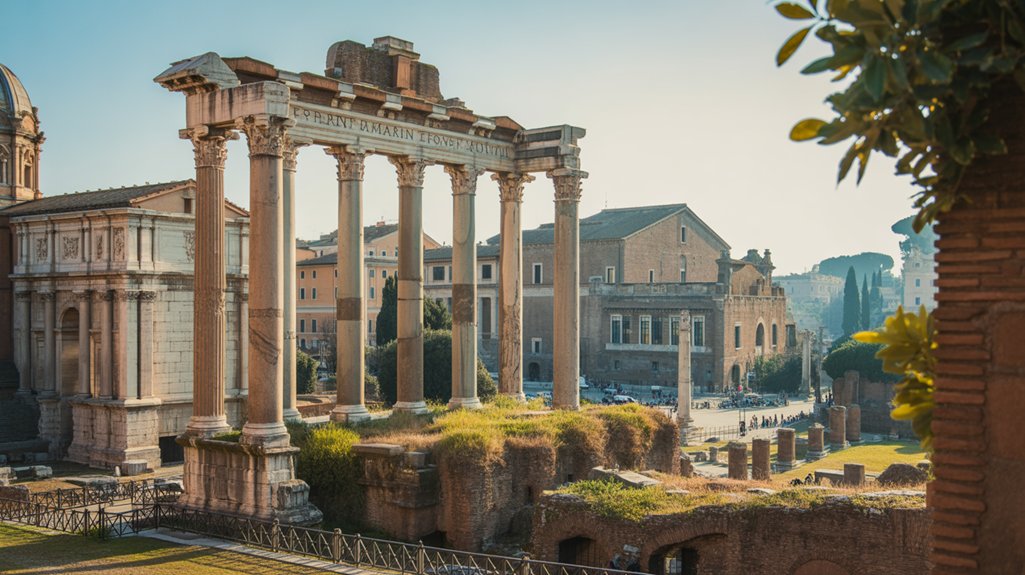
As you explore the Roman Forum, you’ll stand in the heart of ancient Rome’s social life.
This is where citizens gathered for politics, commerce, and community events, surrounded by impressive architectural marvels like the Senate House and the Temple of Saturn.
Imagining the vibrant interactions that once took place here adds depth to your gladiator tour experience.
Historical Significance Of Forum
While exploring Rome, you’ll discover that the Roman Forum was the vibrant heart of ancient society, serving as the social, political, and economic hub where citizens gathered for crucial events.
It hosted critical public gatherings, bustling markets, and essential governmental activities that shaped daily life. The Forum boasted impressive structures, including temples and basilicas, showcasing the architectural prowess of Roman civilization.
Key moments in history unfolded here: political speeches rang out, criminal trials took place, and triumphal processions celebrated victories.
You can wander through the ruins of the Senate House (Curia) and the Rostra, where orators engaged the crowds.
Today, this UNESCO World Heritage site offers an enchanting glimpse into the lives of ancient Romans—an unforgettable stop on your gladiator tour.
Architectural Marvels To Explore
Exploring the architectural marvels of the Roman Forum reveals a tapestry of history and ingenuity.
As you wander through the Forum, you’ll encounter iconic structures like the Curia, the Senate House where important decisions were made, and the Temple of Saturn, a symbol of Roman wealth and power.
The Rostra, where influential speeches were delivered, still echoes the voices of ancient orators. Dating back to the 7th century BC, this site showcases the evolution of Roman design over centuries.
Each ruin tells a story of triumph, trials, and the vibrant daily life of ancient Romans.
Your Gladiator tour provides a unique opportunity to connect with this remarkable past and appreciate the craftsmanship that shaped the heart of Rome.
Central Role In Society
The Roman Forum was the vibrant social heart of ancient Rome, where citizens gathered for debates, celebrations, and commerce. Serving as the political and economic epicenter, the Forum buzzed with public gatherings, passionate speeches, and bustling markets.
Key institutions, like the Senate and the Curia, were housed here, shaping the future of the empire. Gladiators held a special place in this society, celebrated for their bravery and victories that became the talk of the Forum.
Major events, such as triumphant processions and thrilling gladiatorial games, brought thousands together, transforming this space into a grand spectacle.
Today, as you stroll through the ruins, you can almost hear the echoes of public life and witness the architectural splendor that once defined Rome’s vibrant community.
Palatine Hill: Birthplace of Legends and Gladiators
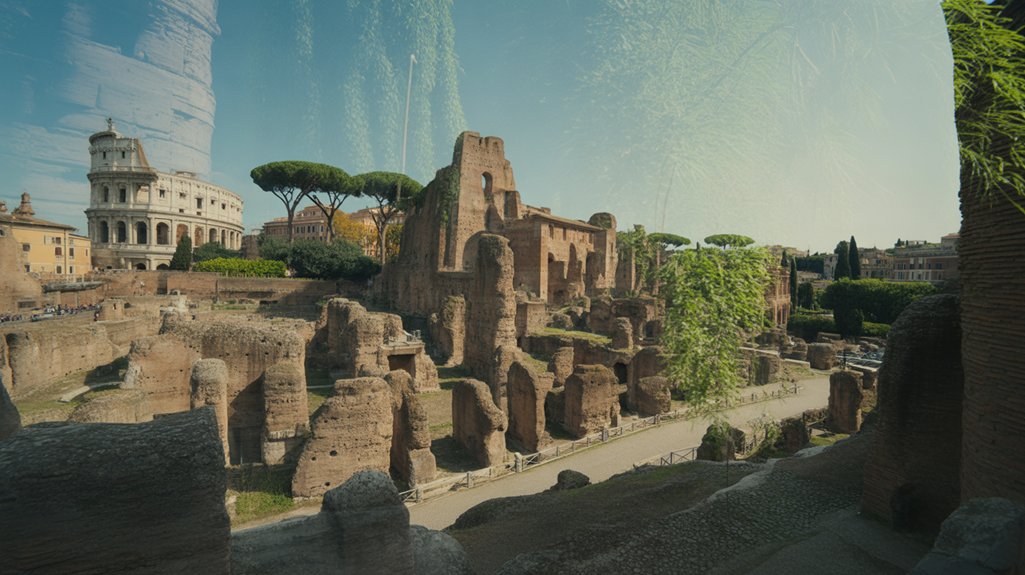
As you stand on Palatine Hill, you’ll be surrounded by ancient ruins that whisper stories of emperors and gladiators.
The sweeping panoramic views of Rome remind you of the city’s grandeur and historical significance. Here, the legends of Romulus and Remus come to life, deepening your connection to the heart of ancient Rome. Rome also reflects Italy’s cultural heritage through its enduring history, art, and traditions.
Ancient Ruins and Stories
Nestled among Rome’s most ancient landscapes, Palatine Hill pulses with the vibrant tales of its past.
As you explore this storied site, you’ll uncover the legendary birthplace of Romulus and Remus, the founders of Rome. The remnants of imperial palaces like the House of Augustus and the Flavian Palace reflect the opulence of a society captivated by gladiatorial combat.
Here, you can almost hear the echoes of past battles, as this hill once served as the cultural heart of gladiator traditions. Each stone you touch tells a story, connecting you to the grandeur of ancient Rome and its elite.
Palatine Hill isn’t just a site; it’s an immersive journey through time, where legends come alive.
Panoramic Views of Rome
While wandering through the storied pathways of Palatine Hill, you’ll be treated to stunning panoramic views that capture the essence of ancient Rome.
From this elevated perch, you can appreciate the historical significance of the Roman Forum and the Circus Maximus, sites that once hosted thrilling gladiatorial games.
As you explore the ruins of opulent palaces once occupied by emperors like Augustus and Tiberius, the grandeur of Rome’s elite during this vibrant era becomes vividly clear.
Imagine the epic battles and lavish spectacles as you absorb the view from above.
- Witness the birth of legends: Romulus and Remus.
- Reflect on ancient Roman architecture.
- Feel the pulse of historic spectacles.
- Experience the opulence of imperial gardens.
- Embrace the legacy of gladiatorial games.
Circus Maximus: Why It Was the Spot for Chariot Races?
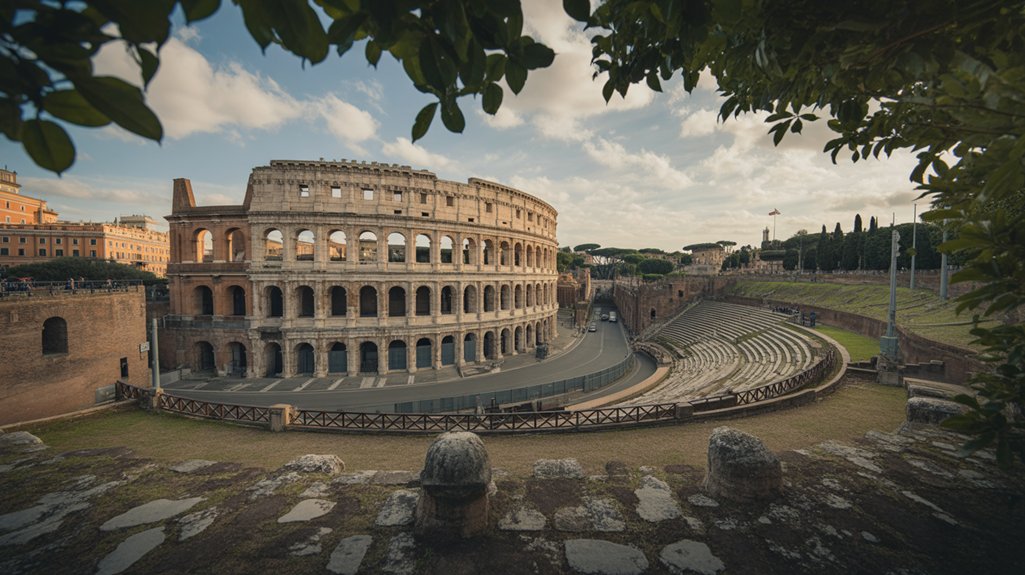
Circus Maximus stands out as the ultimate venue for chariot races in ancient Rome, attracting massive crowds of up to 250,000 spectators. Originally built in the 6th century BC, it stretched about 600 meters long and 150 meters wide, offering ample space for thrilling competitions.
The excitement peaked as teams of horses, known as factions, raced in vibrant colors, stirring fierce rivalries and passionate fan loyalty. Beyond the races, Circus Maximus served as a social hub where Romans gathered, fostering community spirit and shared experiences.
Today, as you explore its remnants, you can’t help but reflect on its historical significance—a crucial piece of Roman life that shaped entertainment and social interactions for centuries.
Arch of Constantine: A Monument to Victory and Gladiators
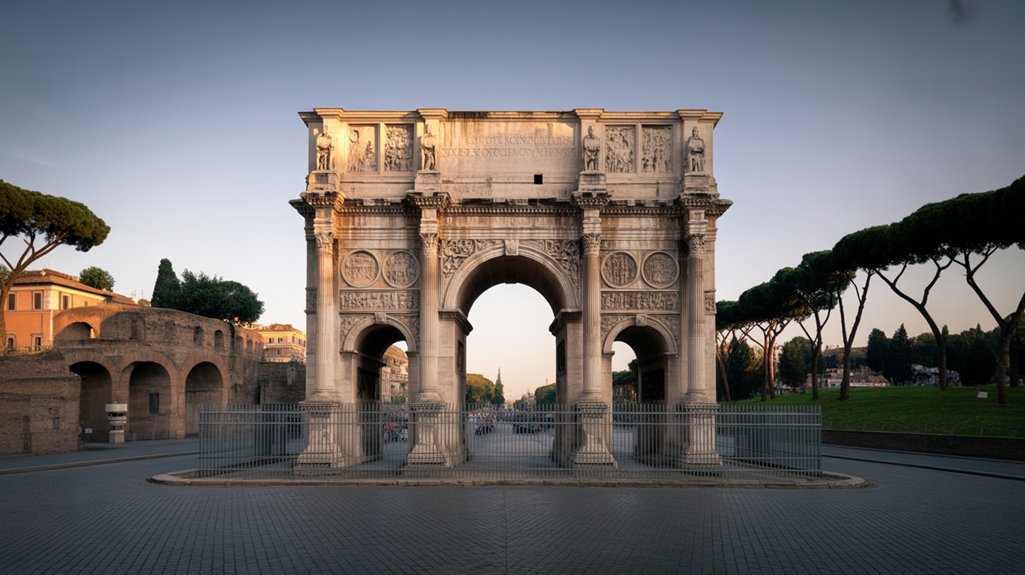
The Arch of Constantine stands as a powerful tribute to Roman achievement and the enduring legacy of its gladiatorial roots. Built in AD 315, this monumental arch commemorates Emperor Constantine’s victory at the Battle of Milvian Bridge. As you admire its 21-meter height, take note of the intricate reliefs celebrating Rome’s glory, including depictions of gladiatorial combat.
- The arch’s three impressive archways symbolize military triumphs.
- Sculptures from earlier monuments showcase artistic styles of the era.
- It connects ancient Rome’s rich history with gladiatorial valor.
- Positioned near the Colosseum, it offers breathtaking views of gladiator arenas.
- This monument encapsulates the social and cultural importance of gladiators in Roman society.
Capitoline Hill: Historical Hub With Stunning Views and Tales
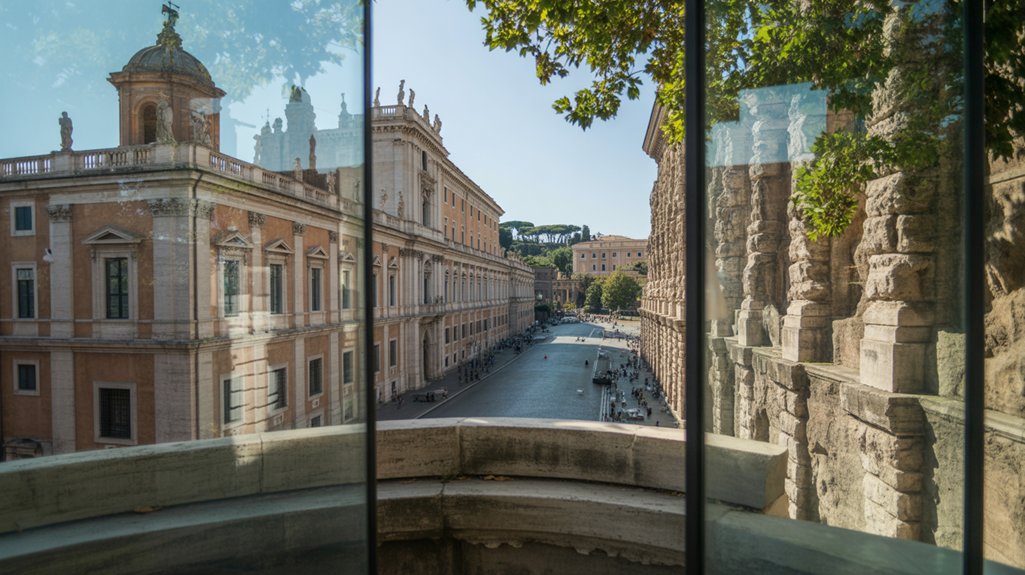
As you explore Rome’s storied landscape, Capitoline Hill stands out as a historical hub teeming with tales of glory and ambition. One of the seven hills, it serves as the city’s historic center, showcasing remarkable artistic and architectural heritage.
From here, you’ll enjoy breathtaking views of the Roman Forum and the Colosseum, ideal for grasping the significance of gladiatorial events. The hill is home to the Piazza del Campidoglio, designed by Michelangelo, and the Capitoline Museums, filled with ancient Roman artifacts.
Originally dedicated to Jupiter, the Temple of Jupiter Optimus Maximus was a critical site for Rome’s religious and political life. As a focal point for historic events, it’s an essential stop on your Gladiator Tour.
Discovering Rome’s Hidden Gladiatorial Gems
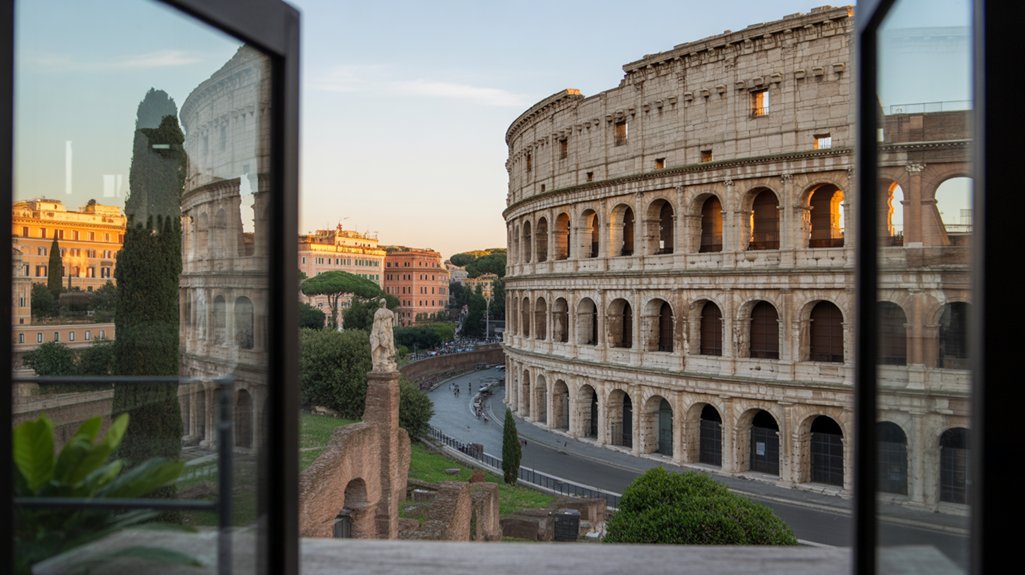
Amidst the grandeur of Rome, countless hidden gems await discovery, each offering a unique glimpse into the world of gladiators.
As you explore, keep an eye out for these significant sites:
- Colosseum: Stand in awe of the largest amphitheater, where epic battles thrilled thousands.
- Circus Maximus: Imagine the roar of crowds witnessing daring chariot races and gladiatorial shows.
- Capitol Hill: Reflect on the blend of power and spectacle at the center of public life.
- Roman Forum: Wander through ruins that once celebrated gladiatorial events, rich in cultural significance.
- Verona’s Arena: Appreciate the amphitheater’s transformation while honoring its gladiatorial past.
Each spot reveals a story, connecting you with the exhilarating legacy of Rome’s fierce warriors.
Frequently Asked Questions
What Are the 6 Top Sightseeings to Do in Rome?
You can’t miss the Colosseum, Roman Forum, Vatican City, Pantheon, Trevi Fountain, and Piazza Navona. Each site showcases Rome’s rich history, stunning architecture, and vibrant culture, making your visit unforgettable. Enjoy exploring!
Leave a Reply