
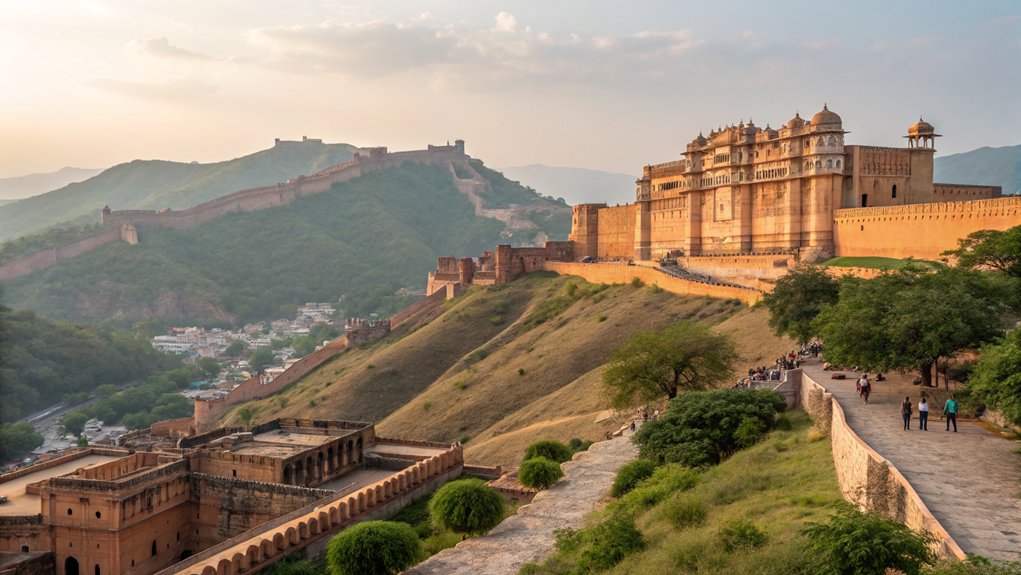
Planning your trip to Jaipur, India’s stunning Pink City, opens up a world of historical marvels and vibrant culture. You’ll uncover breathtaking architecture, savor authentic cuisine, and explore bustling markets filled with unique crafts. Each corner of Jaipur tells a story waiting to be experienced. But before you pack your bags, let’s navigate the essentials for a seamless adventure in this enchanting city. What should you know about getting there and where to stay?
Key Takeaways
- Ideal Travel Period: Visit Jaipur from November to February for pleasant weather and vibrant festivals, aligning with peak tourist season.
- Must-See Attractions: Explore iconic sites like Amber Fort, Hawa Mahal, and Jantar Mantar to experience Jaipur’s rich history.
- Cultural Experiences: Engage in local artisan workshops and visit colorful landmarks like the Patrika Gate to appreciate traditional craftsmanship and art.
- Accommodation Options: Choose from budget-friendly hostels, mid-range heritage hotels, or luxurious palaces to suit your preferences and budget.
- Dining Recommendations: Enjoy local cuisine at rooftop restaurants and cozy cafes like Tapri Central, offering a taste of authentic Rajasthani dishes.
How to Get to Jaipur: Your Travel Options
Getting to Jaipur is straightforward, thanks to a variety of travel options available to you.
You can land at Jaipur International Airport, just 13 kilometers from the city center, with plenty of domestic and international flights.
If you prefer rail travel, Jaipur Junction is a major hub along key routes like the Shatabdi Express from Delhi and the Rajdhani Express from Mumbai.
For those who enjoy road trips, a well-connected highway network links Jaipur to major North Indian cities, offering bus and private car services.
Once you’re in the city, hopping into an auto-rickshaw is a popular way to explore major attractions.
Just remember to book train tickets in advance during peak seasons to avoid any last-minute hassles!
Where to Stay: Top Accommodation Choices in Jaipur
With an array of accommodation choices in Jaipur, you’re sure to find the perfect spot for your stay, whether you’re on a budget or seeking luxury.
Budget travelers can opt for hostels like Zostel, where comfortable beds await. If you’re looking for something upscale, Rambagh Palace and Alila Fort Bishangarh promise opulence and service.
For a blend of heritage and comfort, consider medium-range hotels such as Umaid Bhawan Palace and Samode Haveli, conveniently located near key attractions.
To immerse yourself in local culture, traditional havelis like Alsisar Haveli showcase stunning décor and warm hospitality.
The Best Time to Visit Jaipur for an Unforgettable Experience
November through February offers the best time to visit Jaipur, ensuring you encounter the city’s vibrant culture while enjoying pleasant weather.
During these months, average temperatures range from 10°C to 25°C, making it perfect for sightseeing. You’ll find exploring iconic sites like Amer Fort and Hawa Mahal comfortable, without the sweltering heat that summer brings.
Keep in mind that the peak tourist season corresponds with this delightful winter weather, so it’s wise to book your accommodations in advance.
While the monsoon season from July to September offers lush scenery, heavy rains can disrupt your travel plans.
Must-See Attractions in Jaipur: A Quick Overview
When you visit Jaipur, you can’t miss the iconic historical landmarks that tell tales of its royal past.
From the stunning architecture of Amber Fort to the intricate designs of Hawa Mahal, each site offers a unique glimpse into the city’s rich culture.
Get ready for unforgettable experiences that combine breathtaking beauty and deep cultural significance.
Iconic Historical Landmarks
Jaipur, known as the Pink City, is home to five iconic historical landmarks every traveler must see.
Start your adventure at Amber Fort, where stunning architecture and panoramic views await you.
Don’t miss the enchanting Hawa Mahal, the “Palace of Winds,” with its 953 windows designed for royal women to discreetly observe street festivities.
Next, explore Jantar Mantar, a UNESCO World Heritage Site that highlights India’s 18th-century advancements in astronomy.
The City Palace, still the royal family’s residence, invites you to roam through its courtyards and museums, especially the exquisite Chandra Mahal.
Finally, make your way to Nahargarh Fort for breathtaking views of the city and an engaging light show that brings its history to life.
Stunning Architectural Gems
As you explore the vibrant streets of the Pink City, you’ll discover stunning architectural gems that showcase Jaipur’s rich heritage and creativity. Don’t miss the majestic Amber Fort, where attractions like Sheesh Mahal reflect the grandeur of Rajputana. The iconic Hawa Mahal, with its 953 windows, allows royal women to watch street festivities discreetly.
Jantar Mantar, a UNESCO World Heritage site, displays a remarkable collection of astronomical instruments. Nahargarh Fort provides breathtaking panoramic views coupled with enchanting light shows. Finally, the Albert Hall Museum boasts Indo-Saracenic architecture and a vast array of artifacts highlighting the region’s heritage.
| Attraction | Highlights |
|---|---|
| Amber Fort | Sheesh Mahal, Diwan-i-Khas |
| Hawa Mahal | 953 windows, royal women’s viewing |
| Jantar Mantar | 19 astronomical instruments |
| Nahargarh Fort | Panoramic views, historical light shows |
| Albert Hall | Indo-Saracenic design, diverse artifacts |
Cultural Experiences Await
Immersing yourself in Jaipur’s vibrant culture is as enthralling as admiring its stunning architecture.
You’ll discover a tapestry of historical and cultural experiences that paint a vivid picture of the Pink City.
Here are four must-see attractions that offer a taste of Jaipur’s rich heritage:
- Amber Fort: Explore this UNESCO World Heritage site, where the mesmerizing Sheesh Mahal awaits, just 11 km from the city center.
- Hawa Mahal: Marvel at the intricate façade of the Palace of Winds, featuring 953 windows designed for royal women.
- Jantar Mantar: Visit this astronomical marvel, home to the world’s largest stone sundial.
- Nahargarh Fort: Enjoy panoramic views and stunning light shows that tell the fort’s historical tales.
Discovering Amer Fort: Architectural Marvels & Historical Insights
When you step into Amer Fort, you’re not just entering a monumental structure; you’re discovering a blend of historical richness and architectural brilliance.
Located about 11 kilometers from Jaipur, this UNESCO World Heritage site showcases an impressive fusion of Hindu and Muslim styles. As you explore, you’ll be captivated by the Sheesh Mahal, with its intricate mirror work, and the regal designs of the Diwan-i-Khas.
Built in the late 16th century by Raja Man Singh, this fort served as the primary residence of Rajput rulers. Don’t miss the evening light and sound shows that bring to life the fort’s historical stories, and be sure to stroll through the gardens and terraces for stunning views of Maota Lake and the surrounding landscape.
Exploring Jaigarh Fort: The Guardian of Jaipur’s Heritage
How does a visit to Jaigarh Fort enhance your understanding of Jaipur’s royal history? This majestic fort, built in 1726 on the Aravalli hills, offers insights into the city’s rich heritage.
Here’s what you can expect:
- Military Architecture: Explore impressive fortifications that showcase the strategic military engineering of the time.
- Jaivana Cannon: Get close to the world’s largest cannon on wheels, a 50-ton marvel used for defense.
- Expansive Grounds: Wander through sprawling gardens and palaces that reveal the opulence of Rajputana royalty.
- Panoramic Views: Capture stunning vistas of Pink City and Amer Fort, perfect for photography and appreciation of the landscape.
A visit here deepens your connection to Jaipur’s royal legacy!
Relaxing at Jal Mahal: The Palace in the Lake
Nestled in the tranquil waters of Man Sagar Lake, Jal Mahal offers a serene escape from the bustling streets of Jaipur. Known as the “Water Palace,” this stunning structure was originally built as a royal summer retreat.
As you admire the unique blend of Rajput and Mughal architecture, take in the beautiful red sandstone and intricate latticework that define the palace’s charm.
Although you can’t enter Jal Mahal, the lakeside view is particularly breathtaking at sunrise and sunset. Keep your camera ready, as the surrounding lake attracts a diverse variety of migratory birds, perfect for birdwatching or nature photography.
To enhance your sightseeing experience, combine your visit with Amer Fort, just 11 km away.
What Makes Jantar Mantar a Must-See?
If you’re fascinated by astronomy and history, Jantar Mantar is a must-see attraction in Jaipur. This UNESCO World Heritage site, built in 1734 by Maharaja Sawai Jai Singh II, showcases remarkable scientific advancements of 18th-century India.
Here’s why you shouldn’t miss it:
- Architectural Wonder: Explore 19 unique astronomical instruments that reflect the era’s architectural brilliance.
- Samrat Yantra: Marvel at the largest sundial, measuring time with an impressive accuracy of two seconds.
- Celestial Observations: Discover the Jai Prakash Yantra, designed for measuring altitudes and azimuths of celestial bodies.
- Historical Significance: Experience a pivotal site for astronomical studies that played an essential role in India’s scientific heritage.
Jantar Mantar truly immerses you in the marvels of ancient science.
Admiring the Beauty of Hawa Mahal
Hawa Mahal, often referred to as the “Palace of Winds,” captivates visitors with its stunning pink sandstone façade and intricate latticework.
Built in 1799 by Maharaja Sawai Pratap Singh, this architectural gem was designed by Lal Chand Ustad to let royal women observe street festivities while preserving their privacy.
With 953 small windows, or “jharokhas,” it provides excellent ventilation and a cooling effect during scorching summers.
As part of Jaipur’s charm, Hawa Mahal symbolizes hospitality towards royal guests.
Don’t miss the beautiful views of this palace from the nearby Wind View Cafe—a haven for photography enthusiasts.
For around 200 Rupees, the entry fee makes exploring this piece of Jaipur’s rich architectural heritage incredibly accessible.
Morning Strolls at Patrika Gate: A Colorful Experience
A morning stroll at Patrika Gate offers a vibrant start to your day in Jaipur. This stunning entryway into Jawahar Circle captivates with its pastel colors and intricate designs, creating the perfect backdrop for photos.
As you wander through, you’ll appreciate:
- Cultural Heritage: The murals showcase local art forms reflecting Jaipur’s rich tradition.
- Natural Light: Morning visits allow you to soak in the colorful façade without the crowds.
- Lush Greenery: The nearby Jawahar Circle Garden invites you to explore its serene walking trails.
- Free Access: Enjoy this beautiful site without worrying about entry fees.
Immerse yourself in the vibrancy of Patrika Gate and set an upbeat tone for your day in Jaipur!
Explore the Albert Hall Museum: A Cultural Haven
Discover the enchanting world of history and art at the Albert Hall Museum, the oldest museum in Rajasthan, established in 1880.
This architectural gem, designed in the Indo-Saracenic style, boasts stunning domes and intricate details that reflect Jaipur’s rich heritage. As you explore, you’ll encounter a fascinating collection of artifacts, including rare textiles, vibrant paintings, and impressive weaponry.
One highlight is the mummy of a royal Egyptian, setting this museum apart as a unique attraction. For just about 100 Rupees, you gain access to a diverse set of exhibits.
Nestled within the serene surroundings of Ram Niwas Garden, the museum provides a peaceful atmosphere, perfect for delving into the cultural treasures of India.
Don’t miss this unforgettable experience!
Spiritual Stops in Jaipur: Birla Mandir and Galta Ji Temple
While exploring Jaipur, you’ll want to visit the serene Birla Mandir and the ancient Galta Ji Temple, two spiritual gems that offer a tranquil escape from the city’s hustle.
Here’s what you shouldn’t miss at these locations:
- Birla Mandir: Admire the intricate marble carvings dedicated to Lord Vishnu and Goddess Lakshmi, and soak in the peaceful atmosphere.
- Galta Ji Temple: Immerse yourself in the history of this ancient Hindu pilgrimage site, known for its sacred monkey residents.
- Stunning Views: Capture breathtaking pictures of the landscape, especially during sunrise or sunset.
- Natural Water Tanks: Experience the serene environment as you explore the beautiful water tanks surrounded by hills.
These stops will enrich your spiritual journey in Jaipur.
Tailoring Your Experience: Custom Clothing in Jaipur
When you visit Jaipur, you’ll find a variety of local fabrics just waiting to be turned into your own custom clothing.
The tailoring process is straightforward and personalized, with skilled artisans ready to help you choose designs that fit your style.
Plus, the convenience of timely delivery right to your hotel means you can enjoy your bespoke outfits without any hassle.
Local Fabric Options Available
Jaipur’s vibrant fabric scene offers a feast for the senses, showcasing traditional materials that reflect the city’s rich cultural tapestry.
You’ll find a variety of local fabric options that make perfect additions to your wardrobe. Consider these must-try textiles:
- Block-Printed Cotton – Lightweight and breathable, ideal for hot climates.
- Silk – Luxurious and shimmering, perfect for special occasions or gifting.
- Brocade – Ornate and heavy, designed for stunning statement pieces.
- Rajputi Sarees & Leheriya – Both intricately crafted with beautiful patterns, ensuring unique souvenirs.
With custom tailoring available, skilled artisans can create garments based on your preferences.
Expect quick turnaround times and don’t forget to negotiate prices for the best deals on your fashion finds!
Tailoring Process Overview
As you explore the tailoring opportunities in Jaipur, you’ll quickly realize that the process is both exciting and tailored to your specific needs.
You’ll begin by selecting a design that resonates with you, followed by choosing vibrant fabrics such as block prints or traditional Rajasthani textiles.
Once you’ve made your selections, skilled tailors will take your measurements, ensuring every detail is just right for a perfect fit.
Don’t hesitate to ask for their guidance—these professionals know their craft.
Afterward, you may schedule a fitting to see how your custom garment is shaping up.
This hands-on experience not only reflects Jaipur’s rich cultural heritage but also results in a unique piece that you can cherish long after your trip.
Timely Delivery Service
After selecting your designs and getting fitted, you’ll probably be excited to receive your custom creations without delay. In Jaipur, many tailoring shops promise timely delivery, ensuring you can enjoy your new outfits during your visit.
Here’s what to expect:
- Quick Turnaround: Most garments are delivered within a day or two.
- Quality Assurance: Local ateliers use high-quality materials for an exceptional finish.
- Customized Fit: Tailors assist with measurements, ensuring your items fit perfectly.
- Direct Delivery: Many shops will deliver your finished pieces straight to your hotel.
With a mix of traditional Rajasthani styles and modern trends, you’ll find unique pieces that embody Jaipur’s rich culture, making the wait well worth it!
Top Restaurants for Authentic Jaipur Cuisine
For an unforgettable culinary experience, you can’t miss the top restaurants serving authentic Jaipur cuisine.
Start your journey at Chokhi Dhani, a cultural village venue that immerses you in Rajasthani tradition, complete with folk music and dance.
If you’re after local flavors, make your way to Niros for their famous Pindi Channa, beloved by both locals and visitors.
For something more international with a beautiful setting, try Caffé Palladio, offering fresh salads and pastas at reasonable prices.
Enjoy a meal with a breathtaking view of the Hawa Mahal at Peacock Rooftop Restaurant, which serves classic Indian and Rajasthani dishes.
Finish your day at Tapri Central, a cozy spot famous for its innovative teas and vegetarian snacks.
Shopping Local: Souvenirs and Crafts to Take Home
When you’re in Jaipur, make sure to score some traditional textiles and handcrafted jewelry to take home.
The vibrant fabrics and intricate designs not only reflect the city’s culture but also make for stunning souvenirs.
You won’t be able to resist the unique pieces you’ll find in local markets and boutiques!
Traditional Textiles and Fabrics
Colorful fabrics and intricate patterns define Jaipur’s vibrant textile scene, making it a must-explore destination for shoppers.
Here, you can find a treasure trove of traditional textiles that reflect Rajasthan’s rich heritage.
When you shop, don’t miss these highlights:
- Block-Printed Fabrics: Famous for their unique designs and bright hues, perfect for souvenirs.
- Handwoven Sarees and Dupattas: Crafted using age-old techniques, these pieces are elegant and culturally significant.
- Turbans: A symbol of local tradition, available in various patterns and colors.
- Blue Pottery: Unique to Jaipur, these decorative items showcase exquisite craftsmanship.
Explore local markets like Bapu Bazaar and Johari Bazaar to discover these exquisite offerings, often at friendly prices.
Handcrafted Jewelry and Accessories
As you immerse yourself in Jaipur’s vibrant culture, don’t overlook the city’s stunning handcrafted jewelry and accessories. Renowned for exquisite Kundan and Meena work, Jaipur’s jewelry showcases intricate gemstone settings reflecting its rich heritage.
Head to local markets like Johari Bazaar and Bapu Bazaar, where you can find a wide range of beautiful pieces. Don’t forget to bargain—start negotiations at about 40% of the initial price!
While exploring, check out block-printed textiles, blue pottery, and handcrafted leather goods for unique souvenirs. Visit artisan workshops to witness the jewelry-making process firsthand and even customize your own piece.
Most shops provide certification of authenticity for gemstones, ensuring you take home genuine treasures that embody Jaipur’s craftsmanship.
Frequently Asked Questions
What Is the Best Way to Get Around Jaipur?
To get around Jaipur, you can use auto-rickshaws, taxis, or app-based services like Uber. Renting a bike or walking also offers a unique way to explore the city’s sights and vibrant streets.
Are There Any Cultural Etiquette Tips for Visiting Jaipur?
When visiting Jaipur, respect local customs by dressing modestly, using your right hand for giving or receiving, and greeting with a polite “Namaste.” It’s also courteous to ask permission before photographing people or private property.
How Safe Is It to Travel in Jaipur?
Traveling in Jaipur is generally safe, but you should stay vigilant and be aware of your surroundings. Avoid isolated areas at night, use trusted transportation, and respect local customs to enhance your experience.
What Are Some Local Festivals Celebrated in Jaipur?
You’ll enjoy vibrant festivals in Jaipur like Diwali, when lights decorate the city, Holi with its colorful celebrations, and Teej, celebrating the monsoon. Each offers unique experiences and a glimpse into local culture you won’t forget.
Where Can I Find Guided Tours in Jaipur?
You can find guided tours in Jaipur through popular travel websites, local tour agencies, or mobile apps. Many hotels also offer packages. Don’t hesitate to ask locals for recommendations—they often know the best options!
Related posts:

Thailand Travel Itinerary: Bangkok to Islands Paradise

Namibia Travel Itinerary: Deserts and Wildlife Safari
Eastern Turkey Travel Itinerary: Ancient Routes and Ruins

12 Beautiful Snowy Places for a Winter Escape

Taiwan Travel Itinerary Night Spots: After Dark Guide

Leave a Reply