
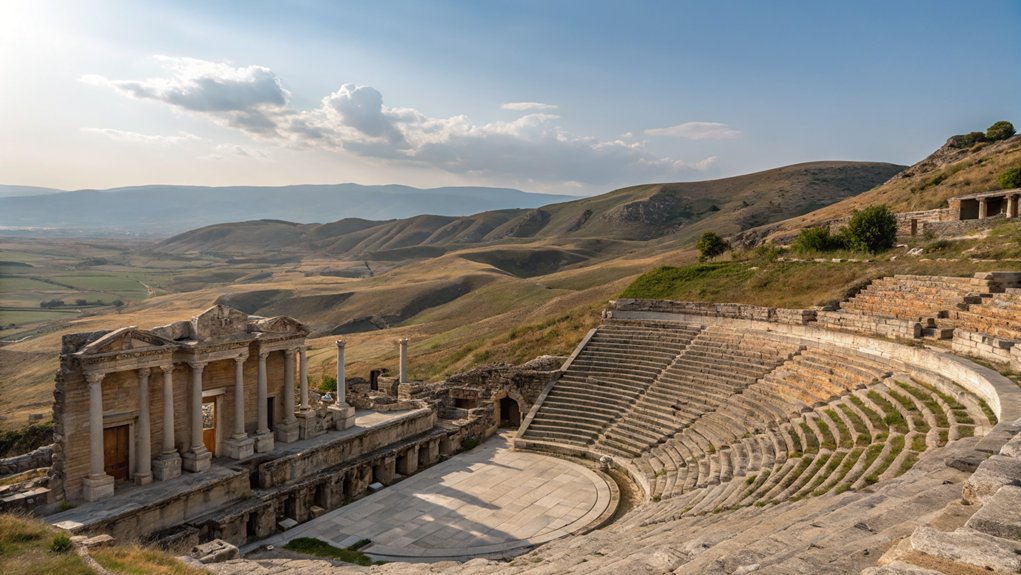
If you’re looking to explore a region steeped in history, Eastern Turkey is a must-visit. You’ll traverse ancient sites like Göbekli Tepe and the Ani Ruins, each with stories waiting to be uncovered. Along the way, you’ll taste local dishes that showcase the vibrant culture. As you plan your journey, consider what landmarks and experiences will leave a lasting impression. Your adventure into this enchanting part of the world is just beginning.
Key Takeaways
- Begin your journey at Göbekli Tepe, exploring the oldest temple complex, and discover its profound historical significance.
- Visit the Ani Ruins to admire medieval Armenian architecture and the Church of St. Gregory, a UNESCO Heritage site.
- Explore Abraham’s Cave and Balıklıgöl in Urfa, significant religious sites surrounded by serene gardens.
- Discover Harran’s beehive-shaped houses, reflecting ancient urban settlements and ties to biblical narratives.
- End your trip at Mount Nemrut, witnessing colossal statues and King Antiochus I’s grand burial site atop scenic vistas.
Explore Eastern Turkey’s Cultural Heritage
When you explore Eastern Turkey, you’ll discover a rich tapestry of cultural heritage that dates back thousands of years.
Begin at Göbekli Tepe, the world’s oldest temple complex, where ancient rituals hint at early human civilization’s beliefs. Move on to the Ani Ruins in Kars to admire stunning medieval Armenian architecture recognized by UNESCO.
In Sanliurfa, visit Abraham’s Cave and Balıklıgöl, sites tied to the biblical Prophet Abraham and significant for both culture and spirituality.
Wander through the ancient city of Mardin, with its distinctive honey-colored stone buildings reflecting Kurdish heritage.
Don’t miss Harran’s beehive-shaped houses, which echo early urban settlement and its connections to both Abraham and Mesopotamian history, showcasing a vibrant legacy waiting for you to explore.
Essential Packing List for Your Eastern Turkey Adventure
When packing for your adventure in Eastern Turkey, you’ll want to take into account the variable weather and the need for comfortable footwear.
Make sure to bring clothing you can layer, as temperatures can shift drastically from day to night.
Also, keep cultural respect in mind by bringing essentials like modest clothing for visiting religious sites.
Weather Considerations
As you plan your adventure in Eastern Turkey, considering the weather is essential for a comfortable experience. This region features a continental climate with hot, dry summers and cold, snowy winters. Before packing, check the seasonal temperatures to guarantee you’re prepared.
- In summer, opt for lightweight, breathable clothing, along with sun protection like hats and sunscreen.
- During spring and fall, bring light layers to adjust to the mild temperatures ranging from 15°C to 25°C (59°F to 77°F).
- If you’re visiting in winter, especially in mountainous areas, pack thermal clothing, a warm jacket, and waterproof footwear, as conditions can be harsh with freezing temperatures.
Being prepared will enhance your exploration of Eastern Turkey’s stunning ancient sites.
Comfortable Footwear
Exploring the breathtaking sites of Eastern Turkey requires more than just a keen sense of adventure; it demands the right footwear to navigate the challenging terrain.
You’ll be walking on uneven ground at archaeological sites like Göbekli Tepe and the Ani Ruins, where rocky and steep paths abound. Sturdy walking shoes or hiking boots with a solid grip are a must, especially when tackling rugged hills at Mount Nemrut and the burial caves of Perre.
Don’t forget moisture-wicking socks to keep your feet dry during long hikes in warmer weather. For city explorations in Mardin and Sanliurfa, breathable, lightweight shoes are ideal for the cobblestone streets.
Cultural Respect Essentials
Respecting local customs in Eastern Turkey is essential for a rewarding travel experience. To guarantee you navigate cultural expectations gracefully, pack the following items:
- Modest clothing that covers your shoulders and knees, especially for visits to rural areas and religious sites.
- A light scarf or shawl, handy for head coverage in mosques and warmth during cooler evenings.
- A travel guidebook or mobile app to deepen your understanding of Kurdish customs and etiquette.
Don’t forget reusable water bottles to stay hydrated while reducing plastic waste, as access to clean drinking water can be limited.
Also, bring sunscreen and hats to protect yourself from the strong sun while exploring ancient wonders like Göbekli Tepe and Mount Nemrut.
The Route: Mapping Your Journey Through Ancient Landscapes
As you plan your journey through Eastern Turkey, you’ll want to hit essential stops that showcase its rich history.
From the mesmerizing landscapes of Mount Nemrut to the ancient city walls of Diyarbakir, each cultural highlight offers a unique glimpse into the past.
To guarantee a smooth trip, follow these tips for seamless navigation along your route.
Essential Stops Along Route
While journeying through Eastern Turkey, you’ll uncover a series of remarkable ancient sites that tell stories of civilization’s early stages.
Your adventure will take you to places where history comes alive, leaving you in awe of humanity’s past achievements.
- Göbekli Tepe: The oldest known temple complex, over 11,000 years old, reveals insights into early human settlements.
- Ani Ruins: Near Kars, these medieval churches showcase exquisite architecture and the region’s rich historical narrative.
- Mount Nemrut: A UNESCO World Heritage site, with colossal statues and ancient burial mounds dating back to the 1st century BC, lets you glimpse into the royal tombs of King Antiochus I.
These essential stops are fundamental to your journey through Eastern Turkey’s rich tapestry of history.
Cultural Highlights of Itinerary
Starting on this journey through Eastern Turkey immerses you in a vibrant tapestry of culture and history, where each stop uncovers the stories of civilizations long past.
Your adventure begins at Göbekli Tepe, the world’s oldest known temple complex, astonishingly over 11,000 years old. Next, you’ll wander through Harran, famous for its iconic beehive houses and as the birthplace of Abraham.
At Mount Nemrut, enjoy a sunrise picnic surrounded by colossal statues of ancient gods, a striking symbol of the region’s heritage. Explore the medieval ruins of Yeni Kale and ancient burial caves in Perre, historical sites dating back to 162 BC.
Finally, a boat tour on the Euphrates River reveals the submerged ruins of Old Halfeti, completing your cultural journey.
Tips for Seamless Navigation
Traversing the breathtaking landscapes of Eastern Turkey requires a bit of planning, but with the right approach, you can seamlessly connect the region’s rich historical sites.
Start by mapping your journey through major access points like Adana and Erzurum, ensuring your itinerary covers key destinations. Utilize local public transportation, especially the reliable VIP coach network, to facilitate smooth travel between towns.
- Incorporate guided tours for expert insights into local history and cultural significance.
- Prioritize planning, particularly for remote areas with limited services, allowing you to explore freely.
- Embrace flexibility in your schedule to discover the rich archaeological landscapes of Eastern Anatolia at your own pace.
With these tips, your adventure awaits!
Day 1: Starting in Gaziantep – A Culinary and Historical Experience
As you commence your journey in Gaziantep, prepare to immerse yourself in a culinary and historical treasure trove.
Start your day with a feast of mouth-watering kebabs and the city’s famous baklava, truly a gastronomic delight.
Afterwards, head to the Gaziantep Zeugma Mosaic Museum, where you’ll marvel at intricate mosaics that reflect the artistry of ancient Rome.
Don’t miss the historic Gaziantep Castle, offering stunning panoramic views and showcasing defensive architecture that tells tales of the past.
Stroll through the lively Elmacı Pazarı, where you can soak in the vibrant local culture while browsing spices, fresh produce, and traditional crafts.
Every corner of Gaziantep invites you to explore its rich history and culinary wonders.
Day 2: Unforgettable Experiences in Şanlıurfa, Eastern Turkey
After indulging in the culinary delights of Gaziantep, you’ll head to Şanlıurfa, a city steeped in history and spiritual significance.
Your day begins at Göbekli Tepe, the world’s oldest temple, where you’ll marvel at structures dating back to around 9600 BCE.
Next, enjoy a serene lunch by Abraham’s Pool (Balıklıgöl), believed to be the birthplace of Prophet Abraham, surrounded by beautiful gardens.
Your itinerary also includes:
- A tour of the Great Mosque of Şanlıurfa, showcasing stunning Islamic architecture.
- A visit to the ancient beehive-shaped houses in Harran, linked to Abraham’s life.
- Insights into the region’s ancient history and its pivotal role in early human civilization.
You’ll leave with unforgettable memories.
The Mystique of Göbekli Tepe and Harran
What secrets does the ancient site of Göbekli Tepe hold? As the world’s oldest known temple complex, dating back to around 9600 BCE, it predates Stonehenge by over 6,000 years.
You’ll be awed by the massive stone pillars arranged in circular enclosures, intricately carved with animals and mysterious symbols. This site served as a gathering place for hunter-gatherers, reshaping how we comprehend the shift from nomadic life to settled farming.
Just a short distance away, visit Harran, known for its unique beehive-shaped houses. This ancient city was a hub of trade and early scholarship, mentioned in biblical texts, enriching its cultural significance.
Explore these remarkable sites that reveal the ancient mysteries of southeastern Turkey.
Day 4: Sunrise Magic at Mount Nemrut
Having explored the ancient wonders of Göbekli Tepe and Harran, your journey now leads you to the majestic peaks of Mount Nemrut. This UNESCO World Heritage site, renowned for its colossal statues and the ancient tomb of King Antiochus I, awaits your presence at sunrise.
As the first rays of light illuminate the stone heads of gods like Zeus and Apollo, you’ll witness a breathtaking spectacle that photographers adore.
Before you set off, keep in mind:
- The summit stands at 2,134 meters, offering panoramic views of Eastern Turkey.
- It gets cooler at sunrise, so wear warm clothing to stay comfortable.
- Organized tours from nearby towns will guide you to this magical destination.
Day 5: Discovering Mardin’s Architectural Wonders
Mardin greets you with its stunning honey-colored stone architecture, an enchanting blend of Roman, Byzantine, and Islamic influences nestled within its narrow alleyways. As you wander the old town perched on a hill, breathtaking views of the Mesopotamian plains unfold before your eyes.
You can’t miss the remarkable 14th-century Deyruzafnan Monastery and the 19th-century Great Mosque, both showcasing the city’s rich historical and architectural heritage. Mardin’s unique beehive houses, crafted from local limestone, feature domed roofs that reflect local traditions and lifestyles.
The city’s cultural diversity enriches your experience, evident in its architecture, languages, and customs. Mardin isn’t just a feast for the eyes; it’s also a vibrant center for exploring Kurdish heritage and history.
Don’t Miss Lake Van’s Natural Beauty
After soaking in the architectural wonders of Mardin, head towards Lake Van, a stunning gem that boasts the largest body of water in Turkey.
You’ll be captivated by its striking turquoise waters and unique alkaline composition, home to the rare Van fish. The lake’s surrounding landscape offers dramatic contrasts and breathtaking views.
- Explore mountain vistas and ancient Armenian churches, like Akdamar Church, adorned with exquisite carvings.
- Stroll along the salt flats and lush hills that frame the lake, immersing yourself in its rich biodiversity.
- Visit during spring or early fall to experience the mild weather and vibrant wildflowers.
You won’t want to miss this natural spectacle that beautifully captures the essence of eastern Turkey.
Day 7: Kars City Exploration and Ani Ruins
As you journey into Kars, you’ll discover a city steeped in history, where each corner reveals architectural gems and tales of bygone empires.
Begin your exploration at Kars Castle, a fortress that highlights the city’s strategic role, then stroll through its charming streets adorned with diverse architectural styles influenced by various cultures.
Next, venture to the iconic Ani Ruins, a UNESCO World Heritage site. Once a bustling medieval hub, it boasts remarkable structures like the Church of St. Gregory and the Cathedral of Ani.
The breathtaking views overlooking the Arpacay River will take your breath away, providing a backdrop to the rich trade history of this area.
Don’t forget to savor local flavors, including the famous Kars gruyere cheese.
Explore Mount Ararat: An Adventure Awaits
Whether you’re an avid climber or a history buff, exploring Mount Ararat promises an unforgettable adventure. At 5,137 meters, it’s Turkey’s highest peak, looming majestically near the borders of Iran and Armenia. This dormant stratovolcano is shrouded in glaciers and legends, such as the tale of Noah’s Ark, and serves as a national symbol for Turks.
Prepare for an extraordinary experience with:
- Guided tours required for safety and environmental protection
- Stunning landscapes that enthrall outdoor enthusiasts
- Nearby historical sites like Ishak Pasha Palace, showcasing rich architectural heritage
Grab your hiking boots, enjoy breathtaking views, and immerse yourself in the region’s cultural significance while conquering this iconic mountain!
Uncovering Akdamar Church’s Rich Heritage at Lake Van
Nestled on Akdamar Island in the mesmerizing Lake Van, Akdamar Church stands as a stunning tribute to Armenia’s rich heritage. Built in the 10th century AD, this remarkable site showcases intricate medieval architecture and detailed relief sculptures.
Dedicated to the Virgin Mary, the church’s stunning frescoes vividly depict biblical scenes, offering a glimpse into Armenian artistry and religious devotion.
You can reach Akdamar Island with a short boat ride from Gevaş, where you’ll be treated to breathtaking views of the lake and surrounding mountains.
The church complex, with its restored bell tower and courtyard, is a UNESCO Tentative List site, highlighting its cultural importance and historical significance in the region’s rich tapestry.
Delightful Local Cuisine: What to Eat in Eastern Turkey
Exploring Eastern Turkey isn’t complete without savoring its delightful local cuisine, which brims with flavors and traditions.
You’ll discover a rich culinary heritage that features distinctive dishes, each telling its own story. Be sure to try:
- Urfa Kebab: This spicy, tender kebab will tantalize your taste buds.
- Manti: These Turkish dumplings filled with spiced meat capture the essence of local flavors.
- Künefe: Indulge in this sweet cheese pastry soaked in syrup for a perfect finish.
Fresh, local ingredients, including herbs, spices, and yogurt, elevate every meal.
Pair your dishes with traditional breads like pide or lavash, enhancing your dining experience.
The culinary delights of Eastern Turkey promise a memorable taste journey you won’t want to miss!
Planning Your Private Tour: Maximizing Your Experience
To truly maximize your experience in Eastern Turkey, consider planning a private tour that caters specifically to your preferences and interests. Early planning’s essential, especially for popular locations like Ani Ruins and Mount Ararat, to secure accommodations and streamline logistics. Companies like Experience Anatolia Tours offer knowledgeable guides, enhancing your understanding of the region’s rich cultural history. Private transport allows you to navigate complex routes efficiently, reducing travel time while increasing the sights you can explore. Combining multiple destinations creates a more enriching experience.
| Focus Area | Benefits | Recommendations |
|---|---|---|
| Custom Itinerary | Tailored to your interests | Include historical sites |
| Experienced Guides | In-depth knowledge | Choose local specialists |
| Efficient Transport | Maximize time and sights | Opt for private vehicles |
Frequently Asked Questions
Where to Go in Eastern Turkey?
You should explore Göbekli Tepe for its ancient temple, the Ani Ruins for medieval architecture, Mount Nemrut for breathtaking views, Harran for cultural history, and Mardin for its stunning architecture and vibrant heritage.
Related posts:

Mallorca Travel Itinerary: Balearic Island Perfection

Solo Travel in Nepal: Mountains and Culture

10 Relaxing Things to Do in Fort Worth for a Serene Escape

Solo Travel Trips for Women With Safe Destinations

Bangkok Thailand Travel Itinerary: Temples and Markets

Leave a Reply