
Planning a trip to South Korea requires careful thought and organization. You’ll want to contemplate the best time for your visit, the must-see cities, and how to navigate them efficiently. From bustling streets in Seoul to serene landscapes in Gyeongju, there’s much to explore. But before you set off, let’s break down how to optimize your journey and guarantee you experience the country’s vibrant culture and history seamlessly.
Key Takeaways
- Plan your trip during spring or autumn for optimal weather, vibrant foliage, or cherry blossoms.
- A two-week stay offers a thorough experience; consider a 10-day itinerary for key highlights.
- Utilize KTX trains for quick travel between major cities like Seoul and Busan.
- Explore diverse accommodations, from budget hostels to luxurious hotels, catering to every travel style.
- Don’t miss must-try dishes like Korean BBQ and bibimbap while experiencing cultural sites like Gyeongbokgung Palace.
When Is the Best Time to Visit South Korea?
When’s the best time to explore South Korea? You’ll want to plan your visit during the spring or autumn for the most stunning experiences.
Spring, from April to June, brings cherry blossoms and various cultural festivals that paint the landscape with beauty and excitement.
Meanwhile, autumn, from September to November, showcases vibrant foliage and harvest festivals, creating a picturesque setting.
Summer, with its heat and humidity, can be uncomfortable for outdoor adventures, while winter’s chilly temperatures in December through February may deter some travelers.
If you time your trip around seasonal activities—whether it’s flower festivals in spring or foliage tours in autumn—you’ll enhance your Korean travel experience considerably.
Suggested Travel Duration for First-Time Visitors
Having chosen the perfect time to visit South Korea, you might wonder how long you should stay to really soak it all in. For a thorough experience, a two-week stay is ideal, letting you explore cities and attractions without feeling rushed.
If you’re short on time, a 10-day itinerary can still cover key highlights. Here’s a suggested breakdown for first-time visitors:
- 3-5 days in Seoul for vibrant culture and modern attractions
- 1-2 days in Gyeongju to explore rich heritage and history
- 2-3 days in Busan for beach relaxation and local cuisine
- A day trip to Incheon for a taste of coastal charm
- Flexibility to discover hidden gems throughout your journey
Embrace each moment!
Essential Transportation Options Within South Korea
Getting around South Korea is a breeze, thanks to its extensive and efficient public transportation system. You’ll find subways, buses, and high-speed KTX trains linking major cities like Seoul and Busan. The KTX train is a fantastic option, cutting travel time from Seoul to Busan to just 2.5 hours.
To make your journey smoother, grab a T-money card at a convenience store; it lets you pay seamlessly for buses and subways across the country. Don’t forget to download KakaoMap, a helpful app that provides accurate routes and real-time transit updates.
While taxis are available, they can be pricier than public transport. Keep in mind that ride-sharing services like Uber aren’t operational in South Korea, so stick to public options.
Navigating Cities: Public Transport Tips
Getting around South Korea’s major cities is a breeze, thanks to the efficient subway and bus systems.
You’ll want to tap into the KakaoMap app for real-time information on routes and schedules, making your journeys smooth.
Plus, using a T-money card will simplify your payments, letting you focus on enjoying the ride.
Subway System Essentials
How can you maneuver through South Korea’s bustling cities with ease? The subway system is your best bet! Major cities like Seoul and Busan boast extensive networks, making it simple to get around.
Here are some essentials to enhance your experience:
- Get a T-money card for seamless payment on subways and buses.
- Use real-time apps like KakaoMap and Naver for train schedules.
- Take advantage of multilingual signage to find your way.
- Remember that the Seoul Metro has 23 lines, linking you to attractions and neighborhoods.
- Trains run frequently, so you won’t wait long for your ride.
With these tips, maneuvering the subway will be effortless, allowing you to explore South Korea’s vibrant cities with confidence!
Bus Travel Strategies
South Korea’s bus networks offer an efficient way to navigate its bustling cities. With thorough routes running frequently throughout the day, you’ll find it’s an affordable and convenient option for getting around.
Download the Bustago app to check real-time bus schedules and plan your onward journeys easily. Don’t forget to familiarize yourself with bus numbers and routes through KakaoMap; it provides up-to-date public transport info.
When traveling between cities, you can purchase intercity bus tickets at terminals or reserve online for convenience.
Plus, buses often complement the subway system, so you can enjoy seamless changes, ensuring extensive coverage of urban areas. Embrace bus travel for a smooth experience in South Korea!
Best Hotels and Guesthouses in Seoul for Every Budget
Seoul offers a diverse range of hotels and guesthouses to suit every budget, making it easy for travelers to find the perfect place to stay.
Here are some options to take into account:
- Nine Tree Myeongdong 2: Great amenities in a bustling shopping district.
- Hotel ShinShin Myeongdong: Affordably priced with excellent facilities.
- Four Seasons Hotel Seoul: Luxurious stay with exceptional service and a prime location.
- Unit M Hostel: Comfortable, budget-friendly private rooms in the heart of the city.
- SeoulStory Hanok: Experience tradition with modern comforts in a beautiful Hanok setting.
Unique Stays in Gyeongju and Busan: Guesthouses and Hotels
When you explore Gyeongju and Busan, you’ll find some truly unique stays that reflect the local culture.
In Gyeongju, consider experiencing a traditional Hanok or opting for a modern boutique hotel in Busan that overlooks the beach.
No matter your choice, these accommodations offer a chance to immerse yourself in the vibrant atmosphere of each city.
Unique Guesthouses in Gyeongju
Gyeongju, often hailed as the “museum without walls,” offers travelers a chance to stay in unique guesthouses that reflect the city’s rich cultural heritage.
Here, you can experience authentic Korean living while enjoying personalized service.
- Stay at Hanok Sodamjeong for a traditional hanok experience.
- Savor local flavors with guesthouses that provide traditional meals.
- Participate in tea ceremonies and immerse yourself in Korea’s customs.
- Enjoy convenient access to historical sites like Bulguksa Temple and the Seokguram Grotto.
- Benefit from guided tours that explore surrounding nature and history.
Whether you’re seeking tranquility or cultural insights, Gyeongju’s guesthouses offer memorable stays that enrich your Korean journey, blending comfort with heritage seamlessly.
Boutique Hotels in Busan
After exploring the unique guesthouses in Gyeongju, you might want to experience the vibrant atmosphere of Busan, where boutique hotels await with contemporary flair.
These accommodations blend modern comforts with local charm, showcasing the city’s thriving cultural scene. Notable options include Hotel Laon, renowned for its artistic designs, and the stylish Lotte Hotel Busan, offering stunning views of the coastline.
Many boutique hotels are located in the Haeundae area, making it easy for you to access popular attractions like the Busan Aquarium and beautiful beaches.
While prices can vary, expect rates to start around $100 per night, typically higher than budget options depending on the season and location.
Enjoy unique stays that encapsulate the essence of Busan!
Traditional Hanok Experiences
For those seeking a unique cultural experience, staying in a traditional Hanok can be a delightful option during your visit to Gyeongju and Busan.
These accommodations immerse you in Korea’s heritage while offering modern comforts. Here’s what you can expect:
- Authentic architectural beauty featuring wooden structures and ondol (floor heating).
- Opportunities to participate in tea ceremonies and enjoy traditional meals.
- Peaceful surroundings that enhance your relaxation and connection to nature.
- Access to amenities like private gardens or courtyards.
- While costs may be higher than standard hotels, the enriching cultural experience makes it worthwhile.
Must-Try Korean Dishes for Foodies
When exploring Korean cuisine, there are five must-try dishes that will tantalize your taste buds and give you an authentic experience.
First, indulge in Korean BBQ, where you grill your own beef, pork, or chicken at the table alongside an array of banchan.
Next up is bibimbap, a colorful mix of rice topped with fresh veggies, a fried egg, and gochujang, exemplifying the harmony of flavors.
Don’t miss tteokbokki, chewy rice cakes simmered in a sweet and spicy sauce—a true street food delight.
Of course, kimchi, the iconic fermented vegetable dish, is essential for its probiotic benefits.
Finally, warm up with hotteok, a sweet pancake filled with brown sugar and nuts, perfect for chilly days.
Discover Regional Dishes Across South Korea
Korean cuisine is as diverse as its landscape, with each region offering unique flavors and dishes that reflect local traditions and ingredients.
As you travel across South Korea, discover these must-try regional dishes:
- Kimchi: A staple side dish, it varies by region, highlighting local ingredients.
- Bibimbap: Originating from Jeonju, this mixed rice dish features vegetables, meat, and gochujang for a flavorful kick.
- Tteokbokki: Chewy rice cakes in a sweet and spicy sauce, perfect for indulging in Seoul’s street food scene.
- Haejeong: Fresh seafood dishes in Busan, like sashimi and grilled fish, are a must for seafood lovers.
- Sundubu-jjigae: A comforting spicy soft tofu stew, especially popular in the Jeolla region, that warms the soul.
Essential Cultural Experiences to Enjoy in Seoul and Nearby
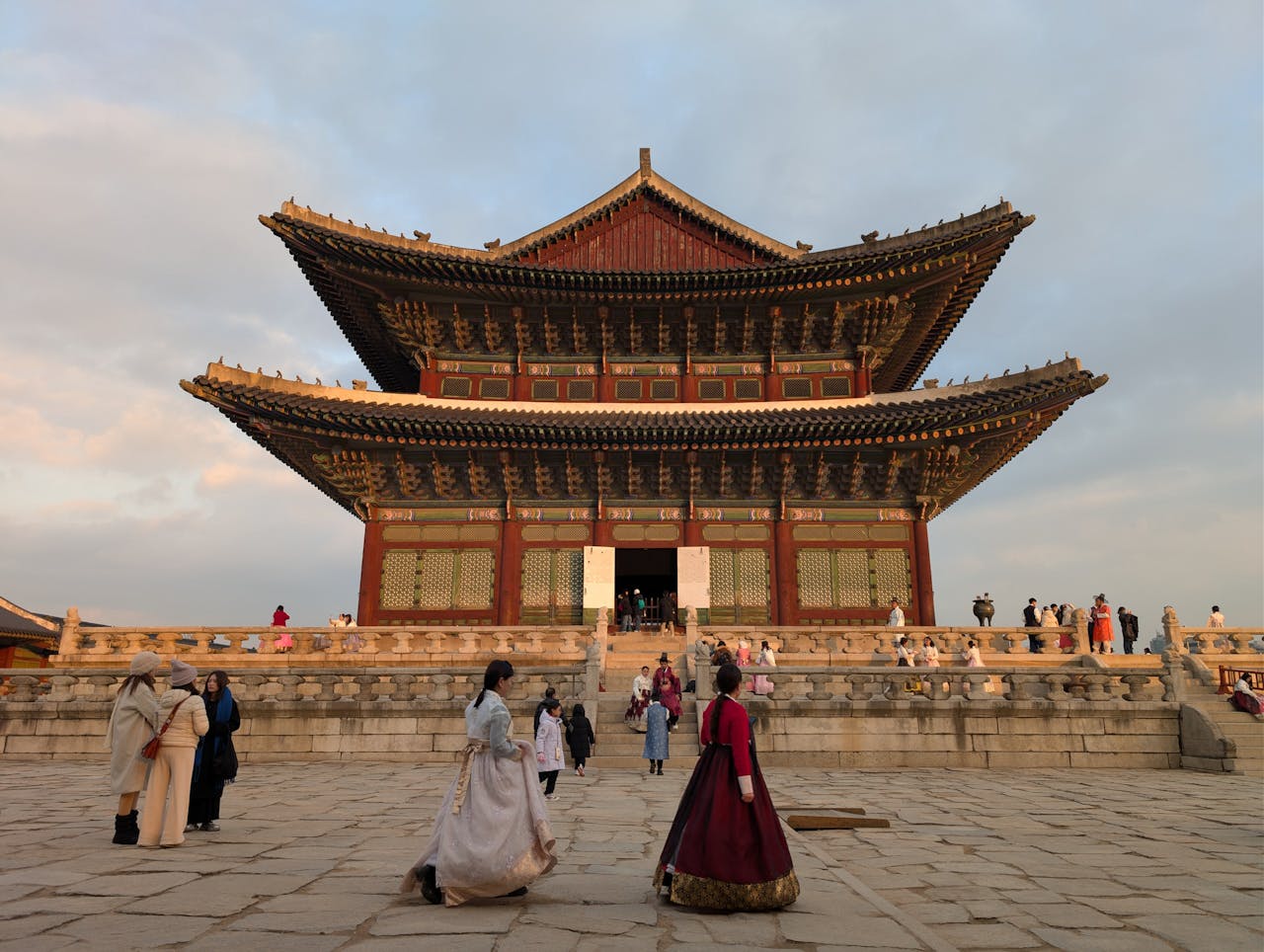
As you immerse yourself in the vibrant culture of Seoul, you’ll find an array of experiences that capture the essence of the city and its surroundings. Start by exploring Gyeongbokgung Palace, where you can witness grand architecture and the changing of the guard ceremony. Stroll through Bukchon Hanok Village to admire traditional hanoks and shop for unique handmade goods. Don’t miss Gwangjang Market to plunge into Seoul’s street food scene, savoring local favorites like bindaetteok and tteokbokki. For a peaceful retreat, walk along Cheonggyecheon Stream, taking in art installations. Finally, climb N-Seoul Tower for stunning panoramic views and soak in the upbeat nightlife in areas like Hongdae and Gangnam.
| Activity | Highlights |
|---|---|
| Gyeongbokgung Palace | Changing of the guard, history |
| Bukchon Hanok Village | Traditional houses, shopping |
| Gwangjang Market | Street food delights |
Ideal Itinerary for a Week in South Korea
A week in South Korea offers an exciting blend of vibrant city life and serene coastal beauty. You’ll immerse yourself in the culture by spending five days in Seoul before heading to Busan for two days of seaside relaxation.
Here’s a suggested itinerary:
- Visit historic Gyeongbokgung Palace and catch the changing of the guard.
- Shop and sample street food in the bustling Myeongdong district.
- Enjoy panoramic views from N Seoul Tower.
- Relax at Haeundae Beach and explore the colorful Gamcheon Culture Village.
- Take in the stunning ocean views at Haedong Yonggungsa Temple.
Traveling between Seoul and Busan on the KTX high-speed train saves time, leaving you plenty of opportunities to indulge in delicious BBQ and fresh seafood throughout your journey.
Best Day Trips From Seoul and Busan
While exploring the bustling streets of Seoul and the sandy shores of Busan, you might find yourself wanting to venture beyond the cities. A day trip to the DMZ lets you explore Korean history and witness significant military sites, like the Third Infiltration Tunnel.
If you’re craving modernity, head to Incheon to stroll through the scenic Songdo Central Park.
For a cultural experience from Busan, Gyeongju awaits, featuring ancient treasures such as Bulguksa Temple and the Gyeongju National Museum, just 90 minutes away by train.
Nature lovers should consider Seoraksan National Park for breathtaking hikes, while Suwon’s UNESCO-listed Hwaseong Fortress offers a peek into Korea’s architectural history—all easily accessible from Seoul.
Must-Have Travel Apps for Your Korea Trip
How do you navigate a new country effortlessly? With the right travel apps, your Korea trip becomes a breeze.
Here are must-have apps that simplify your adventures:
- KakaoMap: Get accurate navigation and real-time public transport info, outshining Google Maps in Korea.
- Kakao T: Book taxis with ease, since Uber isn’t available.
- Papago: Break language barriers with this translation app, perfect for menus and local chats.
- Naver Map: Discover hidden gems with detailed maps beyond usual tourist spots.
- Bustago: Access intercity bus schedules and tickets effortlessly, ideal for trips between cities like Seoul and Busan.
Download these apps before your journey, and you’ll explore Korea with confidence and convenience.
Safety Considerations for Travelers in South Korea
Exploring South Korea is a thrilling experience, but keeping safety in mind enhances your journey. South Korea is one of the safest countries for travelers, boasting low crime rates and a strong police presence in urban areas.
Even with occasional tensions with North Korea, daily life remains largely unaffected, allowing you to explore freely. You can easily access emergency services by calling 112 for police and 119 for fire or medical assistance, with English-speaking operators in most cases.
Remember to familiarize yourself with local safety procedures, especially regarding natural disasters, as many buildings have emergency kits. Public transportation is both safe and reliable, with authorities acting swiftly to guarantee the well-being of both residents and visitors.
Enjoy your trip with peace of mind!
How to Stay Connected With Your Family Back Home?
Staying connected with your family back home is essential during your travels in South Korea. Here are some effective ways to keep in touch:
- Consider purchasing a local SIM card or eSIM for affordable data and talk time.
- Use messaging apps like KakaoTalk or WhatsApp to share photos and communicate instantly.
- Find Wi-Fi hotspots in cafes, restaurants, and public areas to avoid extra charges.
- Schedule regular video calls using Zoom or Skype to catch up and share your experiences.
- Share your itinerary with family members, so they can reach you at specific times and stay updated on your adventures.
Frequently Asked Questions
Is $5000 Enough for a Trip to South Korea?
Yes, $5000’s enough for your trip to South Korea. You can comfortably cover airfare, accommodations, meals, and local transportation, while still having some left for shopping and souvenirs. Enjoy your adventure!
What Is the Best Itinerary for South Korea?
For the best itinerary in South Korea, spend 3-5 days in Seoul, 1-2 days in Gyeongju, and 2-3 days in Busan. Focus on cultural landmarks, food, and local experiences to make unforgettable memories.
Is 2000 USD a Lot in Korea?
Yes, $2000 is a lot in Korea. You can enjoy comfortable accommodations, meals, and attractions for 7-10 days. If you plan wisely, you’ll have a fantastic trip without overspending.
Leave a Reply