
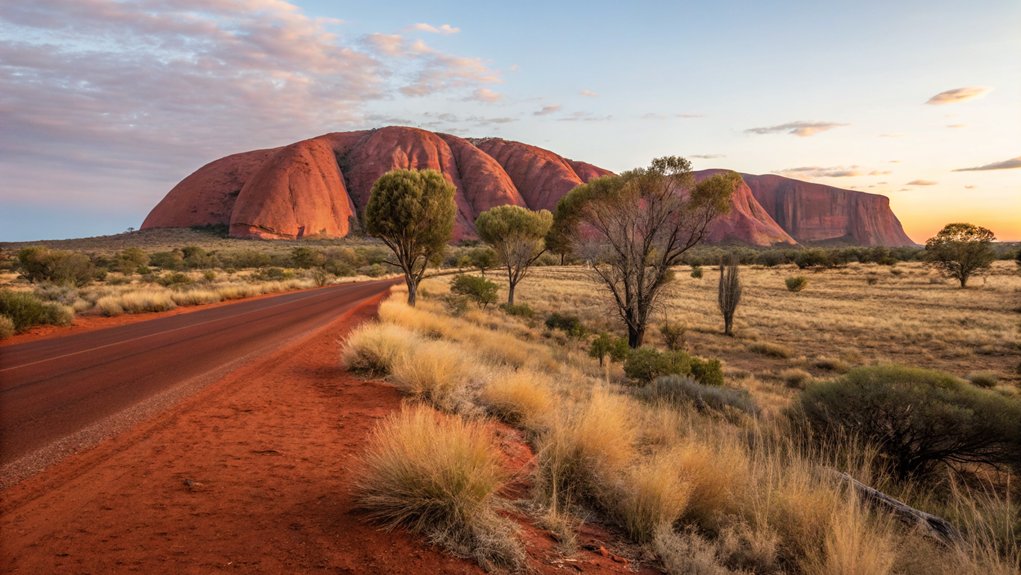
Planning an Australian Outback adventure in the Red Centre is an opportunity to immerse yourself in unique landscapes and rich Indigenous culture. You’ll explore iconic landmarks like Uluru and Kata Tjuta, while engaging with the history of the land. As you consider your itinerary, you’ll need to think about the best routes and sites to experience. So, what should you include in your journey to guarantee a meaningful and unforgettable experience?
Key Takeaways
- Begin your adventure at Ayers Rock Resort, immersing yourself in Indigenous cultural activities and traditions.
- Explore the stunning Kata Tjuta trails and enjoy sunset views over Uluru for breathtaking photographic opportunities.
- Hike the Kings Canyon Rim Walk, ensuring you stay hydrated and prepared for the challenging terrain.
- Recognize the spiritual significance of Uluru to the Anangu people, respecting cultural sites during your travels.
- Choose accommodations based on preferences, ranging from luxury hotels to campgrounds, and visit between April and October for optimal weather.
The Allure of the Red Centre: Why You Should Visit
When you think of Australia, the vast, stunning landscapes of the Red Centre certainly captivate you.
This region is home to iconic landmarks like Uluru and Kata Tjuta, which offer breathtaking views and unique cultural experiences that are essential to Australia’s heartland. You can immerse yourself in adventure activities such as hiking, skydiving, and camel rides, allowing your spirit for exploration to thrive.
The Red Centre holds deep significance for Indigenous Australians, providing rich cultural experiences that connect you to age-old traditions.
Perfect for road trips, the Red Centre Way stretches about 1,160 km, featuring diverse natural wonders like Kings Canyon and Ormiston Gorge.
Aim for the cooler months, from April to October, to make the most of your outdoor adventures.
Essential Preparations for Your Outback Journey
Before you hit the outback, make sure your vehicle’s in top shape and packed with essentials.
Don’t forget to gather navigation tools and a reliable communication device for safety.
Your adventure’s success hinges on these key preparations, so let’s get started!
Vehicle Preparation Tips
Preparing your vehicle for an Outback adventure is essential; it can make the difference between a smooth journey and a frustrating ordeal.
Start by ensuring your vehicle’s serviced, checking important components like brakes, oil, and fluid levels to navigate rugged terrain confidently. Don’t forget to carry a spare tire, jack, and tools for quick repairs, as help is often far away in remote areas.
Familiarize yourself with unsealed road driving techniques, maintaining a steady speed and avoiding sudden braking on gravel. It’s critical to pack enough fuel; those distances between petrol stations can be significant, so refuel whenever possible.
Finally, consider a satellite phone or two-way radio for communication, as mobile coverage can be spotty in the Outback.
Packing Essential Items
Packing essential items for your Outback adventure is crucial for a comfortable and enjoyable experience.
Start with small bags to fit the limited bus space, making transport easier. You’ll need at least 2 to 3 liters of water daily to stay hydrated in the hot desert climate.
A sleeping bag is a must for those chilly nights under the stars; renting one can be expensive. Don’t forget a pillowcase and travel sheet to cover the dusty mattresses often found in accommodations.
Finally, consider bringing an optional fly net to fend off pesky insects during your journey.
With the right gear, you’ll be all set to explore the breathtaking beauty of the Australian Outback.
Navigation and Communication Tools
Exploring the vast Australian Outback requires solid navigation and communication tools to guarantee a smooth journey. Always carry a reliable GPS device or smartphone with offline mapping apps, since cellular service can be hit or miss in remote areas.
Consider bringing a satellite phone for emergency communication, especially when traveling on unsealed roads. Equip your vehicle with navigation tools, including detailed maps of the Red Centre Way, to help plan your routes and fuel stops.
Download essential travel apps ahead of time, like fuel finders and distance calculators, for effective journey management. Finally, inform friends or family of your itinerary and check in regularly to ensure someone knows your travel status, particularly in isolated regions.
Safe travels!
Day 1: Arriving at Ayers Rock and Discovering Uluru
On your first day in the Australian Outback, you’ll arrive at Ayers Rock Airport and quickly find a shuttle bus waiting to whisk you away to Ayers Rock Resort, the closest accommodation to the iconic Uluru.
Once settled, immerse yourself in the rich cultural experiences available:
- Engage in free cultural activities like spear throwing and dance performances
- Visit the Uluru Cultural Centre for insights into Aboriginal art and traditions
- Join a guided walk around the base of Uluru to learn about its significance
Remember, climbing Uluru is prohibited to honor its sacredness to the Anangu people.
Take this opportunity to connect deeply with the land and its stories, setting the stage for an unforgettable journey ahead.
Day 2: Exploring Kata Tjuta and Sunset at Uluru
On Day 2, you’re in for a treat as you explore the stunning Kata Tjuta trails and soak in the breathtaking sunset at Uluru.
Make sure you stay hydrated while hiking and embrace the cultural significance of this sacred land.
Ready to witness the enchanting colors of Uluru as the sun sets?
Discover Kata Tjuta Trails
Wander through the breathtaking landscapes of Kata Tjuta (The Olgas) as you hike the Valley of the Winds trail. This 3-hour walk offers stunning views of the unique rock formations, immersing you in the natural beauty of the Australian Outback.
Before you head out, verify you have the necessary permits for Uluru-Kata Tjuta National Park.
During your hike, remember to:
- Stay hydrated; bring 2 liters of water.
- Take your time to savor each viewpoint.
- Respect the environment; stay on marked trails.
- Capture the moment; your camera will thank you!
After soaking in Kata Tjuta’s beauty, gear up for an unforgettable sunset at Uluru, complete with refreshments to enhance your experience.
Uluru Sunset Viewing Tips
How can you make the most of your Uluru sunset experience? Arrive at the designated sunset viewing area at least 30 minutes early to grab a great spot and soak in the changing colors of Uluru.
During the golden hour, the iconic rock transforms into a stunning blend of reds and oranges, perfect for photography. Bring refreshments like water and snacks to enjoy while you wait—it’ll enhance your relaxation.
Dress in layers; it gets chilly after sunset, so stay warm for the stunning view. Finally, consider packing binoculars to get a closer look at Uluru’s features and the surrounding landscape as dusk unfolds.
Your sunset experience will be unforgettable!
Cultural Significance of Uluru
Experiencing the breathtaking sunset at Uluru isn’t just about the stunning visuals; it’s also a moment to connect with its deep cultural roots.
For the Anangu people, Uluru is a sacred site that embodies their heritage and beliefs. Here are some key aspects to take into account while you soak in the view:
- Cultural Significance: Uluru represents the spiritual connection of the Anangu to the land.
- Climbing Prohibition: The climb was banned in October 2019 to honor the site’s sacredness.
- Uluru Cultural Centre: Gain insights into Aboriginal traditions and Dreamtime stories.
- Valley of the Winds: Explore Kata Tjuta’s trail, revealing Aboriginal narratives and the dramatic landscape.
As you watch the colors dance across the rock, reflect on these profound meanings.
Day 3: A Thrilling Adventure at Kings Canyon
As you commence Day 3 of your Australian Outback adventure, the awe-inspiring Kings Canyon awaits, beckoning you to discover its breathtaking beauty.
The renowned Kings Canyon Rim Walk, stretching 6 kilometers, takes about 3 to 4 hours to complete. You’ll marvel at stunning vistas from 100-meter-high sandstone cliffs, with highlights like Heartbreak Hill, Priscilla’s Gap, and the lush Garden of Eden.
Don’t forget to pack at least 2 liters of water to stay hydrated under the midday sun. If you prefer a leisurely stroll, the Kings Creek Walk offers a shorter, easier path while still showcasing the canyon’s impressive sights.
For an enriched experience, consider guided ranger walks to explore the area’s Aboriginal history.
Day 4: Explore Unique Flora and Fauna in the Outback
On Day 4, you’ll discover the Outback’s incredible biodiversity, featuring over 1,700 unique plant species and vibrant wildlife.
You’ll visit stunning national parks where animals thrive in their natural habitats, all while learning about conservation efforts that protect these ecosystems.
This day offers a chance to connect with both the land and its cultural significance, making for a truly enriching experience.
Diverse Plant Species
The Australian Outback boasts an incredible diversity of plant species, making it a fascinating destination for nature enthusiasts. You’ll discover over 1,500 native plants, each uniquely adapted to survive the arid climate.
Some highlights include:
- Spinifex grass and Desert Bloodwood, both thriving in harsh conditions.
- Deep root systems and drought-resistant leaves that enable survival.
- The vibrant blooms of wildflowers during rare rains, like the striking Sturt’s Desert Pea.
- Essential flora that supports local wildlife, offering food and shelter.
As you explore, take a moment to appreciate these resilient plants and their roles in the ecosystem.
The Outback’s flora not only captivates your senses but also sustains the diverse wildlife that calls this region home.
Unique Animal Habitats
Unique animal habitats in the Australian Outback showcase an impressive range of ecosystems that support an array of wildlife. You’ll encounter kangaroos, emus, and dingoes, each uniquely adapted to the arid climate.
The perentie, Australia’s largest monitor lizard, may catch your eye with its agility and impressive length of up to 2.5 meters. As you explore spinifex grasslands, salt flats, and mulga woodlands, keep an eye out for endemic flora like the ghost gum and vibrant desert flowers.
Visiting conservation areas, such as Watarrka National Park, allows you to observe native wildlife during the cooler hours of dawn and dusk.
Don’t miss the waterholes at Ormiston Gorge, where you’ll find fish and frogs thriving despite the harsh surroundings.
Conservation Initiatives Overview
As you immerse yourself in the diverse ecosystems of the Australian Outback, you’ll discover several conservation initiatives aimed at preserving its unique flora and fauna.
These efforts not only protect endangered species but also promote sustainable practices. Here’s what you’ll find:
- The Desert Oak and spinifex species are essential for soil stabilization in the harsh environment.
- Endangered creatures like the Greater Bilby and the Centralian Rough Knob-tail Gecko are objects of ongoing habitat conservation efforts.
- Collaboration with Aboriginal communities helps maintain traditional land management and enhances biodiversity.
- Educational programs at Alice Springs Desert Park foster awareness and breed vulnerable species.
Through these initiatives, you can see how the Outback balances ecological integrity with cultural heritage.
Day 5: Engaging With Aboriginal Culture: Experiences Not to Miss
Immerse yourself in the rich tapestry of Aboriginal culture on Day 5, where you’ll engage in experiences that connect you to the land and its traditional custodians.
Start your morning at the Uluru Cultural Centre, discovering the significance of Uluru to the Anangu people through art and stories.
Next, get hands-on in a dot-painting workshop, creating your own piece inspired by traditional techniques.
Later, join a guided tour led by an Aboriginal guide, who’ll share Dreamtime stories and cave paintings that reveal centuries of cultural practices.
In the evening, attend vibrant cultural performances, including dance shows and spear throwing at Ayers Rock Resort.
Don’t miss the Ochre Pits, where you’ll learn about its historical significance and use in ceremonies.
Driving Tips for Navigating the Red Centre Way
Maneuvering the Red Centre Way can be an unforgettable adventure, especially if you prepare adequately.
Here are some essential driving tips to guarantee a smooth journey:
- Choose the right vehicle: A 4WD is necessary for traversing the unsealed sections, especially the Mereenie Loop.
- Plan fuel stops: Fuel stations are sparse; refuel whenever possible to avoid running low on petrol.
- Stay hydrated: Pack 2 to 3 liters of water per person daily, as fresh drinking water can be scarce in remote areas.
- Drive during daylight: It’s safest to travel when it’s light outside, particularly on unpaved roads where wildlife might cross your path.
With these tips, you’ll be set to enjoy the stunning landscapes of the Red Centre.
Where to Stay: Top Accommodation in the Red Centre
When planning your stay in the Red Centre, you’ll find a range of accommodations that cater to various budgets and preferences.
For a stunning view of Uluru, consider the Desert Gardens Hotel, which offers comfortable rooms and access to cultural activities.
If you prefer luxury, Kings Canyon Resort provides excellent amenities like restaurants and pools, making it a perfect base for exploring Watarrka National Park.
For budget-friendly options, Outback Pioneer Lodge offers basic lodging with pools and gardens.
If camping’s more your style, Curtin Springs Campground near Uluru has both powered and unpowered sites.
Finally, Discovery Parks Glen Helen Resort features cabin rentals and camping facilities ideal for discovering the breathtaking West MacDonnell National Park.
Packing Essentials for an Outback Adventure
Packing for your Outback adventure requires careful consideration to guarantee you have everything you need.
Space on the bus is limited, so a small bag for your essentials is a must. Here’s what to prioritize:
- Water: Carry 2 to 3 liters per person to stay hydrated in the arid climate.
- Sleeping Bag: Bring your own for chilly desert nights, as rentals can be pricey and uncomfortable.
- Pillowcase & Travel Sheet: Use these to cover dusty mattresses at your accommodations.
- Fly Net (optional): Protect yourself from pesky insects while exploring.
With these essentials, you’ll be well-prepared for your Red Centre journey and ready to make the most of your Outback adventure.
Must-See Highlights on the Red Centre Route
The Red Centre Way, stretching approximately 835 km, offers a wealth of must-see highlights that’ll captivate any traveler.
Start your adventure at Uluru-Kata Tjuta National Park, where the sacred Uluru rock formation tells the story of the Anangu people. Don’t miss the guided walks or sunset camel tours for a deeper appreciation.
Next, head to Kings Canyon for the 6 km Rim Walk, providing breathtaking views that are best at sunrise or sunset.
For a revitalizing dip, stop by Ellery Creek Big Hole, perfect for swimming and hiking.
The vibrant Ochre Pits and Rainbow Valley, with its striking colors, promise excellent photography.
Each attraction showcases the unique landscapes and rich cultural heritage of Australia’s Red Centre.
How to Extend Your Journey Beyond the Red Centre
To make the most of your outback adventure, consider extending your journey beyond the Red Centre.
There’s so much more to explore! Here are some great options:
- Visit the Alice Springs Desert Park to discover the region’s unique flora, fauna, and indigenous culture.
- Head to the MacDonnell Ranges for stunning natural beauty, with hiking trails and swimming holes like Ormiston Gorge and Glen Helen.
- For more adventure, tackle the Larapinta Trail, offering a multi-day hiking experience through spectacular landscapes and breathtaking views.
- Alternatively, explore Katherine and the Nitmiluk National Park for boat tours, hikes, and engaging experiences with local Aboriginal culture.
Each option will enrich your experience and deepen your connection to this remarkable land!
Frequently Asked Questions
What Is the Best Time of Year to Visit the Red Centre?
The best time to visit the Red Centre is during the cooler months from April to September. You’ll enjoy milder temperatures, making your outdoor adventures more comfortable while still experiencing the stunning landscapes and unique wildlife.
Are There Any Specific Health Considerations for Travelers?
You should stay hydrated and protect yourself from the sun, especially during peak temperatures. Be cautious of wildlife and verify your vaccinations are up-to-date. Check for any travel advisories that might affect your journey.
Can I Bring My Pets to the Outback?
You can’t typically bring pets to the outback due to strict regulations protecting wildlife. If you’re traveling, it’s best to find a trusted pet sitter or boarding facility before your adventure. Always check local guidelines, too.
What Types of Meal Options Are Available During the Tour?
You’ll find various meal options during the tour, including traditional bush tucker, hearty camp meals, fresh salads, and vegetarian dishes. Some tours even offer gourmet dining experiences under the stars or picnic lunches.
Are There Any Safety Tips for Hiking in the Outback?
Stay hydrated, wear sturdy shoes, and use sunscreen. Keep to marked trails, watch for wildlife, and tell someone your plans. Being cautious and prepared will guarantee you enjoy your hiking experience safely in the Outback.
Related posts:

Solo Travel Encouragement: You're Braver Than You Think

Tours for Seniors Traveling Alone With Easy Planning

11 Beautiful Places in New Zealand for Adventure Seekers

Sardinian Food Travel Itinerary: Culinary Island Journey

Weekend Solo Trips for Quick and Refreshing Getaways

Leave a Reply