
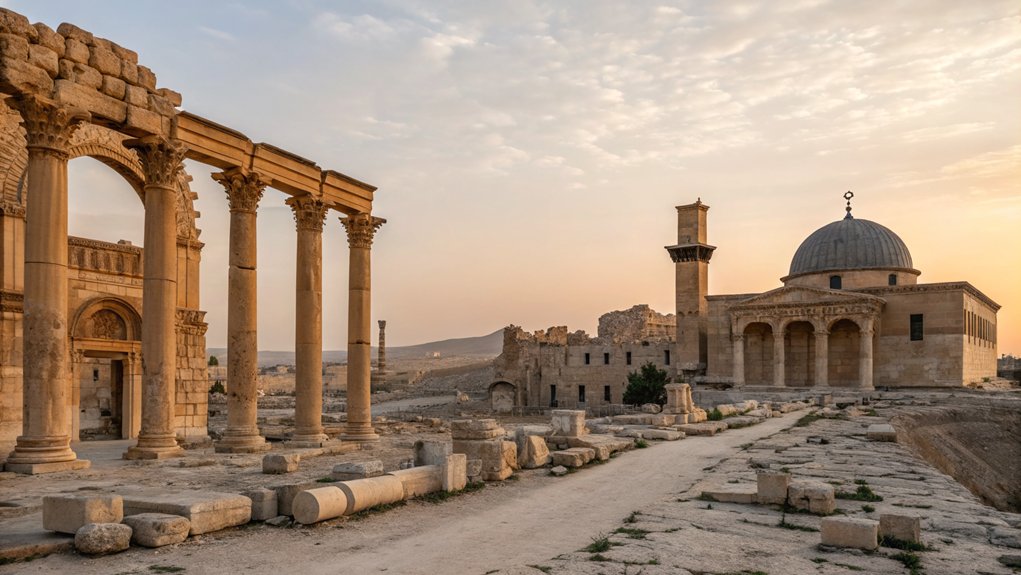
As you explore Syria’s breathtaking sites, you’ll discover a rich tapestry of history woven into each stone and structure. From the imposing Krak des Chevaliers to the serene Umayyad Mosque, every location has a unique story to tell. You might be surprised by the layers of culture and heritage waiting to be uncovered. What secrets do these ancient wonders hold? Let’s uncover the beauty and significance of these historical gems together.
Key Takeaways
- The ancient city of Damascus showcases stunning Islamic and Christian architecture, reflecting centuries of rich history and cultural synthesis.
- Palmyra’s Roman ruins highlight its historical significance as a major hub on the Silk Road, featuring impressive structures like temples and colonnades.
- Krak des Chevaliers, an 11th-century Crusader fortress, exemplifies medieval military architecture and remains one of the best-preserved castles globally.
- The Black Basalt Amphitheater in Bosra is notable for its remarkable engineering and capacity to seat 15,000 spectators, showcasing ancient entertainment culture.
- The Ancient Cities, including Qatna and Apamea, illustrate early urban life and trade dynamics, with structures revealing the prosperity of the civilizations that thrived there.
An Overview of Syria’s Cultural Heritage
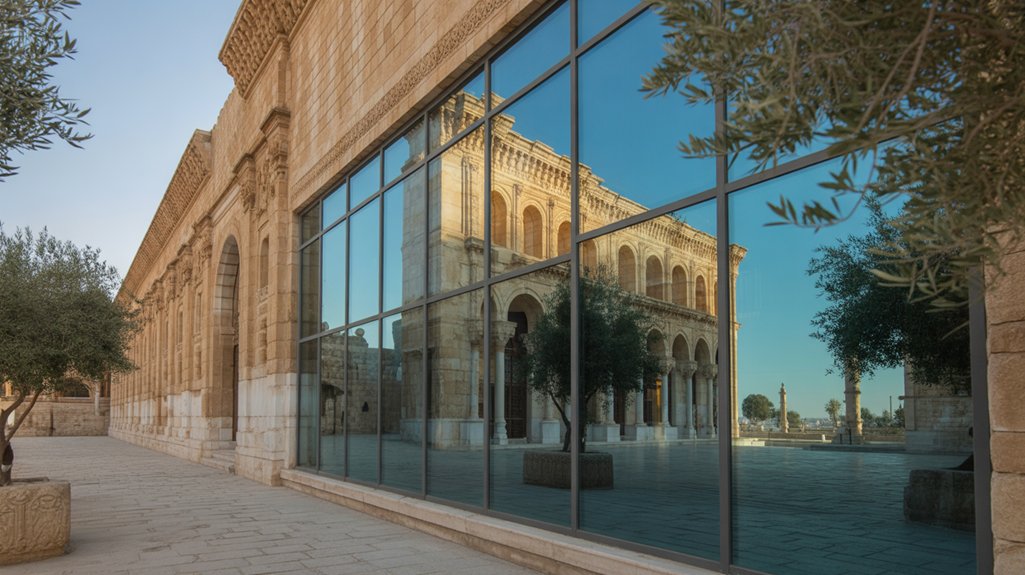
When you think of Syria, it’s hard to ignore its rich tapestry of cultural heritage that has evolved over millennia. The country boasts six UNESCO World Heritage Sites, each revealing the depth of its historical significance.
You can explore the ancient cities of Damascus and Bosra, where architectural marvels blend Islamic and Christian influences. Palmyra, a once-thriving Silk Road hub, showcases stunning Roman ruins that highlight ancient civilizations‘ contributions.
Don’t miss the ancient villages of the Dead Cities in Northern Syria, which are well-preserved examples of early urban life from the 1st to 7th centuries. Highlights like the Umayyad Mosque further illustrate Syria’s diverse cultural landscape, making it an extraordinary destination for history enthusiasts.
Discovering Krak Des Chevaliers: a Crusader Fortress Gem
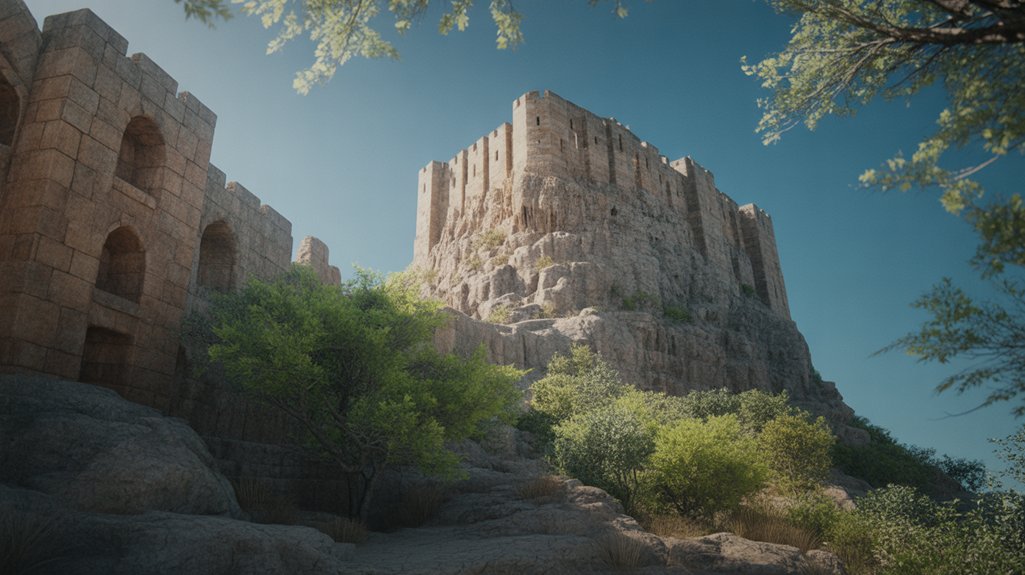
When you visit Krak des Chevaliers, you can’t help but marvel at its stunning medieval architecture and strategic design.
This impressive fortress not only holds historical significance as a Crusader stronghold but also stands as a tribute to the art of preservation.
As you explore its walls, you’ll appreciate the stories and battles that shaped this remarkable site.
Architectural Marvels Of Krak
Krak des Chevaliers, a stunning 11th-century fortress, stands proudly as a monument to Crusader ingenuity and architectural skill. Built in 1031 AD, this remarkable structure exemplifies Crusader fortress architecture, perched atop a 650-meter high natural citadel.
As you explore the fortress, you’ll notice its intricately built defensive features, with imposing towers and sturdy walls that convey both beauty and strength. The panoramic views from its walls enhance its strategic importance, showcasing the landscape that surrounds it.
Designated a UNESCO World Heritage Site in 2006, Krak des Chevaliers reflects incredible preservation and cultural value. Despite facing ongoing conflicts, parts of this architectural marvel have been restored, symbolizing resilience through time and adversity.
Historical Significance And Preservation
The architectural grandeur of Krak des Chevaliers not only highlights medieval engineering but also underscores its historical significance during the Crusades.
Built in 1031 AD, this fortress exemplifies the strategic prowess of the Knights Hospitaller, serving as their headquarters in the 12th and 13th centuries. Nestled on a natural citadel, it offers breathtaking views that enhance its allure as a key heritage site.
Designated a UNESCO World Heritage site in 2006, Krak des Chevaliers faces preservation challenges amid the Syrian Civil War, drawing attention to the broader importance of safeguarding archaeological sites.
Despite safety concerns limiting access, the fortress remains a symbol of historical resilience and a beacon for those enthusiastic to connect with Syria’s rich cultural legacy.
Exploring the Citadel of Salah Ed-Din: The Legacy of Saladin
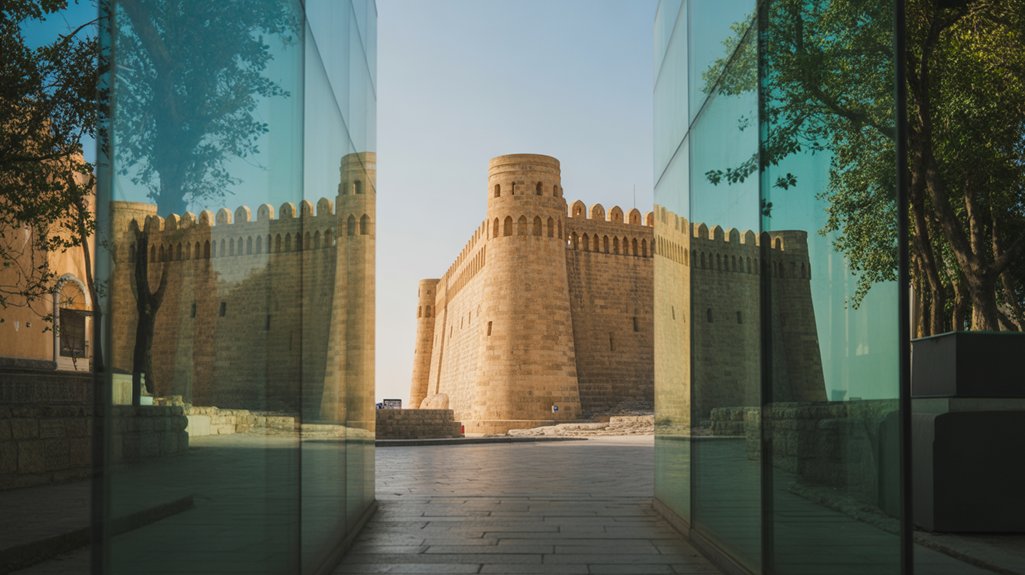
As you explore the Citadel of Salah Ed-Din, you’ll encounter a rich tapestry of history tied to the legendary figure of Saladin.
This architectural marvel not only showcases advanced medieval designs but also serves as a tribute to the military strategies that shaped the Crusades.
The stunning views from its hilltop location enhance the experience, inviting you to appreciate both its beauty and significance.
Historical Significance of Saladin
Nestled atop a strategic hill, the Citadel of Salah Ed-Din stands as a monument to its storied past and the legacy of Saladin. This historical site, originally a Byzantine stronghold, became essential during the Crusades when Saladin seized it in 1188.
Utilizing its elevated position, he launched successful campaigns against Crusader states, showcasing his military prowess. The citadel reflects architectural styles from various periods, symbolizing its long history and military significance.
Previously occupied by Phoenicians and Alexander the Great, the site resonates with narratives of power and resilience.
Today, as you explore the Citadel of Salah Ed-Din, you’re not just witnessing a structure; you’re connecting with the enduring spirit of Saladin, an iconic figure in Islamic heritage.
Architectural Features and Design
Built on a commanding hilltop, Citadel of Salah Ed-Din merges military might with breathtaking design. This fortress, captured by Saladin in 1188, represents the architectural grandeur of the Ayyubid era, displaying advanced military features from the Crusader period. As you explore, you’ll notice the massive stone walls and strategically placed towers, offering stunning vistas of the ancient city below. The remnants of earlier structures tell stories of Phoenicians and Alexander the Great, revealing layers of historical significance.
| Feature | Description |
|---|---|
| Walls | Massive stone, defensive structure |
| Towers | Elevated views, strategic points |
| Historical Layers | Phoenicians to Ayyubids |
| Construction Period | Crusader and Ayyubid architecture |
| Symbol of Resilience | Enduring military history |
Unveiling the Ancient Wonders of Palmyra

Palmyra, often referred to as the “Pearl of the Desert,” captivates visitors with its ancient wonders that tell tales of a vibrant civilization.
As you explore its ancient ruins, you’re stepping into a vital commercial hub along the Silk Road. Renowned for its striking Roman architecture, Palmyra showcases monumental structures like the stunning Temple of Bel, a reflection of the cultural richness of the city at its height.
The blend of Hellenistic, Roman, and Persian influences reflects the historical significance of the site, which still stands as a UNESCO World Heritage Site despite suffering damage in recent conflicts.
Discover Queen Zenobia’s legacy, who led a remarkable revolt against Rome, adding another layer to Palmyra’s fascinating history.
Stepping Back in Time at Qatna Archaeological Park
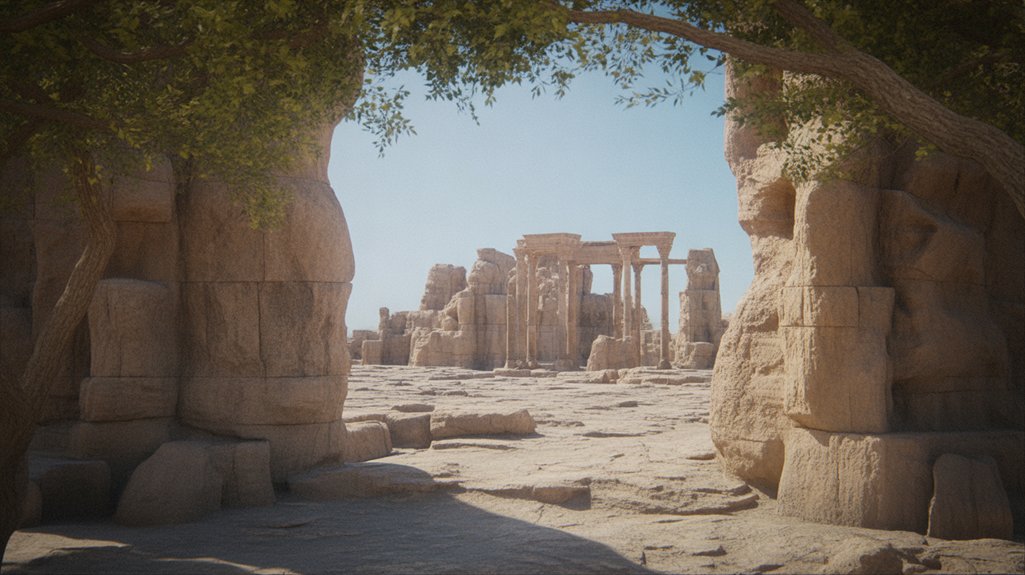
When you visit Qatna Archaeological Park, you step into a thriving hub of ancient trade routes that played a vital role during the Bronze Age.
This historical site not only showcases sophisticated urban development but also reveals the powerful connections between civilizations like the Mitanni and Egyptians.
Exploring Qatna gives you a glimpse into the rich tapestry of life and commerce that shaped the region’s past.
Ancient Trade Routes Hub
As you step into Qatna Archaeological Park, you’re transported back to a time when this ancient city thrived as a pivotal hub along the trade routes connecting the Mediterranean to Mesopotamia.
First occupied in the 3rd millennium BC, Qatna became an essential player in the ancient world, facilitating trade and cultural exchange between diverse civilizations like the Mitanni and ancient Egyptians.
The well-preserved ruins you explore reveal urban planning and architectural styles that signify its historical importance.
As you wander through the park, you’ll see artifacts that highlight Qatna’s economic prosperity and its role as an ancient trade routes hub.
You can’t help but feel connected to the vibrant history that once flourished here.
Bronze Age Flourishment
Stepping into the Qatna Archaeological Park immerses you in the remarkable era of the Bronze Age, a time when this city flourished as a vibrant center of trade and culture. You’ll witness the sophisticated urban planning and impressive architecture that defined this ancient city. Qatna, nestled at a strategic crossroads, thrived on political connections with Mitanni and the ancient Egyptians.
| Feature | Description |
|---|---|
| Trade Networks | Linked to Mediterranean and Mesopotamia regions |
| Architectural Wonders | Extensive residential areas and necropolises |
| Daily Life Insights | Well-preserved ruins reveal funerary practices |
Explore this site to gain valuable insights into the daily lives of its inhabitants during the majestic Bronze Age.
Archaeological Significance Today
Visiting Qatna Archaeological Park today offers you a unique glimpse into the past, revealing the profound archaeological significance this ancient site holds.
As you explore the ruins of Qatna, an ancient city that flourished during the Bronze Age, you’ll discover why it was once an essential political and commercial hub. The park is home to remarkable findings, including evidence of advanced craftsmanship and administrative archives, showcasing its role in trade and governance.
Monumental architecture, such as palaces and temples, stands as an indication of the city’s prosperity and rich cultural heritage.
Apamea: Exploring the Legacy of Roman Urban Design
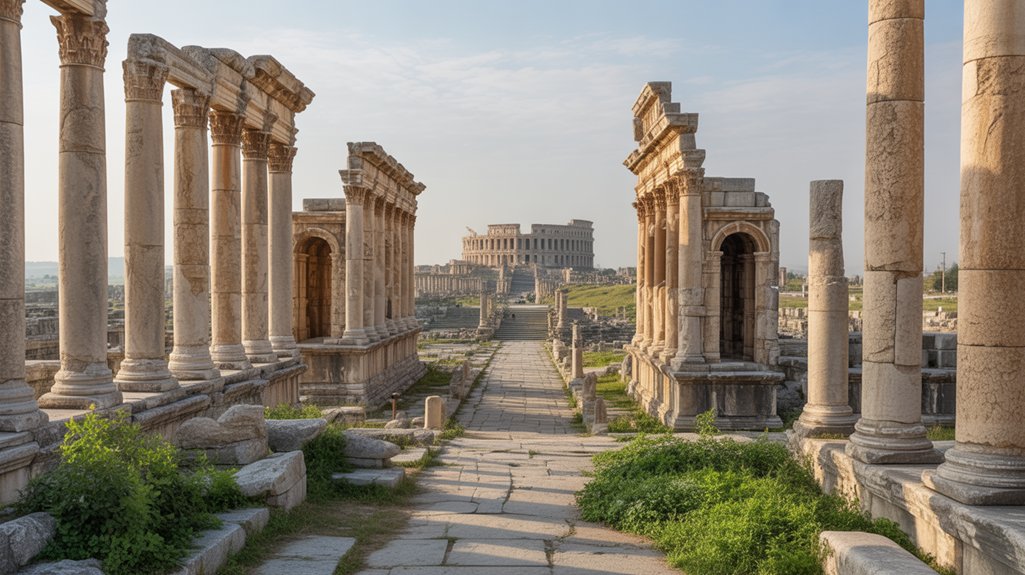
Although you might think of modern cities when considering urban design, Apamea offers a stunning glimpse into the Roman empire’s architectural prowess. This ancient city, founded in the 4th century BC, showcases impressive urban planning through its remarkable features.
Here are four highlights of its legacy:
- Colonnaded Avenue: Spanning 1,800 meters, the grand avenue reflects Roman engineering excellence.
- Vibrant Theater: The well-preserved remains reveal the importance of culture in ancient social life.
- Population Hub: Once home to around 117,000 residents, Apamea was a center for trade and scholarship.
- Resilience: Even amid scars from conflict, the ruins of ancient Apamea stand as a symbol of its historical significance and enduring legacy.
Dura Europos: A Crossroad of Civilizations
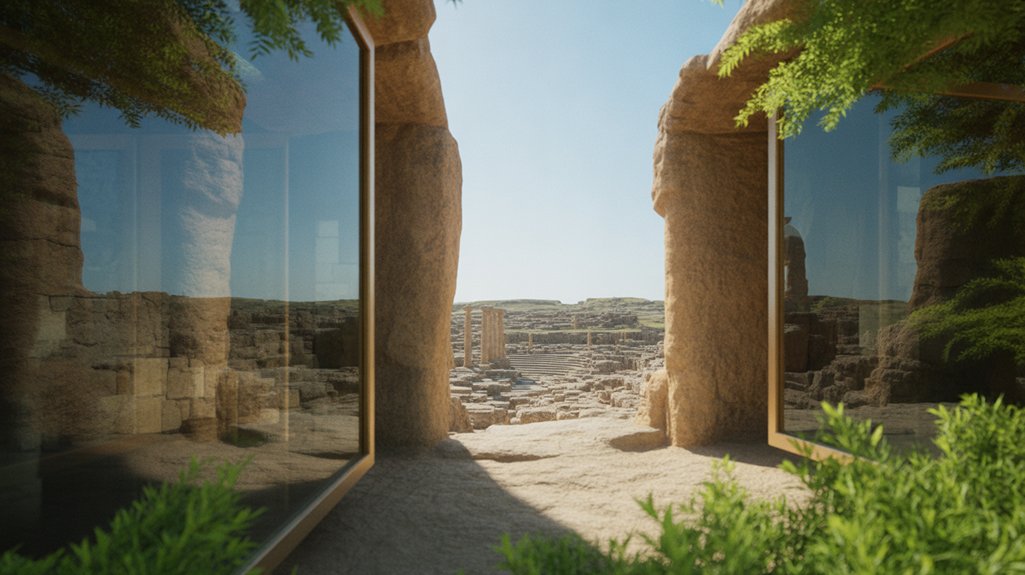
Nestled along the Euphrates River, Dura Europos stands as a remarkable demonstration of the intersection of cultures and civilizations throughout history.
Founded in 300 BC by the Seleucid Greeks, this ancient city flourished as a strategic caravan settlement and a significant commercial hub. You’ll find well-preserved ruins that showcase the blend of diverse influences from Parthians to Romans.
Significant highlights include an early Christian church and a synagogue, reflecting the area’s rich cultural tapestry. As a UNESCO World Heritage site, Dura Europos offers invaluable insights into ancient urban planning, trade routes, and military architecture.
Exploring its remnants allows you to appreciate the interactions that shaped this crossroads of civilizations and left a lasting legacy for all.
The Marvels of Ancient Bosra: A Cultural Mosaic
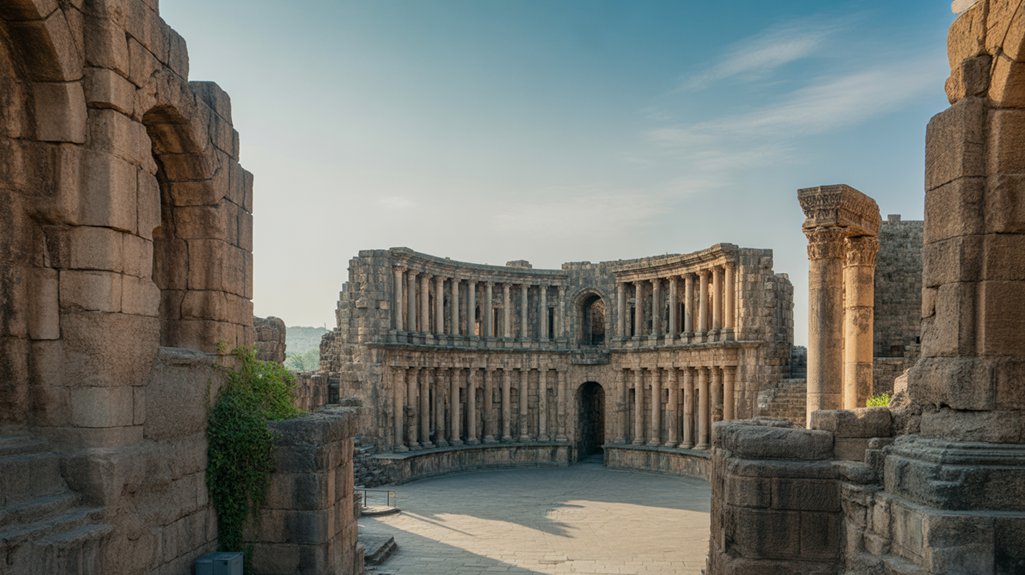
As you explore Syria’s rich tapestry of history, Ancient Bosra emerges as another fascinating chapter, showcasing a remarkable blend of cultures and architectural brilliance.
This historic city of Bosra invites you to discover:
- The Black Basalt Amphitheater: Built in the 2nd century AD, this stunning structure seats up to 15,000 people and exemplifies ancient engineering.
- Diverse Architectural Styles: From Nabatean to Roman, Byzantine, and early Muslim architecture, Bosra’s ruins reflect centuries of evolution.
- UNESCO World Heritage Site: Recognized for its historical significance, this site embodies a unique cultural mosaic.
- Bustling Market Streets: Wander through the remnants of lively marketplaces that once thrived in the ancient villages of northern Syria.
Explore these marvels, and feel the layers of history come alive!
The Historical Aleppo Citadel: A Journey Through Time
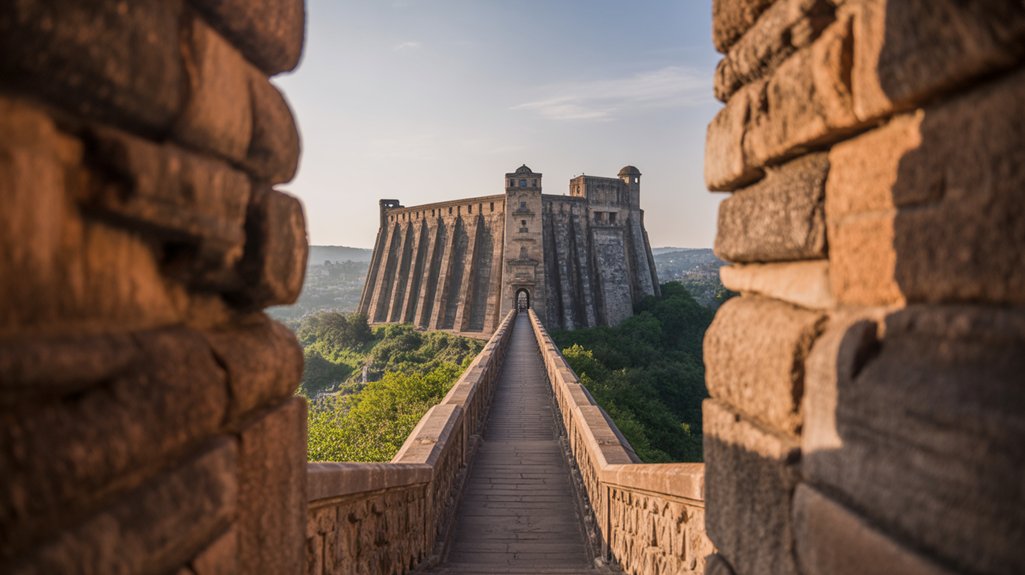
The Historical Aleppo Citadel stands as a tribute to centuries of human ingenuity and resilience, mesmerizing visitors with its majestic presence in the heart of Aleppo.
This impressive structure, one of the oldest and largest castles globally, dates back to the 3rd millennium BC and showcases the architectural brilliance of the Ayyubid period.
As you explore its halls, you’ll discover the strategic design that reflects medieval military ingenuity and urban defense strategies. From its elevated position, breathtaking panoramic views of the city of Aleppo reveal its significance as a fortress and cultural symbol.
Although it faced extensive damage during the Syrian Civil War, the Aleppo Citadel endures as a powerful emblem of the city’s rich and diverse heritage.
The Temple of Jupiter in Damascus: Insights Into Ancient Faith
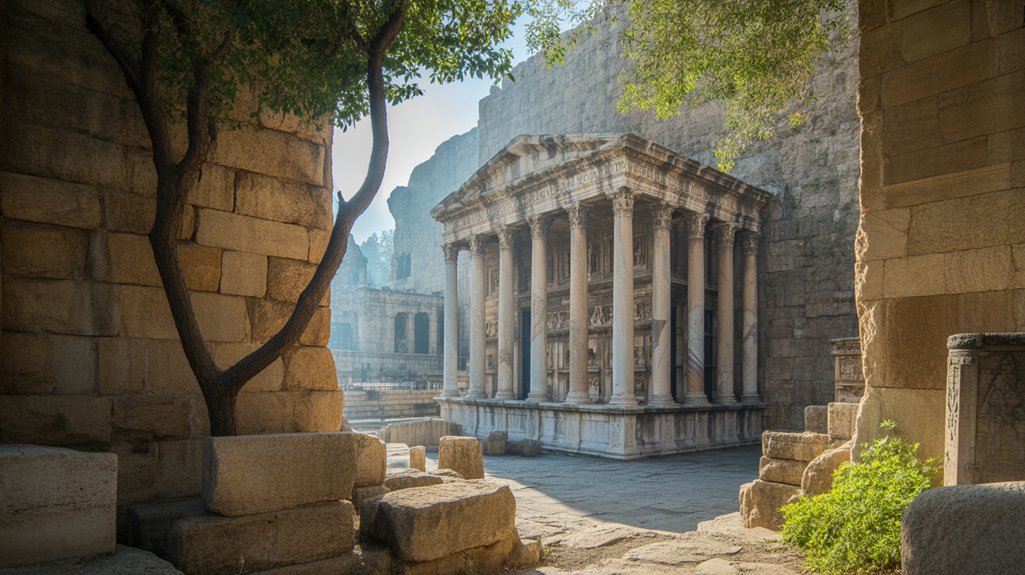
While wandering through the ancient streets of Damascus, you’ll encounter the awe-inspiring remnants of the Temple of Jupiter, a demonstration of the city’s rich religious history. Established during Emperor Augustus’s reign, this temple showcases the cultural blend of local and Roman faiths.
Although mostly in ruins, it offers intriguing insights into ancient worship practices.
Here are some engaging aspects of the Temple of Jupiter:
- Originally dedicated to the Aramaean god Hadad-Ramman.
- Reflects significant elements of Roman religious architecture.
- A reminder of the polytheistic beliefs before Christianity and Islam’s rise.
- Highlights the historical significance of deities in ancient Syrian society.
Visiting the temple allows you to connect with the ancient faith that once thrived here.
Explore the Umayyad Mosque: A Stunning Architectural Wonder
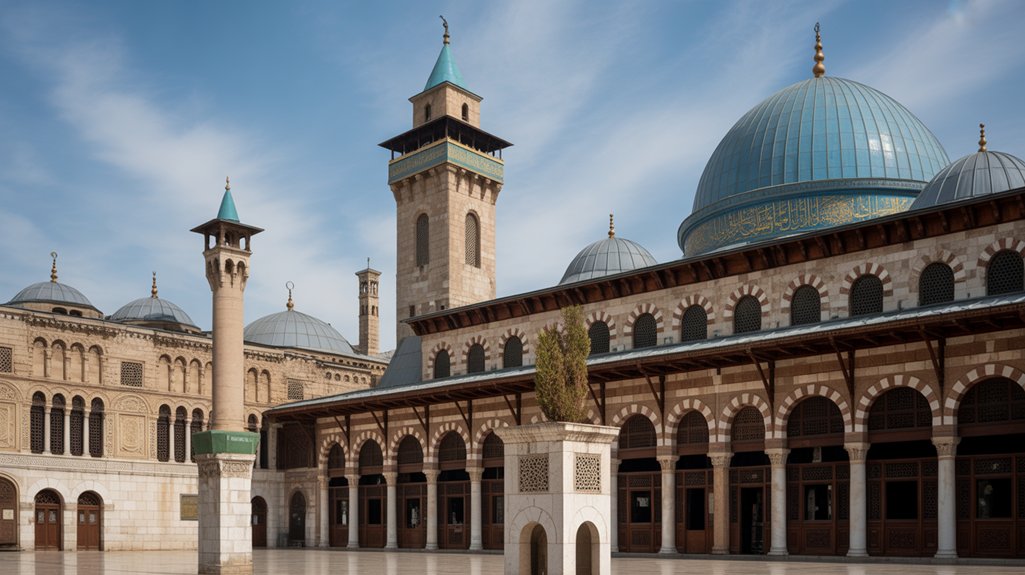
Nestled in the heart of Damascus, the Umayyad Mosque stands as a symbol of the city’s rich tapestry of history and architecture. This architectural wonder, completed in 715 AD during the Umayyad Caliphate, is one of the largest and oldest mosques in the world.
As you explore the Umayyad Mosque, you’ll admire its stunning blend of local and Roman styles, making it one of the best-preserved examples of Islamic art. Intricate mosaics and grand architectural elements showcase the artistic achievements of the time.
The mosque is also the fourth holiest site in Islam, with legends of St. John the Baptist’s head resting within its walls. Don’t miss the tranquil garden housing the mausoleum of Saladin, adding to the site’s allure.
Historic Insights From the Ancient Villages of Northern Syria
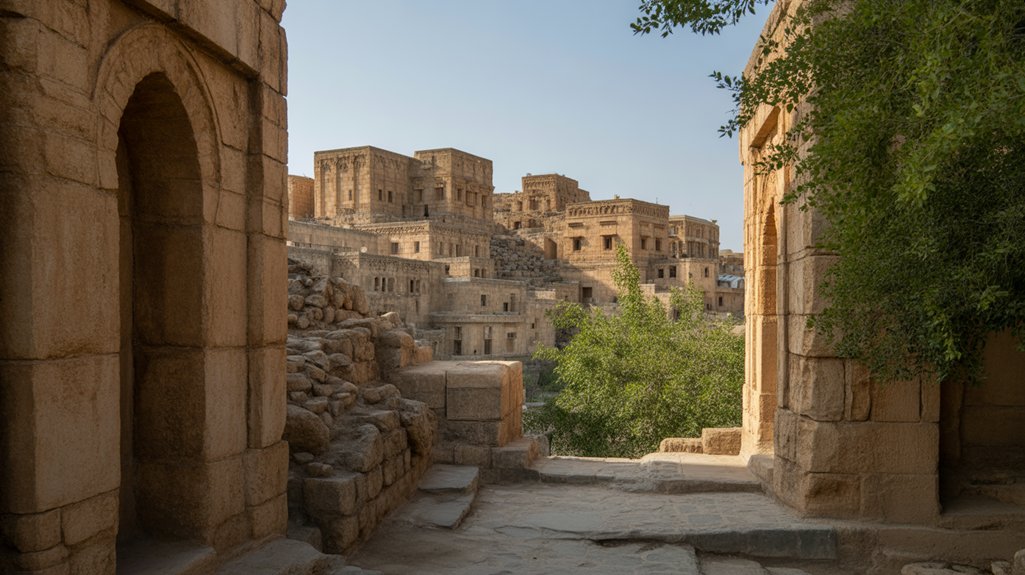
As you wander through the Ancient Villages of Northern Syria, you’ll discover a treasure trove of history that dates back to the 1st century.
These remarkable sites, often referred to as the Dead Cities, showcase well-preserved ruins that reveal the region’s rich past.
Here are some highlights:
- Architectural Marvels: Experience ancient styles reflected in the stone structures of villages like Serjilla and Al-Bara.
- Agricultural Heritage: Learn about the thriving olive oil and wine production that sustained this area’s economy.
- Cultural Insights: Explore the remnants of churches and courtyards that illustrate medieval village life.
- UNESCO’s List of World Heritage: Recognize the importance of preserving these sites, now classified as endangered since 2011.
The Enduring Spirit of Syria: Challenges and Preservation Efforts?
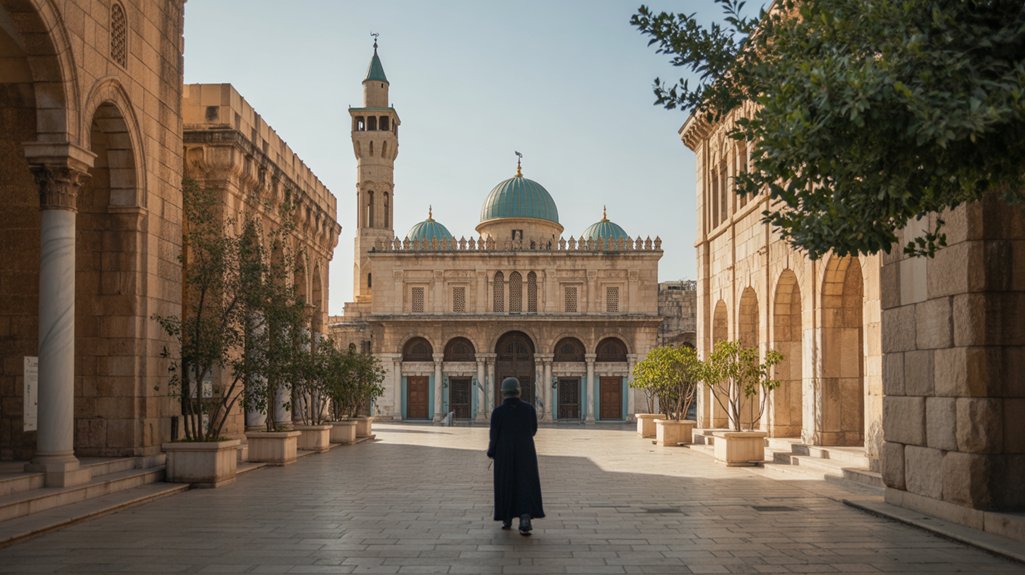
The ancient villages of Northern Syria embody a rich history, but today these treasures face substantial threats due to the ongoing conflict. Major destruction has been reported in iconic sites like Aleppo and Palmyra, both recognized as UNESCO World Heritage Sites since 1980.
With all six World Heritage Sites in Syria placed on the List of World Heritage in Danger since 2013, preservation efforts are increasingly complicated. Crac des Chevaliers and the Ancient City of Bosra suffer from neglect and limited access, hindering restoration initiatives.
Yet, despite the challenges, sites like the Umayyad Mosque and Aleppo Citadel stand as symbols of resilience, showcasing the enduring spirit of Syria’s cultural identity. International cooperation remains vital for the protection of this irreplaceable heritage.
Frequently Asked Questions
What Is the Most Beautiful City in Syria?
You’ll find Aleppo to be the most beautiful city in Syria, with its majestic citadel and vibrant souks. The blend of history and culture creates an enchanting atmosphere that captivates every visitor’s heart.
What Are the Ancient Towns in Syria?
You’ll discover ancient towns like Palmyra, Bosra, Aleppo, Qatna, and Dura Europos. Each town showcases unique architectural marvels and significant historical narratives that reveal Syria’s rich cultural heritage and enduring legacy.
Are There Any Nice Parts of Syria?
Yes, there are definitely nice parts of Syria. You’ll find stunning landscapes, vibrant markets, and rich culture. Exploring its ancient cities offers unforgettable experiences, showcasing the unique beauty that still thrives despite challenges.
What Was Syria Called in Jesus’ Time?
During Jesus’ time, Syria was called the province of Syria, part of the Roman Empire. You’d also find names like Aram for the inland regions and Phoenicia for the coastal areas, reflecting its diverse cultures.
Leave a Reply