
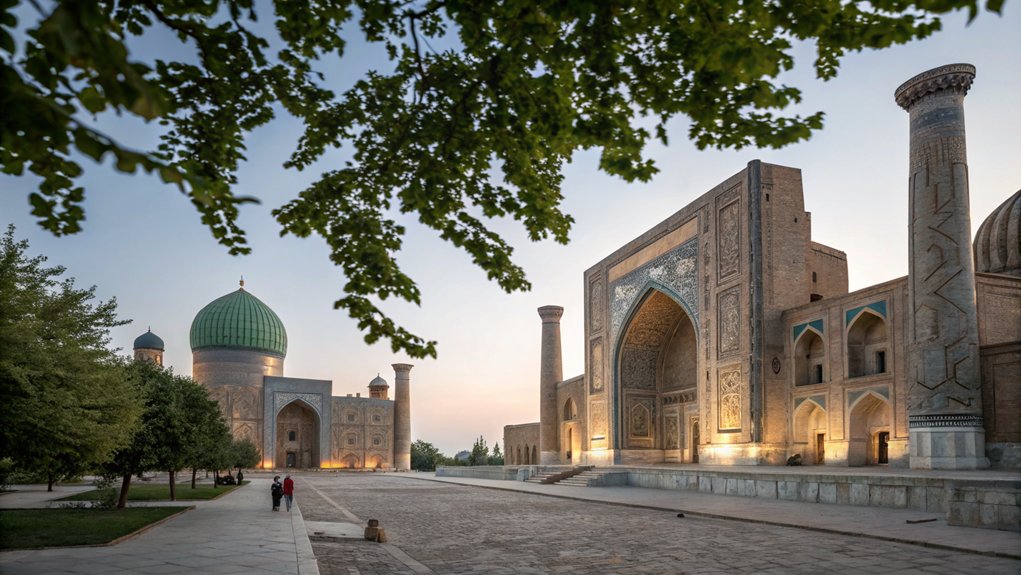
Planning your Silk Road adventure through Central Asia offers a unique opportunity to explore ancient trade routes and vibrant cultures. You’ll navigate through bustling cities like Almaty and Samarkand, immerse yourself in local customs, and witness stunning landscapes. As you consider your itinerary, it’s important to understand the historical context and practicalities that will shape your journey. What else awaits around the bend as you set off on this extraordinary expedition?
Key Takeaways
- Start your adventure in Almaty, Kazakhstan, before exploring key Silk Road cities: Tashkent, Samarkand, Bukhara, and Khiva.
- Allocate time to visit the Registan in Samarkand and the Ark Citadel in Bukhara for a touch of history.
- Engage with local culture by attending folk performances, taking part in yurt-making, and enjoying meals with local families.
- Plan your trip during spring or autumn for mild weather and to avoid extreme summer heat in Bukhara and Samarkand.
- Be mindful of the environment by reflecting on the ecological issues surrounding the Aral Sea during your travels.
Discovering the Silk Road: Historical Context and Significance
The Silk Road represents a fascinating tapestry of history, weaving together cultures and economies from East to West. From 207 BCE to the 15th century, this network of trade routes linked China to Europe, allowing the exchange of goods like silk, spices, and ceramics.
As you explore its historical significance, you’ll uncover how it facilitated cultural exchanges, spreading ideas, religions, and technologies among vibrant civilizations. Remarkable figures like Alexander the Great, Genghis Khan, and Tamarlane played pivotal roles in shaping this dynamic landscape.
Cities like Samarkand, Bukhara, and Khiva emerged as thriving trade hubs, reflecting a stunning blend of architecture and cultures that influenced the development of Western civilization. The Silk Road’s legacy endures in art, craftsmanship, and language, marking its profound impact on history.
Baku’s Old City offers another window into Silk Road-era heritage through its historic core and UNESCO-listed landmarks.
Must-See Cities on the Silk Road
Exploring the must-see cities on the Silk Road reveals a vibrant mosaic of history and culture.
Start your journey in Tashkent, the largest city in Uzbekistan, where Soviet-era landmarks meet modern parks.
From there, head to Samarkand, home to the stunning Registan square and remarkable 14th-century architecture that narrates its rich trading past.
Bukhara beckons with its historical treasures like the Ark Citadel and the Poi Kalyan complex, showcasing its role as a major trading post.
Don’t miss Khiva, where Itchan Kala stands as a UNESCO World Heritage site, offering a glimpse into ancient fortress architecture.
Finally, visit Almaty, surrounded by the Tien Shan mountains, blending Soviet architecture with contemporary flair, making it the perfect gateway to more Silk Road adventures.
Immerse Yourself in Local Culture: Traditions and Hospitality
Traveling along the Silk Road offers more than breathtaking sights; it provides an opportunity to immerse yourself in local culture through its rich traditions and warm hospitality.
Here, you’ll find unique experiences that connect you to the heart of this vibrant region:
- Share tea with a sixth-generation ceramics master, gaining insight into local craftsmanship.
- Attend performances of the Kyrgyz Manas folk tradition in Bishkek, filled with storytelling and music.
- Enjoy meals with local families, revealing the true essence of hospitality.
- Explore artisan workshops in cities like Bukhara and Khiva, learning about silk weaving and pottery.
Each moment creates lasting memories, letting the warmth of Central Asia’s culture embrace you.
How to Plan Your Silk Road Journey
Planning your Silk Road journey can be an exciting endeavor, especially when you consider the rich history and diverse cultures waiting for you. Start by flying into Almaty, Kazakhstan, the perfect launch point for your adventure. Make a list of historical cities to visit, like Tashkent, Samarkand, Bukhara, and Khiva, each brimming with treasures. Join guided tours for smooth logistics and authentic experiences. Also, keep daily activity levels in mind to prepare for walking and managing your luggage.
| Key Considerations | Details |
|---|---|
| Starting Point | Almaty, Kazakhstan |
| Key Cities | Tashkent, Samarkand, Bukhara, Khiva |
| Visa Requirements | Turkmenistan requires a visa, others don’t for U.S. travelers |
| Travel Logistics | Join guided tours for better experiences |
| Activity Level | Daily walking of 2-4 miles |
Understanding Visa Requirements for Your Journey
How do you navigate the visa requirements for your Silk Road adventure? It’s essential to know what you need before you go. Here’s a quick guide:
- Kazakhstan, Uzbekistan, and Kyrgyzstan: No visa needed, but make sure your passport has at least 0 blank pages.
- Tajikistan: Visa required, usually obtainable online; have at least one blank page.
- Turkmenistan: Visa is mandatory; apply in advance and keep one blank page for entry and exit.
- Check the Rules: Always verify the latest visa requirements ahead of your trip, as they can change suddenly.
Planning ahead guarantees you won’t face any surprises when you set off on this incredible journey!
Choosing the Best Times to Visit Central Asia
When you’re planning your trip to Central Asia, timing can make all the difference in your experience.
Spring and autumn offer ideal weather for exploration, while special seasonal festivals can enrich your journey.
Ideal Weather Conditions
While many travelers seek the perfect time to explore Central Asia, the best conditions typically unfold in spring and autumn. Visiting during these seasons guarantees moderate temperatures that make outdoor adventures enjoyable.
Consider these ideal weather characteristics:
- Mild temperatures: Spring (April to June) and autumn (September to October) offer comfortable weather for trekking and sightseeing.
- Minimal rainfall: Expect clear skies, perfect for capturing stunning landscapes along the Silk Road.
- Vibrant scenery: Experience blooming flowers in spring and breathtaking foliage in autumn.
- Avoid extreme heat: Summer can reach over 40°C (104°F), making activities less enjoyable in cities like Bukhara and Samarkand.
Plan your trip around these seasons for a memorable exploration of Central Asia!
Seasonal Festivals and Events
Experiencing Central Asia isn’t just about the stunning landscapes; it’s also about engaging with its vibrant culture through seasonal festivals and events.
If you visit in March, don’t miss Navruz, the Persian New Year, celebrated with communal feasts and traditional performances.
September’s Silk Road Festival in Samarkand showcases the region’s rich heritage through music and crafts, while the Almaty Apple Festival honors Kazakhstan’s apple-growing legacy, featuring tastings and entertainment.
Late July brings the Issyk-Kul Festival, where you can enjoy water sports and nomadic cultural displays by the beautiful lake.
Finally, in October, immerse yourself in Uzbekistan’s Harvest Festival, highlighting the agricultural bounty with local produce and farmer markets.
These events make any trip unforgettable!
Outdoor Adventures Along the Silk Road
As you journey along the Silk Road, you’ll encounter breathtaking hiking trails that lead you through majestic mountains and ancient ruins waiting to be explored.
You’ll also have the chance to experience local cultural traditions firsthand, bringing a vibrant perspective to your adventure.
Get ready to embrace both the beauty of nature and the richness of history in this unforgettable region!
Hiking Scenic Mountain Trails
Central Asia boasts some of the world’s most stunning mountain landscapes, inviting adventurers to explore its breathtaking trails. In Kyrgyzstan, the Tien Shan range offers diverse hiking options, perfect for every skill level.
You can experience the allure of this region through:
- The popular three-day Ala-Kul Lake trek, reaching 3,900 meters with dazzling views of glacial lakes and peaks.
- Cultural stays in yurt camps, connecting you to local nomadic lifestyles.
- Unique trails in the Fann Mountains of Tajikistan, featuring fascinating geological formations and diverse ecosystems.
- Eco-friendly guided hiking tours that emphasize sustainability and cultural appreciation, fostering deep connections with nature and local communities.
Prepare to be captivated by the serene beauty and rich culture that await you on your hiking adventure!
Exploring Ancient Ruins
While traversing the ancient Silk Road, you’ll uncover a treasure trove of well-preserved ruins that narrate the region’s storied past.
Start your journey in Khiva’s Itchan Kala, a UNESCO World Heritage site, where stunning mosques and madrasahs showcase exquisite architecture.
In Bukhara, explore the formidable Ark Citadel, dating back to the 5th century, once the home of emirs.
Venture into Kyrgyzstan’s Tien Shan Mountains for breathtaking landscapes and ancient petroglyphs at Tamgaly Gorge, where history meets nature.
Don’t miss the remains of the Aral Sea, an ecological disaster site that tells a sobering tale of environmental change.
Finally, enjoy scenic drives through Kazakhstan’s Charyn Canyon, revealing geological wonders that rival the Grand Canyon.
Experiencing Local Cultural Traditions
Experiencing local cultural traditions along the Silk Road offers a unique glimpse into the vibrant heritage of this historic route.
You’ll engage in authentic experiences that connect you to the heart of Central Asia:
- Share tea with a sixth-generation ceramics master and learn about traditional craftsmanship.
- Witness a Kyrgyz Manas folk tradition performance in Bishkek, showcasing rich storytelling.
- Participate in a yurt-making demonstration to understand the nomadic lifestyle.
- Visit local artisans in Khiva and Bukhara, observing age-old techniques like silk weaving and pottery.
These activities not only enrich your journey but also deepen your appreciation for the diverse cultures that shaped this legendary path.
Embrace each moment, and you’ll create lasting memories on your Silk Road adventure.
Essential Packing List for Your Silk Road Journey
When you’re preparing for your Silk Road journey, having the right gear can make all the difference in your experience. Pack lightweight, breathable clothing to handle the varying climates, especially for warm days and cool nights in the mountains.
Sturdy, comfortable walking shoes are essential for exploring ancient ruins and trekking diverse terrains. Don’t forget a refillable water bottle to stay hydrated, especially in hot desert areas like Bukhara and during hikes in Kyrgyzstan.
A basic first aid kit is vital, including medications for digestive issues, as local cuisine might differ from what you’re used to.
Finally, carry a power adapter for your electronics, as plug types and voltage vary across the five Central Asian countries.
Enjoy your adventure!
Frequently Asked Questions
What Languages Are Spoken in Central Asia Countries?
In Central Asia, you’d encounter various languages like Russian, Kazakh, Uzbek, Kyrgyz, and Tajik. Each country has its dominant language, but Russian often serves as a common means of communication across the region.
Is It Safe to Travel Alone in Central Asia?
Yes, it can be safe to travel alone in Central Asia, but use caution. Stay aware of your surroundings, research your destinations, and connect with locals. Trust your instincts to enhance your safety during the journey.
What Is the Currency Used in Each Country?
In Kazakhstan, you’ll use the tenge; in Kyrgyzstan, it’s the som; Tajikistan utilizes the somoni; in Uzbekistan, you’ll need the soum; and in Turkmenistan, you’ll deal with the manat. Happy travels!
Are There Vegetarian or Vegan Food Options Available?
Yes, you’ll find plenty of vegetarian and vegan options in local markets and restaurants. Dishes often include fresh vegetables, legumes, and grains. Just ask for no meat, and enjoy exploring the delicious variety available.
How Do I Connect to the Internet While Traveling?
You can connect to the internet by using local SIM cards, finding Wi-Fi in cafes or hotels, or using portable hotspots. Always check coverage maps to guarantee you have access in your travel areas.
Related posts:

9-Day Brazil Travel Itinerary: Rio to Amazon Adventure

Morocco Travel Itinerary: Souks to Sahara Desert

14 Beautiful Places in Iran to Explore Its Rich History

No Single Supplement All Inclusive Deals for Solo Travelers

Solo Travel Inspiration in Japan: Culture & Zen Moments

Leave a Reply