
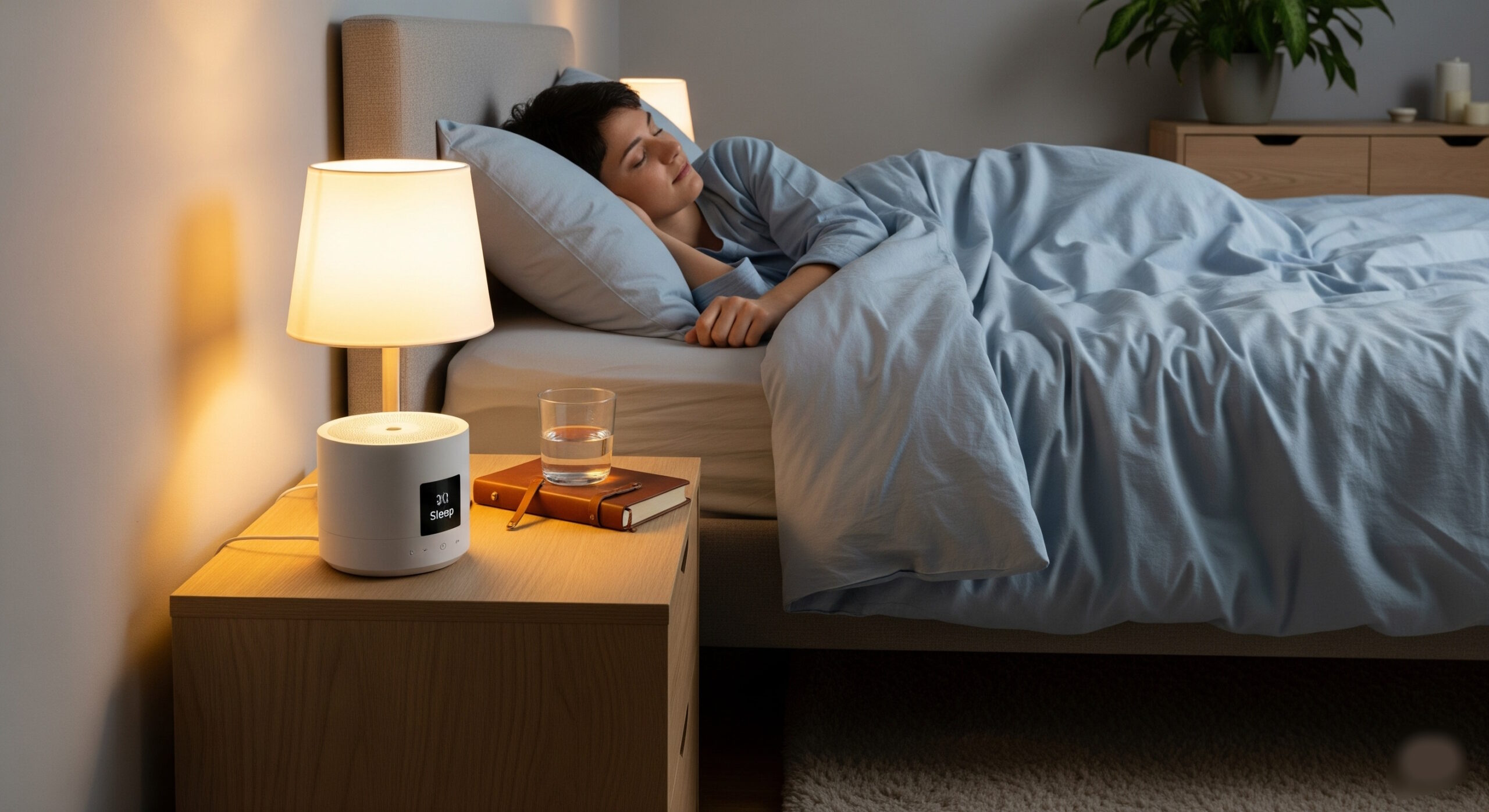
Have you ever been jolted awake by a dog barking at 3 a.m. or lost a full hour of sleep listening to a noisy neighbor? In our modern, increasingly loud world, getting a good night’s rest can feel like an impossible mission. The promise of a simple fix—a sound machine that could drown out all the commotion—has made white noise machines a staple in many bedrooms. But is this popular sleep aid a magic solution, a convenient crutch, or just another fleeting wellness trend?
This post will dive deep into the world of white noise machines to answer the ultimate question: do white noise machines improve sleep? We’ll explore the science behind how these devices work, compare them to other popular “color noises,” and weigh the benefits and drawbacks so you can make an informed choice for your own sleep quality.
The Science of Sound Masking: How It Works
To understand how a white noise machine works, we need to talk about what’s actually happening in your brain when you sleep. Even when you’re unconscious, your brain is a vigilant guardian, constantly processing sounds from your environment. A sudden, unexpected noise—like a door slamming, a siren, or an alarm—acts as a signal of potential danger.
This can trigger your body’s “startle reflex,” causing a spike in adrenaline and heart rate, pulling you out of deep sleep. These minor disruptions, even if you don’t fully wake up, can severely fragment your sleep and leave you feeling unrested the next day. This is a common form of sleep disturbance.
This is where a white noise machine comes in. It doesn’t actually block out sounds; rather, it creates a constant, steady hum of background noise. Think of it as a uniform wall of sound that contains every frequency the human ear can hear, all at the same volume. This wall of sound works by a principle called “auditory masking.”
By providing a consistent auditory baseline, the machine makes sudden changes in noise less noticeable to your brain. That car alarm that would have startled you is now just a minor blip in the steady hum. This allows your brain to stay in a state of calm, preventing those sudden jolts and helping you stay asleep longer. The constant and predictable ambient sound helps to promote relaxation and keep your brain activity from being stimulated by external chaos.
While a solid scientific consensus is still developing, some studies have even explored a potential connection between white noise and brain function. Researchers are investigating if the consistent nature of the sound could help synchronize brain waves to achieve a more stable sleep state.
For individuals with a restless mind or those who struggle to fall asleep, the constant, non-threatening sound can also serve as a useful mental anchor, helping to quiet racing thoughts.
The Many Colors of Noise: A Comparison Guide
When you start looking for a sound machine, you’ll quickly discover that the world of color noises extends far beyond just white. The “color” of a noise is determined by the distribution of its energy across the different sound frequencies.
The right choice for you depends on your personal preferences and the specific types of noises you’re trying to mask. To help you choose, here’s a quick guide to the most popular options:
| Noise Type | Sound Description | Primary Use for Sleep | Example Sound |
| White Noise | A static-like sound with equal intensity across all frequencies. It’s like a hissing radiator or a humming fan. | Excellent for masking all types of jarring sounds, from high-pitched sirens to low rumbles. | TV or radio static, a humming air conditioner. |
| Pink Noise | Deeper and more powerful than white noise, with more energy in the lower frequencies. | Often considered more soothing and calming. It’s better at masking low-frequency noises and can feel less harsh than white noise. | Steady rainfall, a rushing ocean waves on a gentle shore, rustling leaves. |
| Brown Noise | The deepest of the common color noises, with even more energy concentrated in the lowest frequencies. | Creates a very deep, rumbly sound that some people find incredibly soothing. It’s especially effective at masking low-frequency noises. | A strong waterfall, deep thunder, a low-frequency rumble. |
The differences between these noise colors are subtle but important for many people. Pink and brown noises are often considered to be more soothing and natural, making them a preferred choice for individuals who find the static of traditional white noise jarring. Some people find that a deeper, more bass-heavy sound is more effective for falling asleep and staying asleep.
The Benefits and Drawbacks of White Noise Machines
When considering whether a white noise machine is right for your bedtime routine, it’s important to weigh both the potential benefits and the drawbacks. While it can be a great tool, it’s not a one-size-fits-all solution for everyone.
Benefits of Incorporating White Noise
- Blocking Disruptive Noises for Better Sleep Quality: The primary and most well-documented benefit of white noise machines is their ability to mask noise. This is especially helpful for light sleepers or people living in noisy environments. Whether it’s city traffic, late-night revelers, or a snoring partner, a white noise machine can create a peaceful soundscape, helping you get the uninterrupted, high-quality sleep you need. A study from the American Board of Internal Medicine highlighted how ambient sound can reduce a person’s sensitivity to unpredictable environmental noises, which are a major contributor to poor sleep.
- Creating a Consistent Bedtime Routine: Consistency is a cornerstone of good sleep hygiene. Using a white noise machine as part of a nightly ritual can signal to your brain that it’s time to wind down and prepare for sleep. This auditory cue helps establish a predictable bedtime routine, making it easier for your mind and body to transition from an active state to a restful one. This is especially useful for people who struggle with a restless mind.
- Aiding Tinnitus Sufferers: For individuals with tinnitus, a chronic ringing or buzzing in the ears, the relentless sound can make falling asleep extremely difficult. A white noise machine can be a powerful tool for these individuals, as the constant sleep white noise can effectively mask the internal ringing, providing a sense of relief and allowing them to relax enough to sleep.
- Promoting Relaxation and Reducing Stress: The steady, predictable hum of a white noise machine can have a calming effect on the nervous system. This consistent ambient sound can help to quiet a busy mind and reduce the anxiety that often accompanies a difficult time trying to fall asleep. The act of focusing on the soothing sound can be a form of mindfulness that promotes a deeper state of relaxation. The Harvard Medical school and other institutions have conducted research suggesting the power of sound in aiding relaxation, but more research is still being done on the long-term effects.
Potential Drawbacks and Considerations
- Risk of Dependency: A significant concern with using a white noise machine every night is the potential for becoming dependent on it. If you get so used to the sound that you can’t fall asleep without it, traveling or being in a different environment can become a challenge. This dependency can create anxiety around sleep, making the problem worse than it was before you started using the machine.
- Volume and Hearing Damage: The World Health Organization and other reputable bodies have issued warnings about the potential for hearing damage from loud sounds, even with a white noise machine. The volume should always be kept at a low, safe level—never louder than a quiet conversation. Playing the sound at high volumes for long periods of time can cause long-term hearing issues.
- Masking Important Sounds: A loud machine could potentially mask crucial warning sounds, such as a smoke alarm, a security alarm, or even a baby monitor. It’s vital to ensure the volume is low enough that these important sounds remain audible.
- Doesn’t Address Underlying Issues: While a white noise machine is a great tool for masking sound, it’s not a cure for chronic sleep problems. If you’re consistently struggling with deep sleep, excessive daytime sleepiness, or other issues, the machine could be a temporary fix that prevents you from addressing a more serious underlying condition. For example, a white noise machine sleep apnea won’t solve the core issue of an obstructed airway; you need to consult a healthcare professional for a proper diagnosis and treatment.
FAQ
Is it good to sleep with white noise every night?
It is generally safe to use a white noise machine nightly, provided you keep the volume at a low, safe level to prevent hearing damage. The main concern for some people is a psychological dependency on the sound, which can make it challenging to sleep without it.
What is the healthiest noise to sleep to?
For many people, the healthiest sound to sleep to is actually silence, as it allows for the most natural sleep environment. However, if you need a masking sound, many find pink or brown noise to be more soothing and less jarring than white noise, as their deeper frequencies mimic natural sounds.
Effects of white noise on the brain
The primary effect of white noise on the brain is auditory masking, which prevents your brain from reacting to sudden noises and disturbing your sleep. There is also some emerging research suggesting it may improve improve cognitive function and attention, but more studies are needed to understand the full implications and long-term effects on brain activity.
Making an Informed Choice for Your Sleep
So, is white noise machine good for sleep? The answer, like with most things in wellness, is nuanced. For many people, a white noise machine can be a powerful and effective tool for improving sleep quality and helping them stay asleep.
It’s particularly useful for those who live in noisy environments or suffer from mild sleep disturbance. The constant, non-jarring ambient sound can genuinely help to quiet the mind and promote relaxation, making it easier to fall asleep.
However, it’s essential to use this tool mindfully. Avoid using it as a crutch for poor sleep hygiene, and be sure to address any underlying sleep disorders with a healthcare professional. Whether you choose a traditional white noise, a calming pink noise, or a deep rumble of brown noise, a sound machine can be a fantastic addition to your bedtime routine.
Used correctly, it can help you get the quiet, restful night’s sleep you deserve. If you’re curious, an Android white noise generator application can be a great way to experiment with different sounds before investing in a dedicated device.
The important takeaway is that while a white noise machine can certainly help you fall and stay asleep, it’s not a magic bullet. It’s just one piece of the puzzle in building a healthy and restorative sleep life.
Leave a Reply