
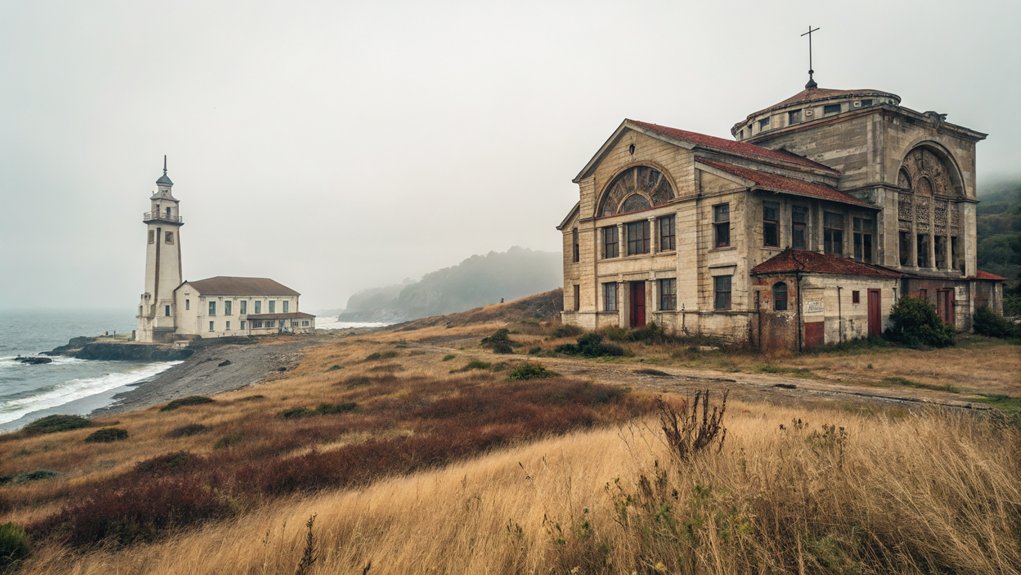
Abandoned places possess a unique charm that captivates photographers like you. Each site tells a story through its crumbling walls and fading colors. Whether it’s the eerie atmosphere of a forgotten theater or the serene beauty of an isolated fortress, these locations challenge your creativity and perspective. As you explore these haunting sites, you might just uncover the narratives hidden in their decay. What awaits you in the next spot on your journey?
Key Takeaways
- Predjama Castle in Slovenia combines dramatic architecture with rich history, perfect for capturing vibrant photography during golden hour.
- Michigan Theatre in Detroit showcases remnants of opulence, providing a remarkable backdrop with its cathedral ceilings and imaginative urban decay.
- Poveglia in Italy, steeped in dark history, entices explorers with its haunting architectural ruins visible from Lido.
- The Great Train Graveyard in Bolivia contrasts rusting locomotives against stark white salt flats, creating striking visual narratives.
- Beelitz-Heilstätten in Germany features decaying Art Nouveau elements within a sprawling sanatorium complex, rich in historical significance and ghostly allure.
The Allure of Abandoned Places: Why Photographers Love Them
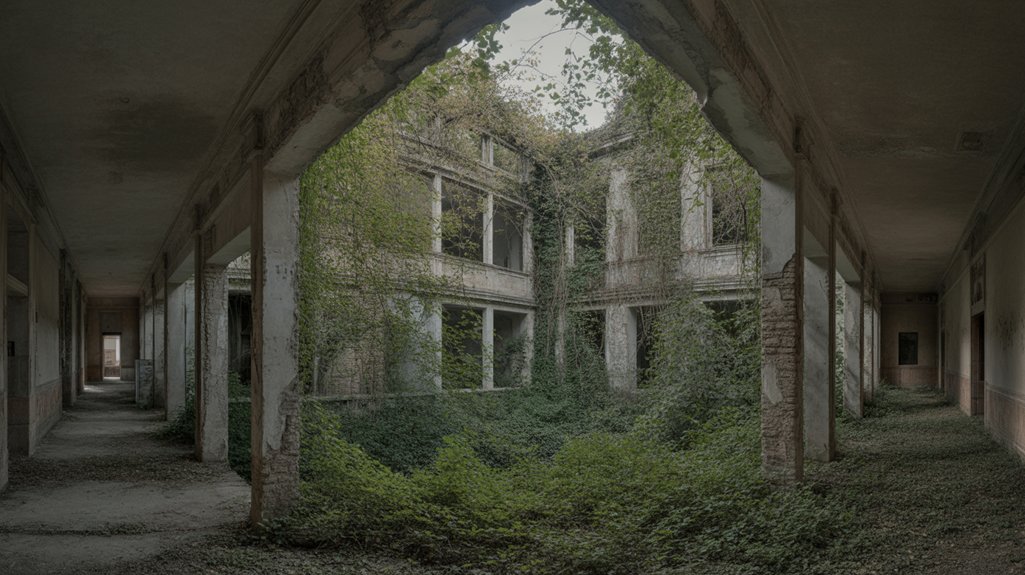
The allure of abandoned places draws photographers in like a moth to a flame. You’re captivated by the eerie, melancholic atmosphere that these sites exude, perfect for showcasing the beauty of decay and the passage of time.
The interplay of light and shadows enhances your visual storytelling, allowing for unique compositions that immerse viewers in the forgotten narratives of these spaces. You find yourself enchanted by the textures and intricate details that evoke powerful emotions, revealing stories about past inhabitants.
As urban exploration photography gains traction on social media, you connect with fellow enthusiasts, fostering an appreciation for the aesthetic charm of neglected sites. Each photograph helps preserve cultural narratives, shedding light on the impacts of abandonment and urban decay.
Discovering the Fairy Tale Fortress of Predjama Castle in Slovenia
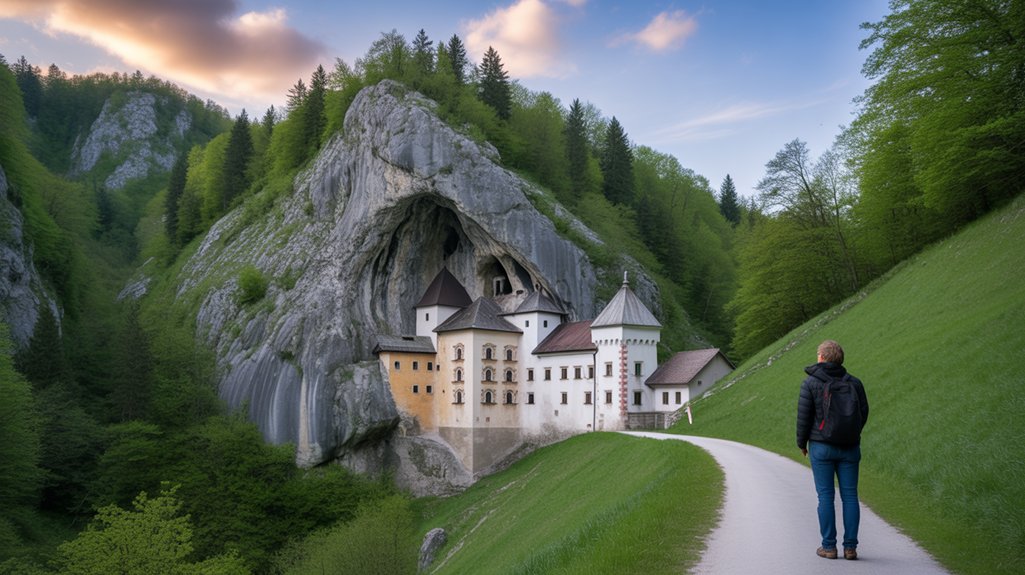
When you visit Predjama Castle in Slovenia, you’ll be captivated by its rich history and stunning architectural design, perched dramatically on a cliff.
This castle not only tells the tale of its legendary nobleman, Erazem, but also offers endless photography opportunities amidst its breathtaking scenery.
Get ready to capture the perfect shot of this fairy tale fortress blending with nature’s beauty.
For more travel inspiration, Albania’s The City of a Thousand Windows reflects the same kind of timeless charm that makes historic destinations so photogenic.
Historical Significance of Predjama
Nestled within a towering cliff, Predjama Castle stands as a remarkable tribute to Slovenia’s rich history and architectural prowess. Built in the late 12th century, it’s not just the largest cave castle in the world; it’s a symbol of resilience.
Its association with Erazem of Predjama and the defiance against the Habsburgs adds layers of intrigue to its story. With Gothic and Renaissance influences shaping its design, the castle has captured the imaginations of nearly 100,000 visitors each year.
- A demonstration of noble resistance and bravery
- A breathtaking blend of natural beauty and human artistry
- A living connection to Slovenia’s folklore
- A symbol of enduring strength through the ages
Architectural Marvels and Features
While exploring Predjama Castle, you’ll discover an enchanting blend of nature and architecture that creates a truly fairy-tale atmosphere.
Perched dramatically on a 123-meter high cliff, this medieval fortress, built in the 13th century, showcases a mesmerizing combination of Gothic and Renaissance styles.
As you wander through its majestic halls, you’ll notice intricate details that reflect its historical significance and cultural heritage. The castle’s network of 700 meters of caverns adds to its mystique, offering clever escape routes for its inhabitants during sieges.
Known as the “Fairy Tale Castle,” Predjama’s picturesque appearance is enhanced by legends of the valiant knight Erazem.
As a UNESCO World Heritage Site, its breathtaking architecture invites you to step back in time.
Photography Opportunities and Tips
Exploring Predjama Castle offers not just a glimpse into history but a treasure trove of photography opportunities. Nestled within a towering cliff, this 13th-century masterpiece provides a mesmerizing backdrop for your photos.
Whether you’re capturing the intricate Gothic and Renaissance details or stunning views of the surrounding landscape, you’ll find endless inspiration.
- Embrace the dramatic textures and angles that shift with the light.
- Seek out hidden passages for mysterious and enchanting compositions.
- Visit during the golden hour for ethereal skies that enhance the castle’s charm.
- Utilize well-maintained paths and viewpoints for safe, unobstructed shots.
With careful planning and an eye for detail, your photographs can truly resonate with the magic of this fairy tale fortress.
Photographing the Haunting Asylum Among the Trees
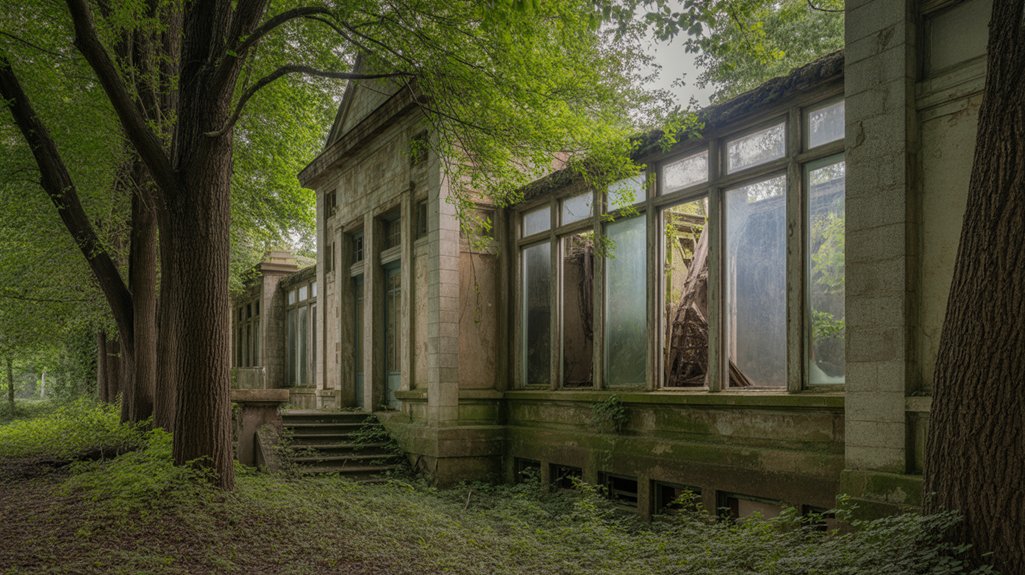
Abandoned asylums, shrouded in the embrace of overgrown trees, offer a haunting tableau that beckons photographers. Locations like the Buffalo State Asylum and Ontario psychiatric hospital showcase unique architectural elements, such as stained glass and intricate moldings, which nature slowly reclaims.
The eerie atmosphere enhances your photos, creating compelling juxtapositions of decay against lush greenery.
However, approach these sites with caution. Unstable structures and dense vegetation can pose risks, so stay alert as you wander.
Each shot resonates emotionally, reflecting the poignant history of former inhabitants and sparking viewers’ imaginations. By capturing these moments, you not only document the beauty in abandonment but also tell the evocative stories that linger in the shadows of these long-forgotten places.
Why Are Abandoned Chateaus in France Enchanting?
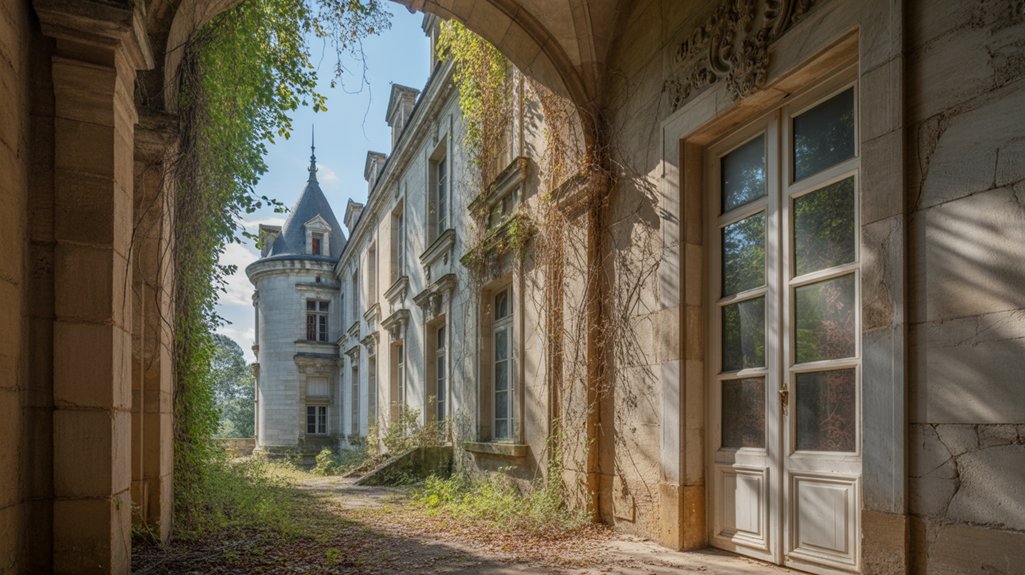
When you explore abandoned chateaus in France, you’re captivated by their breathtaking architectural grandeur, showcasing the blend of Gothic, Renaissance, and Baroque styles.
The mysterious history and legends surrounding these sites echo through time, stirring your imagination about their past inhabitants.
As nature reclaims its territory, these enchanting ruins invite you to witness beauty intertwined with history.
Architectural Grandeur and Detail
The charm of France’s abandoned chateaus lies in their exquisite architectural grandeur and intricate details, which tell stories of a bygone era.
As you explore these historic structures, you’ll find a mesmerizing blend of Renaissance and Gothic elements that reflect their opulent past. The ornate facades and richly detailed interiors showcase the artistic preferences of their time.
- The haunting beauty of intricately carved moldings
- The warmth of grand fireplaces, once filled with flickering flames
- The vibrant colors of stained glass filtering sunlight
- The enchanting landscapes where nature intertwines with history
Each abandoned chateau offers a unique photographic opportunity, allowing you to document the majestic beauty of decay and the poignant tales of luxury and decline.
Mysterious History and Legends
Exploring the fascinating architecture of France’s chateaus naturally leads you to their intriguing pasts. Each abandoned structure, like the iconic Château de Leuhan, boasts architectural grandeur that whispers tales of former nobility and tragic events.
Take, for instance, the haunted Château de Brézé, which was once the setting for secretive royal meetings. The legends and ghost stories wrapped around these chateaus consistently captivate your imagination, drawing you in to witness spectral apparitions and unexplained phenomena lingering within their decaying walls.
Their romantic ruin, adorned with dense forests and manicured gardens, creates an otherworldly atmosphere that beckons photographers and explorers alike. Despite preservation challenges, their decay enhances their haunting beauty and evokes a deep nostalgia for a bygone era.
Capture Stunning Shots at Unforgettable Ruins in Portugal
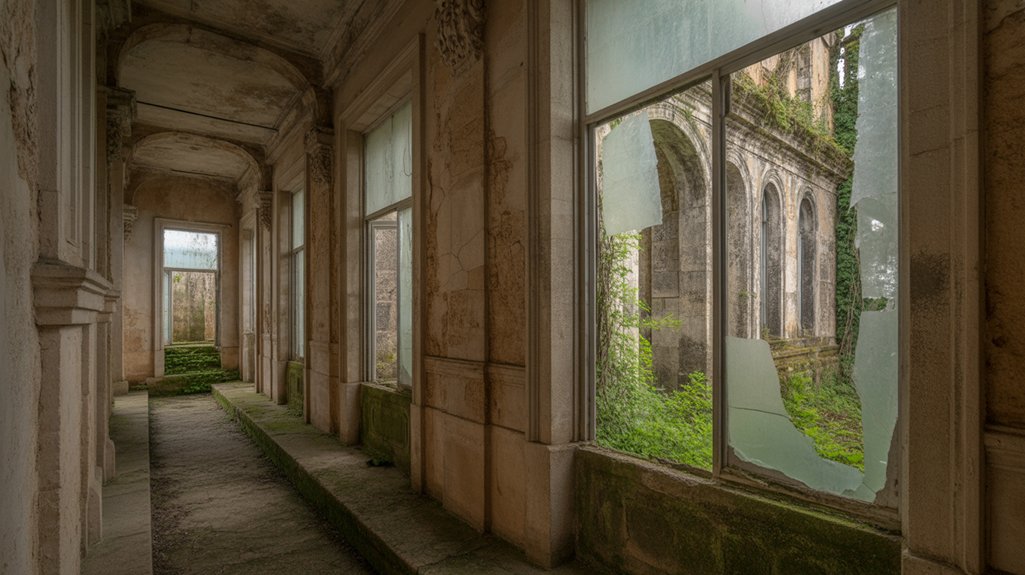
Stepping into Portugal’s abandoned ruins is like walking through a living canvas, where history and nature intertwine beautifully.
At each site, you’ll find stunning opportunities for photography that capture the essence of the past.
- Explore the Convent of Nossa Senhora dos Remédios in Lamego, where intricate architecture tells tales of time.
- Capture breathtaking views from the Castle of Castro Marim, perfectly blending history with picturesque scenery.
- Discover the charming village of Piodão, where traditional stone houses are nestled against a mountainous backdrop.
- Visit the Relógio de Água in São Brás de Alportel, with its beautiful water clock ruins offering a glimpse into forgotten stories.
Each location invites you to create unforgettable images that resonate with deep emotion.
For a different kind of memorable outing, Slovenia’s unique experiences highlight original adventures that blend culture, nature, and local tradition.
The Great Train Graveyard in Bolivia: A Rusting Relic

While wandering through the Great Train Graveyard in Uyuni, Bolivia, you’ll encounter a haunting collection of rusting locomotives that tell stories of an era long gone.
Dating back to the early 20th century, these abandoned antique trains were once essential for mineral transport until operations ceased in the 1940s.
As you explore this eerie graveyard, you’ll discover how economic challenges and conflicts led to these relics being left to rust in a tough, arid environment.
The stark white backdrop of the salt flats enhances the visual impact, creating a striking contrast with the decaying trains.
It’s no wonder this unique location has become a favorite among photographers seeking both haunting beauty and rich historical context.
Exploring England’s Abandoned Sea Forts
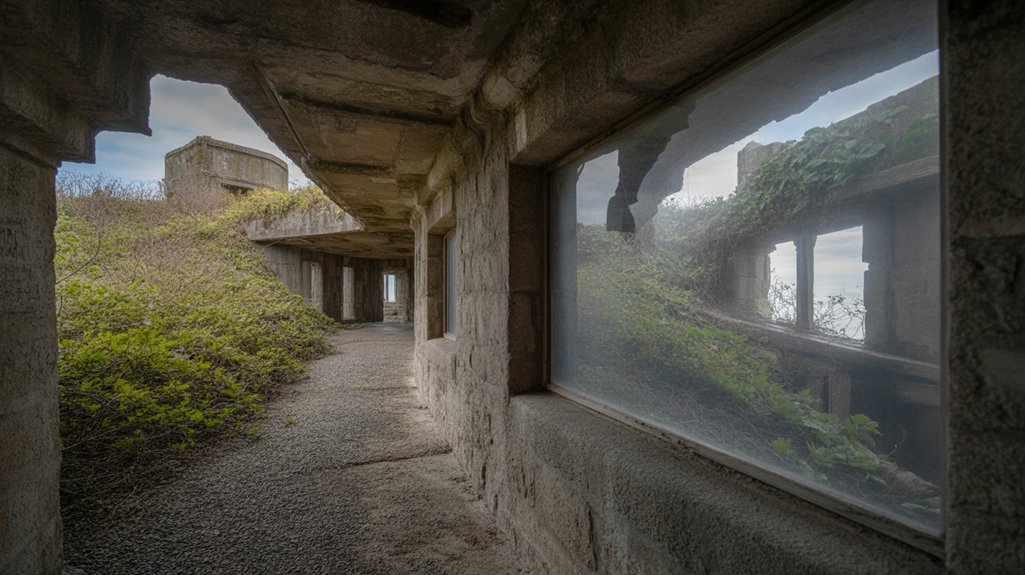
Have you ever wondered what secrets lie within England’s abandoned sea forts? The Maunsell Sea Forts, once bustling during World War II, now stand silent, their history echoing in the air.
Decommissioned in the 1950s, these quirky remnants of military architecture offer a unique glimpse into the past.
When visiting, you’ll feel the weight of history on your shoulders as you explore:
- The haunting silhouette of forts that resemble UFOs
- The whispers of once-vibrant radio waves from pirate broadcasts
- The thrill of urban exploration amidst rusting metal and crumbling concrete
- The cultural significance brought to life by the self-proclaimed Principality of Sealand
These enchanting sights are waiting for you to uncover their stories.
Michigan Theatre: Detroit’s Majestic Cinematic Ruins
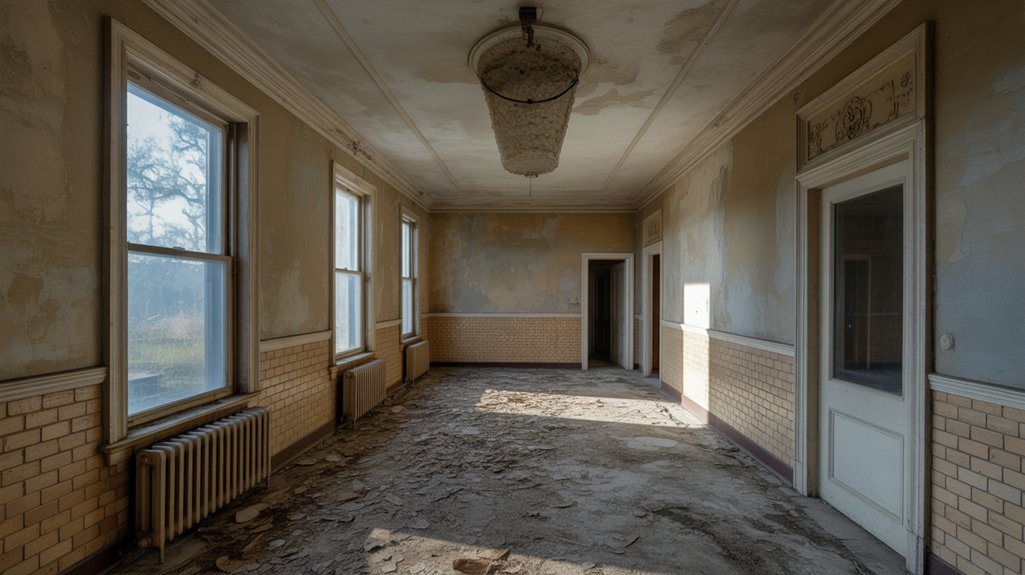
When you step inside the Michigan Theatre, you’re greeted by the remnants of its architectural splendor, a bittersweet reminder of Detroit’s vibrant cinematic past.
Capturing this juxtaposition of grandeur and decay not only tells a story but also highlights the rich cultural history at risk of being forgotten.
As you photograph its stunning details, you’ll find endless inspiration for your visual storytelling.
Architectural Marvels At Risk
As you step into the Michigan Theatre, designed in 1926 to dazzle with its 4,000 seats and opulent details, you’re instantly transported to a time of cinematic splendor that has long since faded.
Once a beacon of entertainment, it closed in 1967, succumbing to the allure of suburban theaters.
Today, this architectural marvel stands as a parking garage, yet fragments of its former glory linger.
- Cathedral ceilings whisper stories of lavish gatherings.
- Frescoed walls, now peeling, still hint at artistic brilliance.
- Deterioration shows the scars of urban decay and neglect.
- Its haunting beauty captivates photographers, drawing them to explore the contrast of elegance and ruin.
The Michigan Theatre reminds us of the fragility of cultural heritage.
Rich Cultural History
While many may overlook the Michigan Theatre amid the bustling urban landscape of Detroit, its rich cultural history tells a fascinating tale of glamour and decline. Opened in 1926, this majestic venue could accommodate around 4,000 patrons, showcasing the opulence of early 20th-century cinema.
However, after closing in 1967 due to competition from suburban theaters and television, it faced various repurposing efforts, including conversion into a parking garage.
Despite its deterioration, the theatre still boasts stunning architectural elements like cathedral ceilings and frescoed walls, reminders of its past grandeur. The blend of historic features and modern functionality creates a unique photographic contrast, making the Michigan Theatre an enthralling relic of cultural history in the heart of Detroit.
Visual Storytelling Inspiration
Exploring the Michigan Theatre offers a unique opportunity to capture the essence of urban decay and rich history in your photography. As you wander through the remnants of this majestic space, you’ll find a compelling narrative woven into its walls.
The stunning contrast between the theater’s opulent architecture and its current state evokes a powerful sense of loss and nostalgia.
- The grandeur of the cathedral ceilings whispers stories of past audiences.
- Deteriorating frescoes reflect the beauty of a bygone era.
- Shadows dance across remnants of cinematic history, inviting reflection.
- The juxtaposition of urban decay against newfound revitalization sparks hope.
Your lens can transform these elements into breathtaking visual storytelling, capturing both the melancholy and resilience of Detroit.
Capturing the Ghost Town of Centralia, Pennsylvania
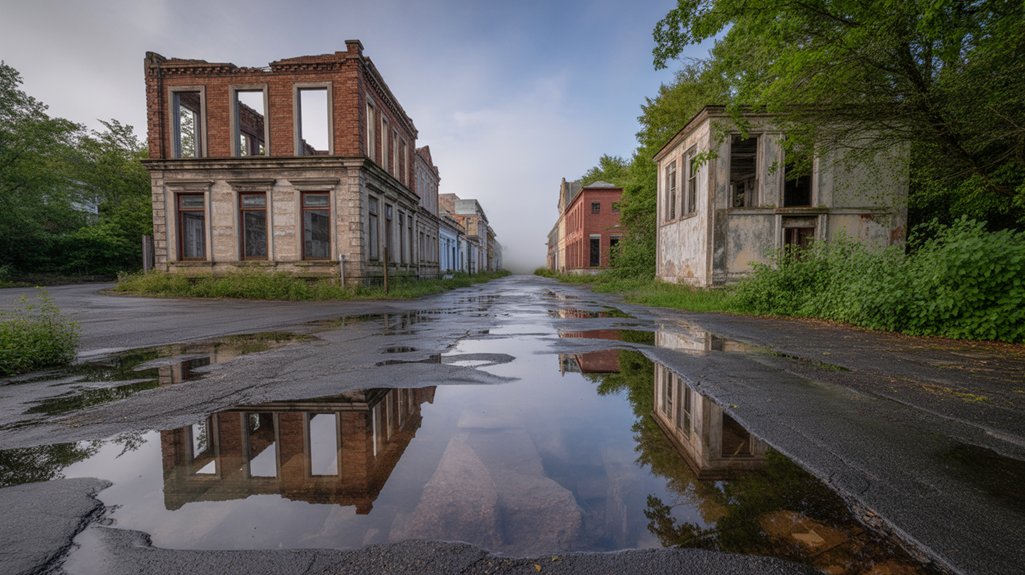
Few places capture the imagination quite like the ghost town of Centralia, Pennsylvania.
Once a bustling coal mining community, its fate changed drastically when an underground fire ignited in 1962, and it still burns today. As you walk through the town, you’ll encounter crumbling buildings and remnants of a once-thriving society, with only four residents remaining as of 2021.
The infamous Graffiti Highway beckons urban explorers, its vibrant artwork contrasting the town’s eerie atmosphere. Smoke rising from the ground adds an otherworldly feel, perfect for haunting photography.
Centralia serves as a striking reminder of the environmental consequences of coal mining, making it a compelling destination for those drawn to urban decay and storytelling through images.
Eternal Echoes of the Eerie Salt Mine in Romania
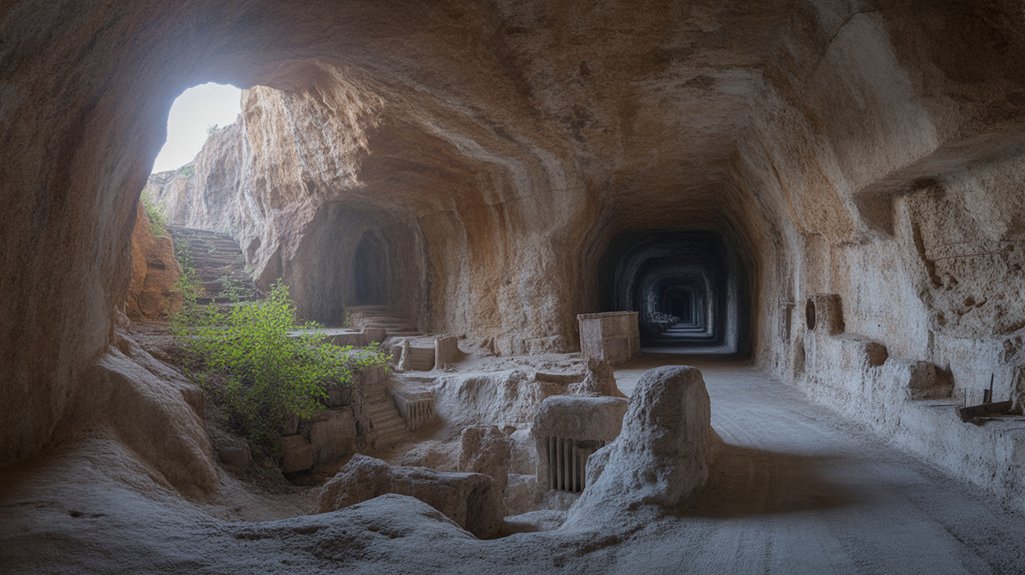
As you descend into the depths of the Salina Turda Salt Mine in Romania, you’re transported to a surreal world where history and nature intertwine. Dating back to the 11th-13th centuries, this formerly operational mine now captivates with its stunning underground chambers and mesmerizing salt formations.
You can feel the echo of its past, with remnants of its significance as an essential salt source still lingering in the air. With recreational facilities like a Ferris wheel and underground lakes, it’s a haunting yet beautiful space for photographers keen to capture its eerie atmosphere.
- Experience the contrast of light against textured salt walls.
- Witness the haunting beauty of abandoned industrial heritage.
- Embrace the serene silence enveloping the chambers.
- Discover the intriguing blend of history and creativity.
Timelessness at Poveglia: Venice’s Doomed Island
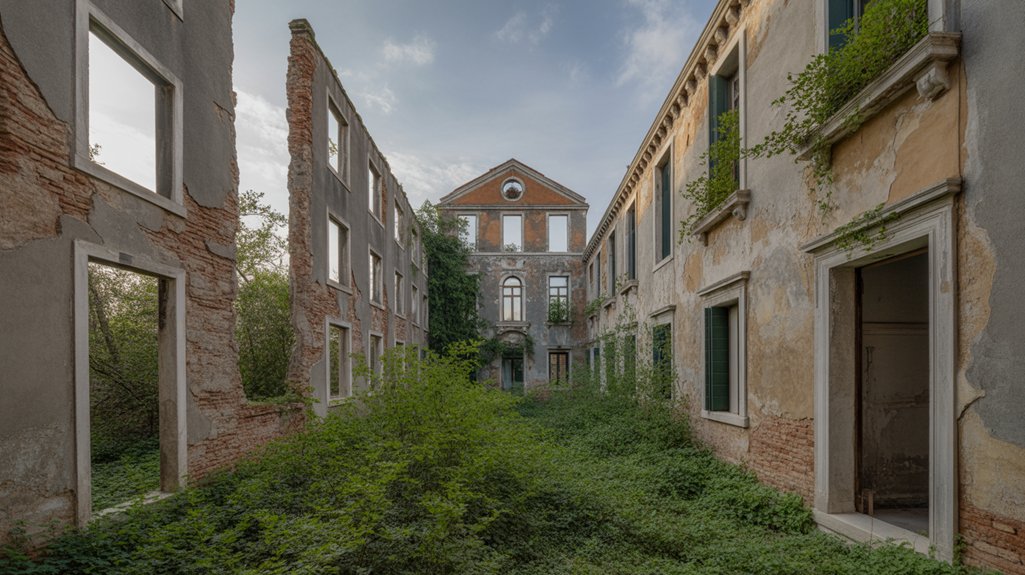
Poveglia beckons you with its ghostly historical significance and intriguing architectural ruins, echoing tales of its dark past.
As nature reclaims this forsaken island, you’ll witness a compelling interplay between decay and resilience.
Here, every crumbling wall and overgrown path tells a story of life, death, and survival.
Ghostly Historical Significance
What secrets lie within the overgrown ruins of Poveglia, Venice’s infamous island? This haunting place, once a quarantine zone for plague victims and a site for brutal medical experiments, is steeped in dark history.
With an estimated 160,000 lives lost there, shadows linger among the decaying structures, inviting curious souls while evoking deep unease. The asylum’s chilling tale is underscored by the eerie legend of a doctor who jumped to his death from the bell tower.
Though visiting is illegal, the island’s presence remains palpable from the shores of Lido.
- Whispering ghosts of the past
- Decaying walls steeped in sorrow
- A relentless air of despair
- Timeless echoes of human suffering
Captivating Architectural Ruins
Amidst the whispers of lost souls, the architectural ruins of Poveglia reveal a haunting beauty that enchants anyone who dares to gaze upon them. Just under half a mile from Venice, this island’s chilling past as a quarantine zone and asylum adds to its allure.
You’ll find decaying structures that tell stories of horrific experiments and lives lost, especially the infamous bell tower where a doctor met his tragic end. Though it’s illegal to visit, you can still view Poveglia from Lido, where the eerie outlines of its buildings stand against the picturesque Venetian backdrop.
This enchanting juxtaposition of beauty and decay invites photographers and urban explorers, igniting an irresistible desire to uncover its dark secrets.
Nature’s Reclamation Journey
Although many may avoid stepping foot on Poveglia, its deserted spaces tell a compelling story of nature’s relentless reclamation. This island, forever haunted by its past as a quarantine zone and asylum, showcases a striking contrast. Abandoned buildings, left to decay, are now intertwined with the wild flora that envelops them.
The eerie atmosphere draws you in, igniting your curiosity and creativity.
- Witness nature’s power reclaiming human-made structures.
- Experience the chilling echoes of history that linger in the air.
- Capture the delicate balance of decay and growth.
- Feel the haunting beauty that fuels the imagination of photographers and explorers alike.
Poveglia’s everlasting transformation reminds us of nature’s astonishing resilience.
Ghostly Beauty at Beelitz-Heilstätten in Germany
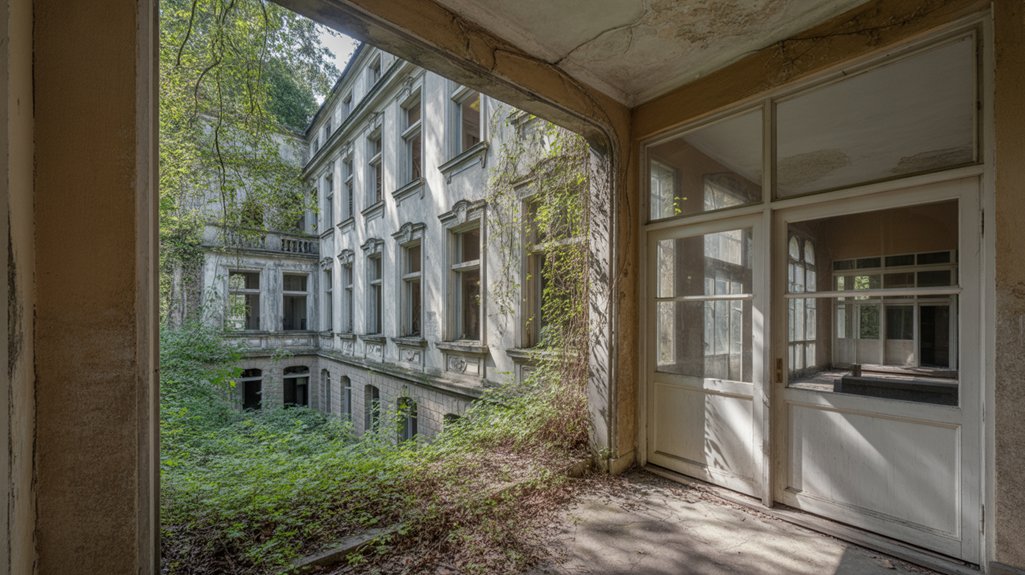
Beelitz-Heilstätten in Germany captivates with its ghostly beauty, drawing photographers to its hauntingly picturesque landscape. This sprawling complex, originally a tuberculosis sanatorium, boasts over 60 buildings adorned with decaying architecture and lush, overgrown vegetation.
As you explore, don’t miss the Main Building, where exquisite Art Nouveau elements like ornate tiles and intricate woodwork reflect the architectural style of its time.
The site’s historical significance is profound, having served as a military hospital during World War I and later as a Soviet facility until 1994.
You’ll find that the eerie atmosphere inspires numerous art projects and film productions, making Beelitz-Heilstätten a must-visit for anyone enthusiastic to capture urban decay’s poignant beauty.
The Fascinating Stories Behind Abandoned Architectural Wonders
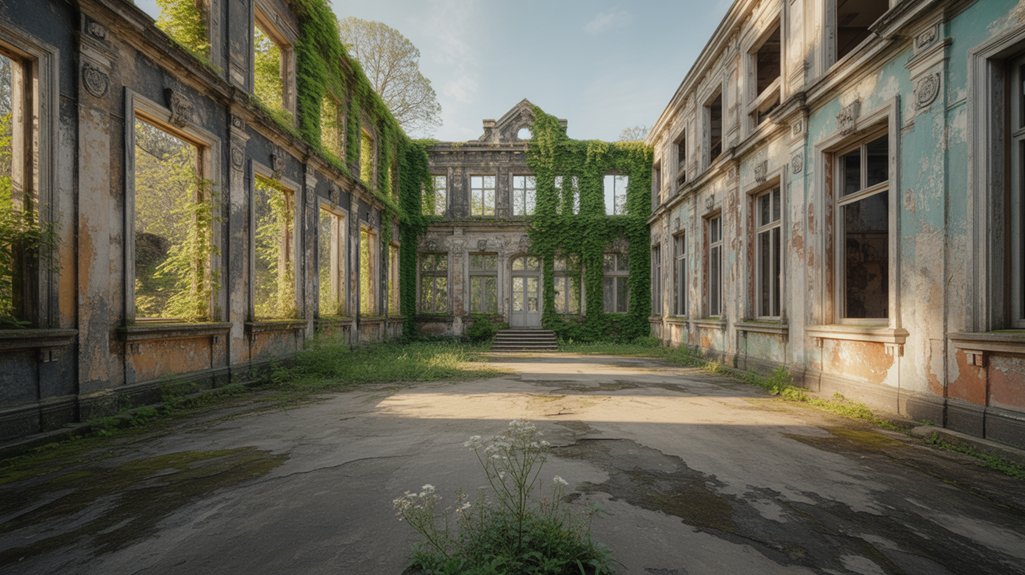
Exploring abandoned architectural wonders reveals fascinating stories that intertwine history, culture, and human experience. Each site whispers tales of its past—reflecting life’s impermanence and beauty.
- The Michigan Theatre in Detroit, once a vibrant cultural hub, is now a parking garage, sacrificing elegance for practicality.
- Poveglia, a desolate island, carries the sorrow of plague victims and haunted asylum stories, luring curious souls.
- Craco, a medieval village in Italy, enchants with its stone architecture and quaint streets, a monument to resilience and beauty amid abandonment.
- Hashima Island, now a UNESCO site, stands as a ghostly reminder of the coal industry’s decline, with its towering structures echoing forgotten days.
Each location carries a unique narrative that you can’t help but feel compelled to capture.
How to Prepare for Your Urban Photography Adventure
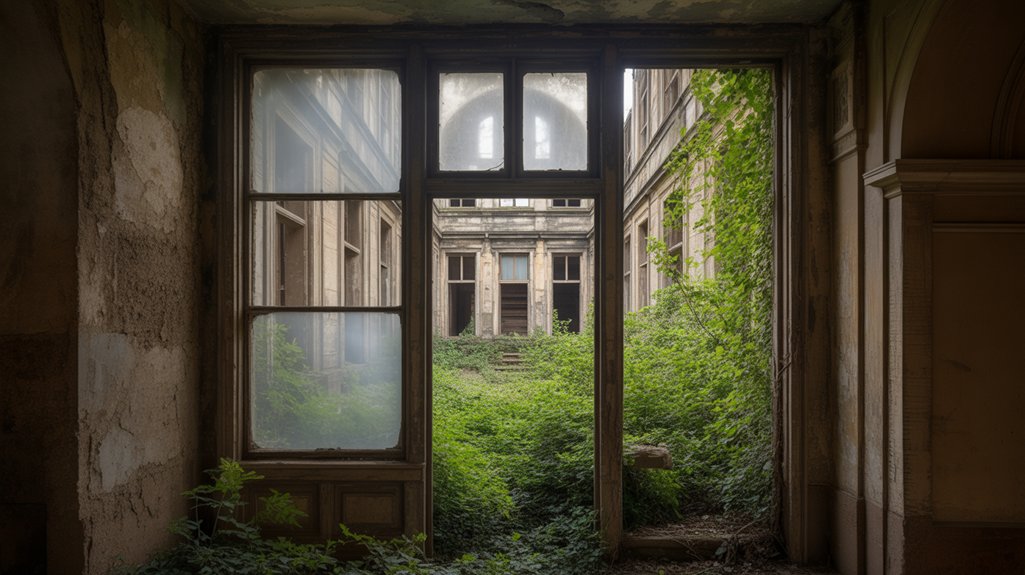
Capturing the beauty of abandoned places requires more than just a good eye; it demands careful preparation. Start by researching your chosen location to understand its history, accessibility, and any safety hazards you might encounter. This guarantees a safe exploration.
Assemble essential gear like a camera, various lenses, a flashlight, gloves, masks, snacks, water, and a first aid kit to stay prepared. Dress in suitable clothing and footwear for comfort and protection against unpredictable conditions.
It’s advisable to explore during daylight hours to maximize visibility and minimize risks. Finally, always follow the urban exploration code: “Take nothing, leave nothing.” Respect the locations and their histories while reducing your impact on these hauntingly beautiful spaces.
For deeper context, many abandoned sites across the United States reveal the history and decline of once-active communities.
Frequently Asked Questions
What Is Photography of Abandoned Places Called?
The photography of abandoned places is called urbex or urban exploration photography. You’ll capture decaying structures, showcase fascinating textures, and explore the stories of past inhabitants while revealing the beauty in forgotten environments.
What Are Some of the Creepiest Abandoned Places?
Some of the creepiest abandoned places include Poveglia Island, Centralia, and Aokigahara Forest. These locations are steeped in dark history, each echoing eerie stories that send chills down your spine as you explore.
Leave a Reply