
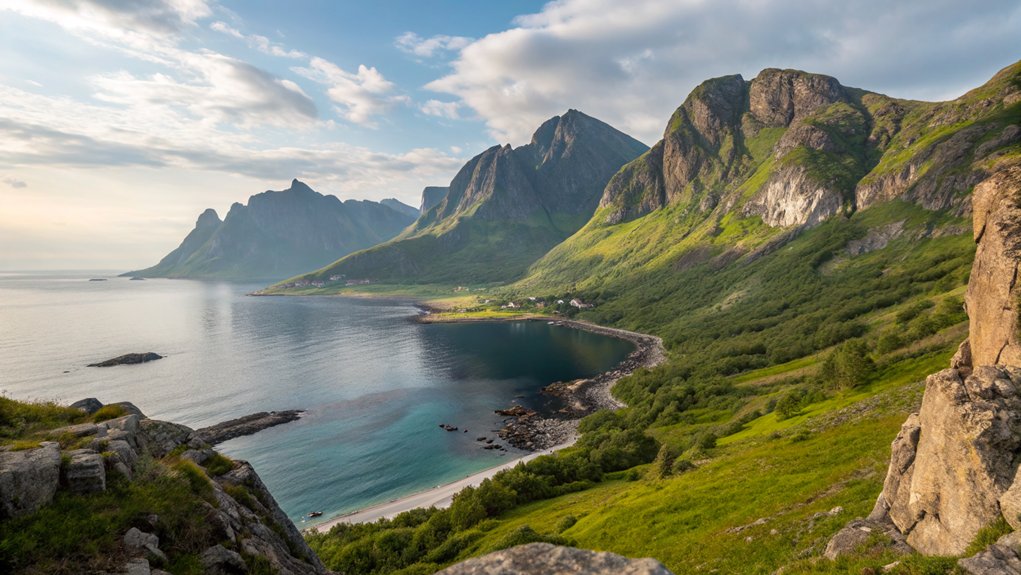
When planning your journey to the Lofoten Islands, you’re in for an experience that seamlessly combines breathtaking nature and rich culture. From rugged cliffs to charming villages, every corner offers something special. You’ll want to know how to get there and the best times to visit. Plus, there’s a list of local dishes you simply can’t miss. Curious about what awaits you in this stunning part of Norway?
Key Takeaways
- The Lofoten Islands are known for stunning landscapes, charming fishing villages, and unique natural phenomena like the midnight sun and northern lights.
- Travel to Lofoten can be achieved via ferry from Bodø or direct flights from Bodø to Leknes; advance bookings are recommended.
- The best time to visit ranges from June to September for hiking and summer activities, and February to March for winter sports and northern lights.
- Key attractions include scenic drives along the E10 highway, hiking trails like Ryten, and quaint fishing villages such as Reine and Henningsvær.
- Don’t miss local culinary experiences, featuring dishes like Skrei and Stockfish, alongside cultural sites like the Lofotr Viking Museum.
Why Visit the Lofoten Islands?
The Lofoten Islands are a true gem, offering breathtaking landscapes that you won’t find anywhere else.
Picture towering mountains, pristine beaches, and charming fishing villages that draw in nature lovers and photographers like you. Thanks to the Gulf Stream, the islands enjoy mild temperatures year-round, making outdoor activities accessible no matter when you visit.
Hiking is a must here, with trails such as Reinebringen and Ryten providing stunning panoramic views during the main season from June to September. You’ll also be captivated by the islands’ vibrant cultural heritage, visible through traditional rorbu and historical sites like UNESCO-listed Nusfjord.
Plus, experiencing the midnight sun or the northern lights will make your visit unforgettable, no matter the season!
Getting to the Lofoten Islands: Travel Options
Reaching the Lofoten Islands is part of the adventure, and you have several travel options to choose from. Here are three ways to get there:
- Fly to Bodø: Take a flight to Bodø, then enjoy a scenic 3-4 hour ferry ride to Moskenes. This route offers stunning views of the surrounding landscapes.
- Direct Flights to Leknes: Catch a direct flight from Bodø to Leknes (LKN) via Widerøe, making your journey quicker and more convenient.
- Via Harstad/Narvik Airport: Fly into Harstad/Narvik Airport (EVE) and access Lofoten from the northern end, offering an alternative approach.
Keep in mind that schedules can vary, especially in summer, so check for seasonal changes and book your travel in advance!
Best Time to Experience Lofoten’s Beauty
When you’re planning your trip to Lofoten, the timing plays a vital role in your experience. Each season offers unique weather conditions and daylight hours, impacting your activities and views.
Understanding the best times to visit can help you make the most of Lofoten’s stunning beauty.
Ideal Seasons For Travel
What’s the best time to experience the breathtaking beauty of Lofoten? To truly soak in this stunning destination, consider these ideal seasons:
- June to September: Enjoy stable weather and accessible hiking trails, perfect for outdoor activities.
- Mid to Late August: Experience fewer crowds and lovely summer-like weather, making it a fantastic time for exploration without the busy tourist rush.
- September: Milder temperatures await you along with an increased chance to spot the northern lights, enhancing your overall adventure.
If you’re keen on winter activities and maximizing your northern lights chances, visit between February and late March.
Each season offers its unique charm, so choose based on your interests!
Weather Variability Insights
Understanding Lofoten’s weather variability is key to planning your trip effectively. The ideal time to visit is from mid to late August, when the weather’s milder and crowds are thinner, making your experience much more enjoyable.
When September rolls around, you’ll have opportunities to see the northern lights under favorable conditions, perfect for some magical stargazing.
June and July bring the midnight sun, extending hiking hours, but expect larger tourist crowds and fewer clear night skies.
If winter’s on your mind, consider visiting from February to late March for winter activities and a better chance to catch the northern lights, even though daylight is limited during December and January.
Flexibility is essential for fun outdoor adventures!
Daylight Hours Considerations
How can you make the most of Lofoten’s breathtaking beauty?
Timing your visit around daylight hours is essential for experiencing all this stunning archipelago has to offer. Here are three key periods to take into account:
- Midnight Sun (June to mid-July): Delight in nearly 24 hours of sunlight, perfect for extended hikes and photography.
- Late Summer (August to September): Enjoy 14-16 hours of daylight, ideal for outdoor adventures as the weather remains mild before winter sets in.
- Winter Wonders (February to March): Witness 10-12 hours of day, which is great for winter sports and catching stunning sunsets.
Essential Packing List for Your Lofoten Adventure
When you pack for your Lofoten adventure, you’ll need to contemplate the unpredictable weather and varied terrain.
Make sure you bring waterproof clothing and sturdy hiking boots to keep you comfortable while exploring.
Also, don’t forget thermal layers and essentials for staying hydrated and energized on your hikes. For extra inspiration, Lofoten is a great place to experience friluftsliv and embrace Norway’s nature-based outdoor lifestyle.
Clothing For Varied Weather
Lofoten’s weather can change on a dime, so packing the right clothing is essential for your adventure. Dress in layers to handle everything from sunshine to sudden rain and chilly winds. Here’s what you should definitely include:
- Lightweight, waterproof outer layer: A good rain jacket will keep you dry when unexpected showers hit.
- Insulated clothing: Pack thermal tops and bottoms to stay warm, especially during early spring or late autumn.
- Sturdy, waterproof hiking boots: These are vital for trekking through Lofoten’s rugged terrain while keeping your feet dry and comfortable.
Don’t forget accessories like gloves, hats, and scarves for that extra warmth, especially when you’re out watching the northern lights in the evening!
Hiking Gear Essentials
As you prepare for your Lofoten adventure, ensuring you have the right hiking gear is essential for a safe and enjoyable experience.
Start with proper hiking boots that offer good grip and waterproof features for those muddy, rocky trails. A lightweight, waterproof jacket and breathable layers will keep you comfortable when the weather unexpectedly changes.
Don’t forget a reliable map or GPS device like Norgeskart to help navigate the stunning trails and viewpoints.
It’s also vital to pack safety gear, including a first aid kit, enough food and water, and a headlamp, especially during the shoulder months when daylight is limited.
Equipped with these essentials, you’ll be ready to tackle Lofoten’s breathtaking landscapes!
Top Scenic Drives and Routes in Lofoten
Whether you’re seeking dramatic landscapes or picturesque coastal views, the scenic drives in Lofoten promise an unforgettable experience.
The E10 highway, known as King Olav’s Road, is a must-ride, connecting major villages while offering breathtaking views of rugged mountains and fjords.
Here are three top routes to explore:
- Hamnøy to Sakrisøy – Capture stunning photos of iconic red rorbu fishing cabins against towering peaks.
- Nusfjord to Henningsvær – Enjoy dramatic scenery, with stops at the Lofotr Viking Museum and beautiful beaches.
- Uttakleiv Beach to Haukland Beach – Revel in striking beauty with sandy stretches and rugged cliffs, perfect for sunset photography.
Pack your camera and prepare for a visual feast!
Must-See Fishing Villages in Lofoten
As you explore Lofoten, you’ll encounter charming fishing villages that showcase the region’s authentic fishing culture and stunning architecture.
Each village, from Reine’s iconic rorbu to Nusfjord’s historic facilities, offers breathtaking landscapes that will capture your heart.
Get ready to experience the vibrant atmosphere and rich heritage of these must-see spots!
Authentic Fishing Culture
Exploring Lofoten’s authentic fishing culture is a must for any traveler, with iconic villages like Å, Reine, and Henningsvær showcasing the region’s rich maritime heritage.
You’ll discover the traditional red wooden fishermen’s houses (rorbu) that date back to the 16th century, offering glimpses into the past.
Here are three villages you can’t miss:
- Å: The westernmost village, known for its strong fishing heritage, with only about 100 residents.
- Reine: Famous for its stunning harbor and dramatic landscapes, perfect for capturing unforgettable photographs.
- Henningsvær: A charming village packed with art galleries, boutique shops, and even a unique football pitch on a tiny island.
Immerse yourself in the enthralling culture and history at each stop!
Scenic Architecture and Landscapes
Lofoten’s fishing villages offer a stunning blend of scenic architecture and breathtaking landscapes that will leave you in awe.
In Hamnøy, the iconic red rorbu stands out against dramatic mountains, perfect for photography.
Visit Nusfjord, a UNESCO World Heritage Site, to explore its historical wooden fishermen’s houses, showcasing Norway’s fishing heritage.
Then head to Reine, often deemed Norway’s most beautiful village, where colorful rorbu line the harbor, framed by towering peaks.
Henningsvær, known as the “Venice of Lofoten,” charms with its scenic waterfront and unique football pitch amidst towering mountains.
Don’t miss the iconic yellow rorbu in Sakrisøy, where you can immerse yourself in local seafood at Anita’s Seafood café, delighting in fresh flavors from the sea.
Epic Hiking Trails to Explore in Lofoten
Five epic hiking trails await you in Lofoten, each offering unique landscapes and breathtaking views. Here are some trails you shouldn’t miss:
- Ryten: A 7.5-kilometer hike taking 5-6 hours, rewarding you with stunning views of Kvalvika Beach from the summit.
- Kitind: This challenging 6-kilometer trail involves a 750-meter elevation gain, ideal for those with navigation skills, and offers impressive vistas.
- Mannen: Covering 4.5 kilometers with a 420-meter elevation gain, this trail leads to panoramic views of Haukland and Vik Beaches, typically taking 2.5-3 hours to complete.
Each hike brings you closer to Lofoten’s natural beauty, making unforgettable memories on these trails!
Underrated Beaches to Enjoy in Lofoten
Breathtaking beaches often steal the spotlight in Lofoten, but several underrated gems deserve your attention. Haukland Beach, with its white sands and turquoise waters, invites you to swim and sunbathe in one of the most beautiful spots.
For a tranquil escape, hike to Kvalvika Beach, where stunning mountain backdrops and a hidden cove provide the perfect setting for a picnic.
Don’t miss Uttakleiv Beach, famous for its unique rock formations and mesmerizing sunsets, ideal for camping and surfing.
Ramberg Beach offers an expansive shoreline, making it perfect for families looking to relax and enjoy outdoor activities.
Finally, venture to Bunes Beach, accessible only by trail or boat, for a remote retreat surrounded by majestic cliffs.
Discover Lofoten’s Unique Cultural Experiences
There’s an abundance of unique cultural experiences waiting for you in the Lofoten Islands, where traditional fishing communities thrive alongside contemporary artistic expressions.
Here are three highlights to explore:
1. Nusfjord: As a UNESCO World Heritage Site, this village showcases Norway’s fishing history through well-preserved Rorbuer (fishermen’s cabins) and a historic cod liver oil refinery.
2. Lofotr Viking Museum: Immerse yourself in Viking culture with reconstructions of longhouses and engaging exhibitions.
Don’t miss the chance for historical reenactments!
3. Henningsvær: This charming fishing village boasts art galleries and boutiques celebrating local craftsmanship, providing a glimpse into the vibrant arts scene that thrives here.
Dive into these cultural gems and enrich your experience in Lofoten!
Must-Try Dishes in Lofoten’s Local Cuisine
When you visit Lofoten, indulging in the local cuisine is a must, as it reflects the region’s rich fishing heritage and pastoral traditions.
You can’t miss trying skrei, the seasonal cod, available from January to April. Stockfish, air-dried cod, showcases traditional preservation methods and finds its way into many local dishes.
Don’t overlook arctic char, grilled or smoked to highlight its rich flavor, embodying the essence of Lofoten’s waters. Lamb also plays a significant role; indulge in lammestek, delicious oven-roasted lamb shoulders that speak to the islands’ pastoral roots.
For dessert, grab a pølse med lompe, a local hot dog wrapped in soft flatbread, and enjoy this everyday Norwegian street food for a genuine taste of Lofoten.
Camping Tips for Lofoten
Although camping in Lofoten offers a unique way to experience its natural beauty, it’s important to be prepared for the elements. Here are some tips to make your camping adventure enjoyable:
- Choose the Right Campsite: Consider designated campsites like Moskenes Camping and Fredvang Strand Camping for amenities and breathtaking views.
- Check the Weather: Travel between June and September for milder weather, but remember to always check forecasts due to the region’s unpredictable climate.
- Pack Essentials: Bring necessary supplies like food, water, and waste disposal options.
Many camping areas have minimal facilities, so plan accordingly.
Leaving Lofoten: What to Reflect On?
After those unforgettable nights under the stars, leaving Lofoten offers a chance to reflect on your experiences in this stunning region. You’ll cherish the dramatic mountains, picturesque beaches, and charming fishing villages that define the landscape.
Remember how you adapted to unpredictable weather, which shaped your hiking adventures and outdoor activities. Explore the rich cultural heritage highlighted by unique sites like Nusfjord and the iconic rorbu fishing homes that tell the local history.
Don’t forget the delicious seafood at eateries like Anita’s Sjømat, which celebrated the region’s culinary delights. Finally, recall the breathtaking views from trails like Ryten and Kvalvika Beach, reminding you of the unforgettable moments spent in Norway’s scenic wilderness.
Frequently Asked Questions
What Wildlife Can I Expect to See in Lofoten?
In Lofoten, you can spot a variety of wildlife, including puffins, sea eagles, and seals. Depending on the season, you might even catch glimpses of orcas and whales swimming nearby. It’s truly breathtaking!
Are There Any Local Festivals During the Year?
Yes, there are local festivals throughout the year! You’ll experience events like the Lofoten Viking Festival, the Stockfish Festival, and the Lofoten International Art Festival—each showcasing the region’s culture, traditions, and vibrant community spirit.
What Are the Best Photography Spots in Lofoten?
You’ll find breathtaking photography spots at Reine, Hamnøy, and the scenic beaches of Haukland and Uttakleiv. Capture dramatic peaks at Ryten and the mesmerizing light during the midnight sun or northern lights. It’s magical!
Is It Safe to Hike Alone in Lofoten?
Yes, it’s generally safe to hike alone in Lofoten. Just make sure you’re well-prepared, check weather conditions, and stick to marked trails. Keep a charged phone and let someone know your plans. Enjoy your adventure!
How Can I Connect With Locals During My Visit?
Join local workshops, attend community events, or grab a coffee at cozy cafes. Engaging in conversations, participating in guided tours, or utilizing social media can also help you connect with locals during your visit.
Leave a Reply