
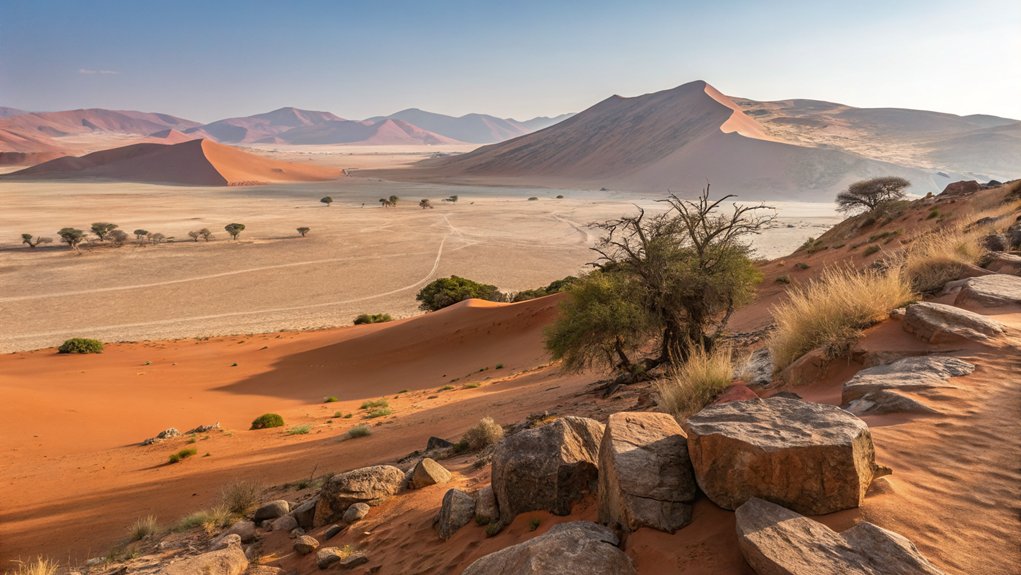
If you’re seeking a unique travel experience, Namibia offers an unforgettable blend of dramatic deserts and remarkable wildlife. From the towering dunes of Sossusvlei to the game-rich waters of Etosha National Park, this itinerary highlights the country’s diverse landscapes and ecosystems. As you set out on this self-drive adventure, you’ll not only explore stunning scenery but also engage with local cultures. Just wait until you learn about the hidden gems awaiting you on this incredible journey.
Key Takeaways
- Begin your adventure in Sossusvlei to climb Big Daddy for stunning sunrise views over the iconic red dunes.
- Explore Etosha National Park for exceptional wildlife spotting opportunities, especially at waterholes during the dry season.
- Visit Damaraland for guided excursions tracking desert-adapted elephants and discovering ancient rock engravings.
- Experience the rugged beauty of the Skeleton Coast, including shipwreck visits and the Cape Cross Seal Colony.
- Ensure your self-drive itinerary is flexible, incorporating both cultural sites and scenic viewpoints along the way.
Top Destinations in Namibia to Explore
When you think of Namibia, iconic landscapes and unique wildlife come to mind.
Explore Sossusvlei, where towering red sand dunes, including “Big Daddy,” beckon you to climb. At 325 meters, it’s one of the tallest dunes globally.
Next, head to Etosha National Park, spanning over 22,000 square kilometers, where diverse wildlife gathers around waterholes—keep an eye out for elephants, lions, and the stunning black rhino.
The Skeleton Coast offers a rugged coastline filled with shipwrecks and the Cape Cross Seal Colony, home to over 100,000 fur seals.
In Damaraland, marvel at ancient rock engravings at Twyfelfontein and spot desert-adapted elephants.
Finally, visit Swakopmund for its charming architecture and thrilling activities against a scenic backdrop of the Atlantic Ocean.
Must-Experience Activities in Namibia’s National Parks
Namibia’s national parks offer a wealth of unforgettable experiences for adventure seekers and nature lovers alike.
At Sossusvlei, you can climb the iconic Big Daddy dune for breathtaking sunrise views.
In Etosha National Park, watch diverse wildlife—including elephants and lions—gather at waterholes, especially during the dry season.
Damaraland invites you on guided excursions to track desert-adapted elephants in its rugged terrain.
Don’t miss the Skeleton Coast, where you’ll marvel at the dramatic meeting of sand dunes and the Atlantic Ocean, plus the bustling Cape Cross Seal Colony.
Finally, explore Deadvlei, where ancient camel thorn trees rise against the stark white clay pan and vibrant red dunes, making it a photographer’s paradise.
Planning Your Self-Drive Adventure in Namibia
Exploring the breathtaking landscapes of Namibia is best done at your own pace through a self-drive adventure, as it lets you make spontaneous stops at stunning viewpoints and cultural sites along the way.
Here are a few key tips to guarantee a smooth journey:
- Travel during the dry season: From April to October, you’ll enjoy ideal weather and better wildlife sightings at waterholes.
- Prepare for varying road conditions: Expect both tarred and gravel roads, so choose a rental vehicle that suits this terrain, and plan for slower travel times.
- Book accommodations in advance: Secure your lodging, particularly in hotspot areas like Sossusvlei and Etosha National Park, to avoid disappointment.
With the right preparation, your self-drive adventure in Namibia will be unforgettable!
Understanding Himba Culture and Other Namibian Communities
How can you truly appreciate the richness of Namibia’s diverse communities? Start by immersing yourself in the culture of the Himba people, a semi-nomadic group in the Kunene region.
You’ll recognize Himba women by their striking red ochre body paint and intricate hairstyles that express their social status. Their traditional lifestyle revolves around herding cattle and goats, rooted in customs that honor their ancestors and the land.
Participate in community gatherings, where you’ll witness vibrant ceremonies celebrating rites of passage and marriages. Some Himba communities even open their doors to tourists, allowing you a unique view of their way of life while promoting cultural preservation.
Engaging with them will deepen your understanding of Namibia’s rich heritage.
Tips for Capturing Stunning Wildlife Photos?
When planning to capture stunning wildlife photos, timing can make all the difference, so aim to shoot during the golden hours of early morning or late afternoon. This will optimize lighting and enhance the colors of Namibia’s landscapes.
Here are three essential tips for great wildlife photography:
- Invest in a telephoto lens (200mm or longer) to get close-up shots without disturbing the animals.
- Use a tripod or stable surface to reduce camera shake, especially around waterholes where wildlife gathers at dawn and dusk.
- Familiarize yourself with animal behavior to anticipate dynamic moments, like a lion’s hunt or elephants drinking.
Essential Driving Tips for Navigating Namibia’s Terrain
As you commence your adventure through Namibia, traversing its diverse terrain requires careful consideration and preparation.
You’ll encounter a mix of tarred and gravel roads, so a 4×4 vehicle is essential for accessing remote areas, particularly Deadvlei and the Skeleton Coast. Expect long distances between attractions, so plan your travel time carefully and include scenic stops to appreciate the stunning landscape.
The dry season, from April to October, is the best time to drive, as heavy rains from January to March can render many gravel roads impassable. Fuel stations are plentiful in urban areas, but make sure to refuel before tackling long stretches.
Finally, be ready for rugged conditions, with extra tires and tools handy for those inevitable punctures.
Best Times to Visit Namibia for Unforgettable Adventures
Planning your adventure to Namibia? Timing can make all the difference in creating unforgettable memories.
The best time to visit is during the dry season from April to October, when wildlife congregates around waterholes. Here are three ideal periods to take into account:
- June to August: Experience peak season with perfect weather for exploring stunning landscapes and abundant wildlife.
- September and October: Though warmer, these months provide excellent photography opportunities and fewer crowds at popular sites.
- Early Mornings and Late Afternoons: Plan your game drives and hikes during these times when the weather is temperate and wildlife is most active.
With this timing in mind, you’re ready for remarkable adventures in Namibia!
Packing Essentials for Your Namibia Safari
When packing for your Namibia safari, think about the essentials that’ll keep you comfortable and prepared.
You’ll need appropriate clothing layers for varying temperatures, along with essential travel accessories to make your adventures smoother.
Don’t forget your wildlife viewing gear, as spotting animals in their natural habitat is a highlight of the trip!
Appropriate Clothing Layers
To fully enjoy your Namibia safari, packing the right clothing layers is essential. Depending on the time of day, temperatures fluctuate dramatically. During the day, light, breathable fabrics will keep you comfortable, while evenings can get surprisingly chilly.
Here are three crucial items to pack:
- Lightweight, breathable clothing – Perfect for daytime activities in the heat.
- Fleece jacket or warm layers – Important for cooler mornings and evenings in the desert.
- Sturdy hiking shoes – Essential for exploring sandy and rocky terrains safely.
Don’t forget sun protection; a wide-brimmed hat and UV-protective clothing will shield you from the intense sun.
Being prepared will enhance your experience in Namibia’s beautiful landscapes.
Essential Travel Accessories
Packing the right clothing layers is just the beginning of preparing for your Namibia safari. You’ll want to bring lightweight, quick-dry apparel to stay comfortable during the heat of the day and the cooler evenings.
Don’t forget sun protection items, like high-SPF sunscreen, a wide-brimmed hat, and polarized sunglasses, to shield yourself from the fierce African sun.
A small first aid kit, complete with antiseptic wipes, plasters, and personal medications, is essential for handling any minor injuries.
Finally, an efficient daypack will be invaluable for carrying snacks, water, your camera, and other personal items, providing easy access while you explore.
These accessories will make your safari experience enjoyable and hassle-free.
Wildlife Viewing Gear
A well-prepared wildlife viewing experience in Namibia hinges on having the right gear.
To make the most of your safari, pack these essentials:
- Binoculars: Choose a pair with at least 8x magnification for great distance viewing without disturbing wildlife.
- Camera with Zoom Lens: A lens of 200mm or longer is perfect for capturing memorable moments, especially in Etosha National Park at waterholes.
- Sun Protection: Bring a wide-brimmed hat and high-SPF sunscreen to safeguard yourself from Namibia’s harsh sun during daytime adventures.
Additionally, consider lightweight, moisture-wicking clothing in neutral colors for comfort and camouflage, as well as a small backpack for carrying water, snacks, and a first-aid kit on your game drives.
Enjoy the stunning landscapes and diverse wildlife!
Frequently Asked Questions
What Vaccinations Are Recommended Before Traveling to Namibia?
You should get vaccinations for hepatitis A, hepatitis B, typhoid, and possibly yellow fever before you travel. It’s best to consult with your healthcare provider to verify you’re up-to-date on all necessary immunizations.
Are There Specific Health and Safety Precautions for Namibia?
Yes, you should stay hydrated, apply sunscreen, and use insect repellent to prevent bites. It’s also wise to avoid drinking tap water and to be cautious with street food for your safety and health.
What Currency Is Used in Namibia, and Are Credit Cards Widely Accepted?
Namibia uses the Namibian dollar and the South African rand. While credit cards are accepted in cities and major establishments, it’s wise to carry cash for smaller vendors and rural areas where cards may not work.
Is Travel Insurance Necessary for a Trip to Namibia?
Yes, travel insurance’s important for your trip to Namibia. It covers unexpected events like cancellations or medical emergencies. You’ll feel more secure exploring the stunning landscapes and wildlife, knowing you’re protected during your adventure.
How Do I Stay Connected While Traveling in Remote Areas of Namibia?
To stay connected in remote areas, consider using a local SIM card or portable Wi-Fi device. Download offline maps and essential apps, and inform friends or family about your itinerary for safety.
Leave a Reply