
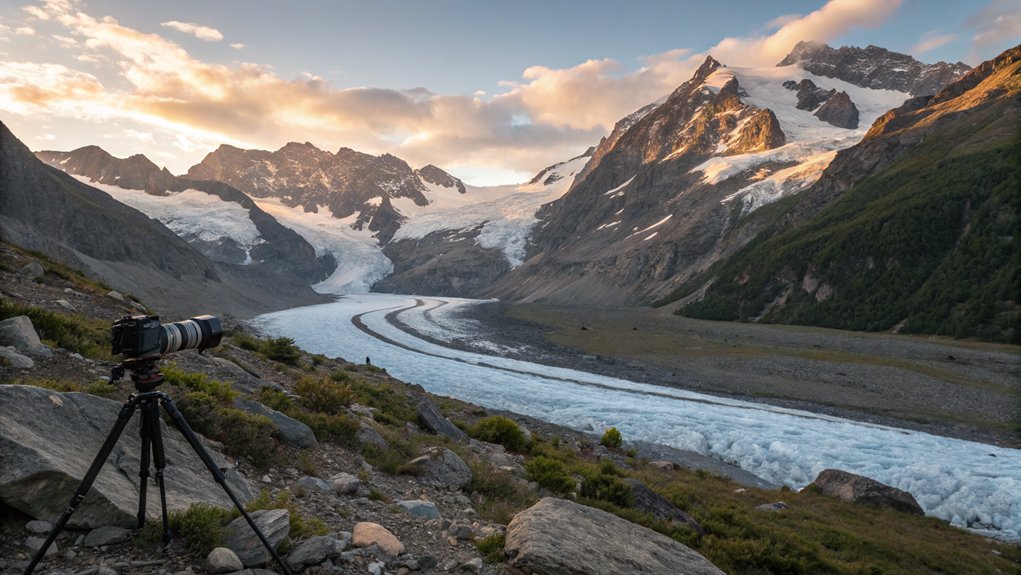
If you’re considering solo glacier travel, you’re stepping into a world of stunning beauty and immense challenges. The allure of untouched landscapes can be hard to resist, but the risks are significant. Maneuvering crevasses and unpredictable weather isn’t for the unprepared. Understanding hazard management and honing your skills is critical for safety. Are you equipped to handle the unforeseen dangers that come with such an adventure? Let’s explore what you need to know.
Key Takeaways
- Solo glacier travel poses significant risks; ensure you have at least 100 days of roped experience before attempting solo adventures.
- Master self-rescue techniques and glacier navigation to enhance safety during explorations on ice.
- Essential gear includes ice axe, crampons, helmet, and insulated clothing to protect against cold and hazards.
- Engage in guided expeditions or training courses to gain vital skills and confidence for solo glacier travel.
- Be aware of weather changes and plan routes carefully to mitigate risks associated with crevasses and unstable conditions.
The Dangers of Solo Glacier Travel
When you begin solo glacier travel, you should recognize the heightened dangers that come with it. Fatalities among solo travelers greatly increase due to limited experience and understanding of glacier hazards.
It’s strongly advised to have at least 100 days of roped glacier travel before starting solo expeditions. This extensive training equips you to handle various conditions.
Remember, self-rescue after a crevasse fall is incredibly challenging, and team support plays a vital role in minimizing risks. Crevasses are particularly dangerous, with their stability changing due to seasons and weather—you need expert knowledge to navigate safely.
Finally, over-relying on equipment instead of honing your skills can lead to severe accidents. Experience is essential to guarantee safer glacier exploration.
Understanding Glacier Hazards and Safety
Understanding glacier hazards and safety is crucial for anyone contemplating solo travel on these icy expanses, as articulating a clear awareness of risks can mean the difference between a thrilling adventure and a dangerous situation.
Here are key hazards you should consider:
- Crevasses: Hidden fissures can trap or injure you, especially on wet glaciers where snow cover conceals dangers.
- Weather Changes: Unpredictable conditions can turn safe areas into risky zones, so always stay alert.
- Limited Experience: Solo travel is riskier without extensive training; aim for at least 100 days of roped glacier travel.
- Navigation: Stick to marked paths to minimize surprise falls into crevasses, even if you’re experienced.
Stay informed and prioritize your safety to enhance your glacier adventure!
Key Skills for Safe Solo Glacier Travel
Mastering essential skills is essential for ensuring safety during solo glacier travel.
Before venturing out alone, it’s recommended that you accumulate a minimum of 100 days of roped glacier travel to gain the necessary understanding of glacier hazards. Enroll in thorough training programs to develop practical skills for managing these conditions effectively.
You must understand crevasse risks and practice self-rescue techniques, as they’re critical for your safety. Familiarize yourself with different glacier types—wet and dry—since each presents unique hazards.
Finally, create a detailed route plan and grasp emergency procedures, as these enhance your survival chances in case of an accident.
With the right skills, you’ll be better equipped for a safe ice adventure.
How to Prepare for Your Glacier Adventure
Before you head out on your glacier adventure, you need to gear up with the right equipment and skills.
It’s a good idea to consult experienced guides who can offer recommendations and insights.
With the right preparation, you’ll set yourself up for a safer and more enjoyable experience on the ice.
Essential Gear Checklist
Preparing for your glacier adventure requires a thoughtful approach to gear selection to guarantee safety and comfort in challenging conditions. Here’s a checklist to help you prepare:
- Clothing: Wear insulated, waterproof layers to protect against cold winds and moisture.
- Footwear: Invest in sturdy hiking boots with good traction for stability on icy surfaces.
- Safety Equipment: Don’t forget ice axes, crampons, and a helmet—essential for ice climbing.
- Accessories: Pack gloves, hats, sunglasses, and sunblock to shield against UV rays and chill.
Additionally, use a reliable rucksack for hydration supplies and a first-aid kit, ensuring you attach safety gear correctly.
Assess your skill level with the AAI system to match your gear to the glacier conditions you’ll face.
Experienced Guide Recommendations
While you’re enthusiastic to commence on your glacier adventure, it’s essential to focus on gaining the right experience and knowledge first.
Prioritize at least 100 days of roped glacier travel and complete thorough training programs. This will prepare you for hazards like crevasses and guarantee you’re equipped with practical skills.
Consider joining guided expeditions to learn from seasoned guides; their insights will enhance your safety and confidence.
Familiarize yourself with the specific types of glaciers you’ll encounter—wet and dry glaciers pose different risks, requiring tailored techniques.
Finally, engage with safety resources, such as expert articles and first-hand accounts, to deepen your understanding and bolster your readiness for solo glacier exploration.
Your well-prepared journey awaits!
Essential Gear for Glacier Travel
When you venture onto a glacier, having the right gear is essential for both safety and comfort. Here’s a must-have gear checklist for your glacier travels:
- Ice axe and crampons: These are vital for ice climbing and maneuvering slippery surfaces safely.
- Helmet: Protects your head from falling ice and other hazards.
- Waterproof and insulated clothing: Keeps you warm and dry in unpredictable conditions.
- Sturdy hiking boots: Necessary for support and grip on the treacherous terrain.
Additionally, don’t forget essentials like a rucksack for personal items, water bottles for hydration, first-aid kits for emergencies, sunglasses, and sunblock to safeguard against UV rays.
With the right gear, you’ll enhance your glacier adventure experience!
Techniques for Successful Glacier Navigation
Mastering glacier navigation requires a combination of skill and awareness, as unpredictable conditions can quickly turn a journey into a dangerous situation.
Start by using the Alpine Butterfly Knot for safety when crossing glaciers; make sure it’s securely tied and spaced for easy access. Always probe the terrain ahead with your skis or an avalanche probe to reveal hidden crevasses, particularly on wet glaciers with snow cover.
Gain confidence in recognizing different glacier conditions to enhance your navigation capabilities. When facing crevasses, consider connecting long ladders or poles to your harness for stability and psychological protection.
Finally, avoid solo travel unless you’re exceptionally knowledgeable about glacier safety, since the risks of crevasse falls and self-rescue scenarios considerably increase on your own.
The Importance of Self-Rescue Skills
When you’re traveling solo on a glacier, knowing self-rescue techniques is non-negotiable.
You need to be prepared to assess emergency situations quickly and act decisively, as help mightn’t be readily available.
Mastering these skills not only boosts your confidence but also greatly enhances your chances of survival in critical scenarios.
Essential Techniques for Self-Rescue
Self-rescue skills are a lifeline for solo glacier travelers, as crevasse falls can happen without warning. Knowing how to act quickly can make all the difference.
Here are essential techniques you should master:
- Ice Axe Use: Practice self-arrest techniques using your ice axe to stop a fall.
- Knot Familiarity: Learn key knots like the figure-eight and bowline for securing yourself and your gear.
- Etriers and Safety Anchors: Use lightweight etriers to quickly climb out of a crevasse, along with sturdy anchors to secure yourself.
- Self-Rescue Plans: Develop a clear self-rescue plan tailored to your abilities and environment; familiarize yourself with all your equipment.
Assessing Emergency Situations Effectively
Evaluating emergency situations on glaciers isn’t just about reacting; it’s about understanding the potential risks before they escalate. Crevasse falls and sudden weather changes can turn your adventure into a life-or-death scenario.
Since crevasse accidents are a leading cause of fatalities among solo travelers, honing your self-rescue skills becomes essential. You must develop the ability to swiftly assess your surroundings and react accordingly.
Take the time to train in glacier hazards and emergency protocols—knowing the risks associated with crevasses and having a solid plan can greatly enhance your survival odds.
Practicing self-rescue techniques in controlled settings boosts your confidence and prepares you for real emergencies. Preparedness isn’t an option; it’s your best lifeline on the ice.
Training Resources for Glacier Travelers
Appropriate training is essential for anyone looking to venture onto glaciers, especially if you’re considering going solo. To safely navigate these icy terrains, you should aim for a minimum of 100 days of roped glacier experience.
Here are some valuable training resources to enhance your skills:
- Guided Expeditions: Join experienced mountain guides to learn crucial safety techniques.
- Comprehensive Courses: Enroll in expert-led programs that focus on glacier hazards and practical navigation skills.
- Beginner Climbing Courses: Build foundational skills and gauge your competency before heading out solo.
- Expert Articles: Refer to resources like Jason Martin’s articles for deeper insights and strategies.
Investing time in proper training will greatly boost your confidence and safety on glaciers. For additional inspiration and practical tips, the Go Skiing Go Snowboarding section offers resources on getting started in winter mountain sports.
Frequently Asked Questions
What Are the Best Glaciers for Solo Travel Experiences?
For solo travel experiences, consider exploring Franz Josef Glacier, Perito Moreno, and Vatnajökull. These glaciers offer breathtaking landscapes, stunning ice formations, and unique adventures, ensuring you’ll create unforgettable memories all on your own.
How Do I Document My Solo Glacier Adventures Safely?
To document your solo glacier adventures safely, always pack waterproof gear, carry a portable charger, and use a durable camera. Keep your phone secure, share your location with someone, and check conditions regularly. Enjoy capturing memories!
What Wildlife Might I Encounter During Solo Glacier Travel?
You might encounter seals basking on ice, polar bears roaming nearby, and various birds like puffins or gulls. Keep your distance and respect their space; wildlife interactions can be thrilling yet unpredictable. Stay alert!
Can I Travel Solo if I’m New to Climbing?
Yes, you can travel solo, but it’s best to gain some experience first. Consider taking climbing courses, practicing skills, and evaluating your comfort level in challenging environments to guarantee a safer adventure.
How Do Weather Conditions Affect Solo Glacier Travel Plans?
Weather conditions greatly impact your solo glacier travel plans. High winds, snowstorms, or warming temperatures can create dangerous conditions. Always check forecasts, adjust your schedule, and prioritize safety to guarantee a successful adventure.
Leave a Reply