
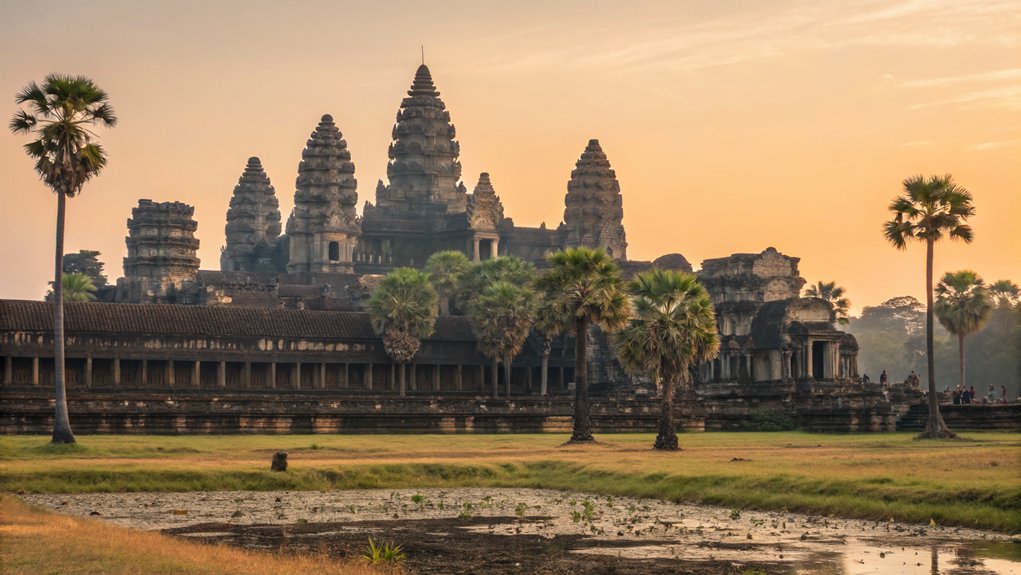
When you think about exploring Vietnam and Cambodia, you think of stunning landscapes and rich cultures. Imagine spending ten days in vibrant cities, soaking in history and experiencing local cuisines. Then, picture three unforgettable days in Siem Reap, where the ancient Angkor Wat awaits. This itinerary offers a perfect blend of adventure and relaxation. But how do you make the most of your time and budget in these fascinating destinations? Let’s explore the essentials together.
Key Takeaways
- Start in Vietnam with a minimum 10-day itinerary, exploring Ho Chi Minh City, Hanoi, and Hoi An for cultural immersion and local cuisine.
- Include a Halong Bay cruise for stunning natural scenery, followed by a visit to Da Nang for beaches and local specialties.
- Travel to Cambodia for at least 3 days in Siem Reap to witness the sunrise at Angkor Wat and explore local heritage.
- Utilize local transportation options like taxis and tuk-tuks for efficient travel between attractions in both countries.
- Plan your trip between November and February for the best weather in both Vietnam and Cambodia, avoiding the rainy season.
Essential Travel Tips for Exploring Vietnam and Cambodia
When you’re planning your adventure in Vietnam and Cambodia, it’s essential to guarantee you have the right visas in hand—Vietnam’s costs start at $25 for a single entry, while Cambodian visas typically run around $30 for tourists.
Travel between November and February for the best weather; you’ll enjoy clear skies and comfortable temperatures perfect for sightseeing. Familiarize yourself with local customs, especially dress codes at temples like Cambodia’s Angkor complex, ensuring you respect local traditions.
For smooth transportation, consider booking through reliable services like 12Go to connect between destinations effortlessly.
Don’t miss indulging in street food; it’s a culinary highlight, but stay mindful of food hygiene to keep your trip enjoyable and safe.
Everything You Need to Know About Visa Requirements?
When planning your trip to Vietnam and Cambodia, understanding the visa requirements is essential.
You’ll need to apply online for a tourist visa for both countries, while ensuring your passport meets necessary validity timelines.
Let’s explore the specific steps you’ll need to take for each country’s visa application.
Vietnam Visa Process Overview
Traveling to Vietnam requires a visa, and understanding the application process is essential for a smooth journey. You’ll need to apply online for your visa.
A single-entry visa costs $25, while a multiple-entry visa is priced at $50, especially important if you’re also visiting Cambodia. After submitting your application, expect to receive your visa approval letter via email within 72 hours.
Don’t forget to check your passport’s validity and review visa requirements based on your nationality. If you’re heading to Cambodia, remember you’ll need a separate tourist visa, costing $30, or $35 for a business visa.
Simplify your Cambodia entry by considering their e-visa option for $36 plus processing fees.
Cambodia Visa Application Steps
Securing a visa for Cambodia is a straightforward task that you can tackle with the right steps. You can choose between an on-arrival visa for $30 or an e-visa for $36 plus processing fees.
If you opt for the e-visa, complete your application online at the official website; this process usually takes about three business days. Make certain your passport is valid for at least six months from your entry date.
If you plan to visit both Vietnam and Cambodia, a multiple-entry visa is beneficial for smooth re-entry into Vietnam.
For visa on arrival, keep a recent passport-sized photo (4×6 cm) handy to guarantee a hassle-free process when you arrive in Cambodia.
Best Times to Visit Vietnam and Cambodia
If you’re planning a trip to Vietnam and Cambodia, timing is everything.
The best months to visit are from November to February, when the weather is perfect for exploring and you can experience vibrant local festivals.
Let’s look at what makes this period the ideal choice for your adventure.
Ideal Travel Seasons
When planning your visit to Vietnam and Cambodia, you’ll find that the best time to explore these vibrant countries is between November and February. During this period, you’ll enjoy cooler and drier weather, perfect for outdoor adventures.
In northern Vietnam, temperatures can dip to around 10°C (50°F), while southern regions stay tropical with averages of 25-30°C (77-86°F). Cambodia experiences its dry season during these months, boasting pleasant temperatures from 22-30°C (72-86°F).
It’s wise to avoid traveling from May to October, when heavy rain can disrupt your plans. Additionally, during the dry season, you’ll have a chance to engage in local cultural festivals, enriching your experience and providing a deeper connection to the region’s traditions.
Weather Considerations
Having established the ideal travel seasons, it’s important to reflect on the specific weather patterns in both Vietnam and Cambodia.
From November to February, you’ll enjoy milder temperatures and minimal rainfall, perfect for exploring. In Vietnam, the north, including Hanoi, sees cooler temperatures between 15°C to 22°C (59°F to 72°F), while the south, like Ho Chi Minh City, remains warm at 25°C to 30°C (77°F to 86°F).
In Cambodia, the dry season runs from November to April, with temperatures peaking around 30°C to 34°C (86°F to 93°F), ideal for visiting Angkor Wat.
Avoid travel during the rainy season from May to October, particularly during June to August, when conditions can disrupt your plans.
Festival Highlights
One of the best ways to experience the vibrant cultures of Vietnam and Cambodia is by timing your visit to coincide with their festive celebrations. Traveling from November to February is ideal, as the weather is cooler and less humid.
Here are some key festivals to reflect on:
- Tet (Lunar New Year): Celebrated in late January or early February in Vietnam, showcasing family reunions and rich traditions.
- Water Festival (Bon Om Touk): Occurs in November in Cambodia, featuring exciting boat races and lively festivities in Phnom Penh.
- Siem Reap Angkor Festival: Held in December, this celebration honors the cultural heritage of Angkor Wat with various performances and activities.
- Local Insights: Attending these festivals offers a chance to savor traditional foods and immerse in local customs.
Don’t miss out!
Top Travel Activities in Ho Chi Minh City
Ho Chi Minh City buzzes with energy and history, offering an array of activities that cater to every traveler’s interests.
Start your journey at the War Remnants Museum, where poignant exhibits reveal insights into the Vietnam War. Next, explore the Cu Chi Tunnels for a guided tour; you’ll uncover the underground network and learn about the Viet Cong’s guerrilla tactics.
Don’t miss the stunning Notre Dame Cathedral and the Saigon Central Post Office, both showcasing French colonial architecture. Immerse yourself in local life at Ben Thanh Market, bustling with artisanal crafts and flavorful street food.
Finally, ascend to the Saigon Skydeck in the Bitexco Financial Tower for breathtaking panoramic views of this vibrant city.
Must-See Sites in Hanoi and Their Historical Context
After soaking in the vibrant atmosphere of Ho Chi Minh City, you’ll want to explore the historical treasures of Hanoi. This city is filled with significant sites that illustrate Vietnam’s rich past.
Don’t miss these must-see locations:
- Ho Chi Minh Mausoleum: A monumental tribute to Vietnam’s founding father, housing his embalmed body.
- Temple of Literature: Established in 1070, it’s Vietnam’s first national university honoring Confucius and education.
- Hoa Lo Prison: Known as the “Hanoi Hilton,” it served as a detention for political prisoners and American POWs.
- One Pillar Pagoda: Built in 1049, this iconic Buddhist temple symbolizes Vietnam’s cultural heritage.
Each site offers a unique glimpse into the nation’s journey through history, making your visit deeply enriching.
Experience the Charm of Hoi An
The charming town of Hoi An invites you to step into a beautifully preserved world that celebrates its rich cultural tapestry.
As a UNESCO World Heritage site, it showcases stunning ancient architecture influenced by Vietnamese, Chinese, and Japanese cultures.
Stroll through vibrant night markets, where you’ll discover unique handcrafted goods and mouthwatering local street food.
Don’t miss the chance to join traditional lantern-making workshops or take Vietnamese cooking classes that highlight local culinary techniques.
Explore the Old Town and marvel at the iconic Japanese Covered Bridge, a symbol of Hoi An’s history.
For a serene retreat, head to nearby An Bang Beach, where you can unwind in a perfect blend of cultural exploration and relaxation.
Hoi An truly captivates your heart.
Da Nang’s Unique Experiences
In Da Nang, culinary delights and scenic coastal adventures await you. You’ll savor mouthwatering local dishes and soak up the sun on stunning beaches like My Khe.
Don’t miss the chance to explore the breathtaking Marble Mountains and enjoy everything this vibrant city has to offer.
Culinary Delights Awaiting You
Da Nang boasts a culinary scene that’s as vibrant as its landscapes, offering a feast for the senses. You’ll find a rich variety of flavors, especially as you explore the city’s street food delights and local markets.
- Savor the iconic Mi Quang, a turmeric rice noodle dish with a mix of proteins, herbs, and vegetables.
- Don’t miss Banh Xeo, crispy pancakes filled with shrimp and pork, perfect with fresh herbs and dipping sauce.
- Visit the Han Market for fresh seafood and traditional Central Vietnamese snacks.
- Enjoy grilled squid and steamed clams, local specialties that highlight Da Nang’s coastal bounty.
Every bite promises a memorable culinary adventure waiting just for you in this vibrant city!
Scenic Coastal Adventures Ahead
Get ready for unforgettable coastal adventures as you explore Da Nang’s stunning landscapes and vibrant experiences.
Relax on the beautiful beaches of My Khe and Non Nuoc, where the soft sand and clear waters invite you to unwind or plunge into exciting water sports.
Don’t miss the iconic Golden Bridge, where giant stone hands support a pathway offering breathtaking views.
Take a hike through the Marble Mountains, a fascinating cluster of hills with caves and temples—don’t forget to grab your ticket for just 40,000 Dong!
For a taste of local culture, visit the Linh Ung Pagoda, home to the impressive Lady Buddha statue.
Enjoy delicious seafood and try Mi Quang at the bustling markets for a truly local dining experience.
Highlights of Siem Reap and Angkor Wat
As you explore the vibrant town of Siem Reap, you’ll find it’s the perfect base for uncovering the wonders of the Angkor Archaeological Park.
Start at the awe-inspiring Angkor Wat, the largest religious monument in the world, which dates back to the 12th century. You’ll be mesmerized by its stunning architecture and intricate bas-reliefs.
Here are some highlights you won’t want to miss:
- Witness a breathtaking sunrise illuminating Angkor Wat’s silhouette.
- Discover the Bayon Temple, noted for its numerous stone faces.
- Wander through Ta Prohm, where trees intertwine with ancient ruins.
- Immerse yourself in the rich history and cultural evolution of this UNESCO World Heritage Site.
Each experience adds to the charm of your unforgettable journey!
Top Vietnamese Dishes You Can’t Miss
When you visit Vietnam, indulging in its diverse and flavorful cuisine is a must. Start your journey with Pho, the fragrant noodle soup that’s the national dish, best enjoyed for breakfast.
Don’t miss Banh Mi, a scrumptious sandwich with a French baguette stuffed with pork, pickled veggies, and herbs—an exquisite fusion of flavors.
Next, savor Goi Cuon, fresh spring rolls filled with shrimp or pork, crisp vegetables, and served with delicious dipping sauces.
In Hanoi, taste Bun Cha, featuring grilled pork with rice noodles and fresh herbs.
Finally, try Ca Kho To, caramelized fish cooked in a clay pot with soy sauce and spices, perfectly pairing with steamed rice.
Each dish tells a story of Vietnam’s vibrant culinary heritage.
Cultural Etiquette in Vietnam and Cambodia
When traveling in Vietnam and Cambodia, understanding local customs can enhance your experience. You’ll want to greet others with a smile and a slight bow, and remember to dress modestly when visiting temples.
Showing respect for cultural norms, like removing your shoes before entering homes, is vital for connecting with locals.
Respectful Dress Codes
How should you dress while exploring the rich cultural sites of Vietnam and Cambodia? Respectful attire is essential to immerse yourself in these countries’ vibrant cultures. Here are some guidelines to keep in mind:
- Cover your shoulders and knees when visiting temples and significant sites, especially the One Pillar Pagoda and Angkor Wat.
- Opt for light, breathable fabrics like cotton to stay comfortable in the warm climate.
- Choose neat, casual clothing for dining in local establishments, avoiding overly revealing outfits.
- Wear comfortable footwear such as sandals or sneakers, as many historical attractions require considerable walking.
Following these tips not only honors local customs but also enhances your travel experience, allowing you to fully appreciate the beauty around you.
Greeting Customs и Etiquette
Exploring Vietnam and Cambodia is as much about engaging with the local people as it is about visiting stunning sites. Understanding local greeting customs enhances your experience.
| Country | Greeting Custom |
|---|---|
| Vietnam | Bow or handshake; use right hand, maintain eye contact |
| Cambodia | “Sampeah” gesture; palms together, slight bow |
| Titles | Address with titles (Mr./Ms.) unless invited to use first names |
| Homes | Remove shoes before entering homes or temples |
| Composure | Smile, remain calm, and avoid public displays of affection |
A friendly demeanor fosters positive interactions. Remember, respecting local customs goes a long way in building rapport with the people you meet.
Transportation Options for Getting Around
Although traversing Vietnam and Cambodia might seem intimidating at first, a variety of transportation options make getting around both efficient and enjoyable.
Here are some top choices to take into account for your travels:
- 12Go: Easily book buses, ferries, trains, and flights in advance for flexible travel across Vietnam.
- Taxis and ride-hailing apps: In cities like Ho Chi Minh City and Hanoi, Grab is a convenient way to get around.
- Night buses and sleeper trains: For affordable inter-city travel within Vietnam, think about overnight sleeper trains or budget-friendly buses.
- Tuk-tuks: In Siem Reap, these popular vehicles offer a fun and easy way to explore local attractions, especially the Angkor Archaeological Park.
With these options, your journey through Vietnam and Cambodia will be seamless and memorable!
Recommended Accommodations for Every Budget
After settling on the best transportation options for your journey, it’s time to contemplate where you’ll rest your head each night. Here’s a breakdown of recommended accommodations across different budgets in Vietnam and Cambodia:
| Destination | Luxury Choices | Budget-Friendly Options |
|---|---|---|
| Hanoi | Sofitel Legend Metropole Hanoi | Old Quarter View Hanoi Hostel |
| Hoi An | Renaissance Hoi An Resort & Spa | RiverTown Hoi An Resort & Spa |
| Ho Chi Minh City | New World Saigon Hotel | Long Hostel |
| Siem Reap | Sofitel Angkor Phokeethra Golf Resort | The Funky Village |
| Borei Angkor Resort & Spa (Mid-Range) |
No matter your budget, these options cater to your comfort and needs, ensuring a pleasant stay throughout your adventure!
How to Plan Your Itinerary Effectively
Planning your itinerary effectively can make all the difference in maximizing your travel experience in Vietnam and Cambodia. Start by securing the necessary visas for both countries, with Vietnam charging $25 and Cambodia $30. Allocate at least 10 days in Vietnam and 3 days in Siem Reap to soak in the major attractions.
Here are some key tips to think about:
- Use platforms like 12Go for advance travel planning between cities.
- Make certain you schedule must-see experiences like sunrise at Angkor Wat and a Halong Bay cruise.
- Book accommodations in advance in popular areas to suit your budget.
- Balance your schedule to allow for relaxation amidst your adventures.
These steps will help you create an unforgettable itinerary.
Budgeting Tips for Your Southeast Asian Journey
Budgeting for your Southeast Asian journey can seem intimidating, but it’s easier than you think once you break it down.
Start by setting aside $25 to $50 for Vietnam’s single-entry visa and around $30 for Cambodia’s tourist visa. Daily food costs can range from $10 to $30; embrace street food for delicious savings.
Accommodations vary widely, with budget hostels starting at $10 and mid-range hotels exceeding $100. For local transportation, expect to pay between $5 and $20, depending on distance.
Finally, budget $50 to $100 for activities like visiting Angkor Wat or taking a Halong Bay excursion. With smart planning, you’ll experience the best of both countries without breaking the bank.
Happy travels!
Frequently Asked Questions
How Many Days Are Enough for Vietnam and Cambodia?
You’ll need at least 13 days to explore both Vietnam and Cambodia effectively. Spend around 10 days in Vietnam and 3 days in Cambodia’s Siem Reap for an enriching experience at the Angkor temples.
Can Vietnam and Cambodia Be Done Together?
Yes, you can definitely do Vietnam and Cambodia together. Planning a two-week itinerary lets you explore major cities, savor rich cultures, and visit iconic sites, creating a memorable experience in both countries.






Leave a Reply