
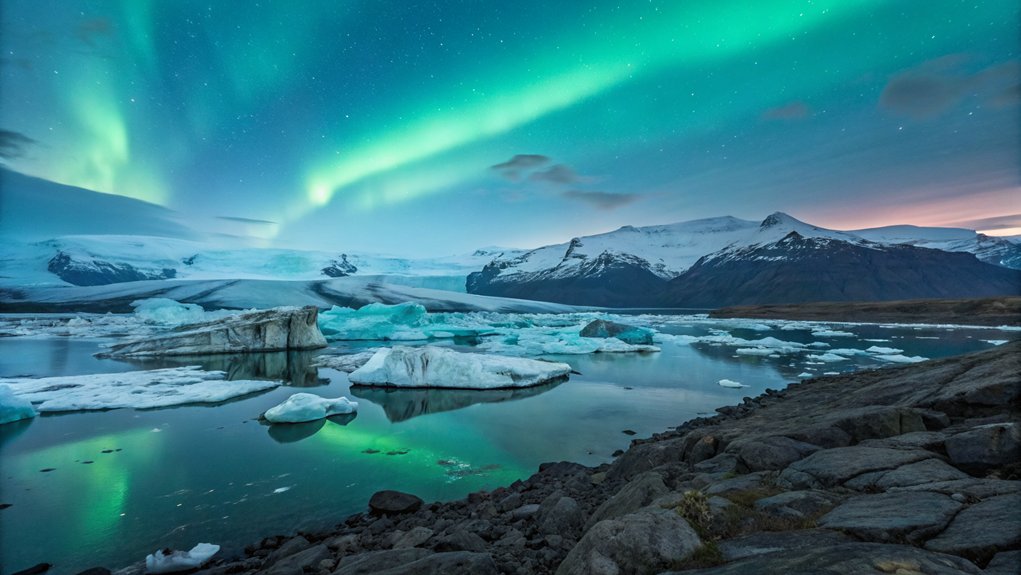
If you’re looking to witness the mesmerizing northern lights, Iceland’s diverse landscapes offer some of the best vantage points. From vibrant cityscapes to serene natural parks, each location presents a unique opportunity to experience this spectacular phenomenon. Imagine standing beneath a canopy of shimmering colors, but you might wonder which spots will give you the best views. Let’s explore seven beautiful places in Iceland that promise unforgettable northern light sightings.
Key Takeaways
- Reykjavík: Ideal for viewing northern lights from 9 PM to 2 AM, with Grotta Lighthouse and Öskjuhlíð Hill being prime spots for minimal light interference.
- Seltjarnarnes: This uninhabited peninsula near Reykjavík offers spectacular visibility at Grotta Lighthouse, with excellent scenic walks and low light pollution.
- Thingvellir National Park: Known for its dark skies and unique geology, it’s a picturesque location just 45 minutes from Reykjavík for aurora photography.
- Jökulsárlón Glacier Lagoon: Features minimal light pollution and stunning backdrops of icebergs, allowing for exceptional northern lights viewing and photography opportunities.
- Vík: The striking red-roofed church amid dark landscapes offers a superb setting for capturing the northern lights alongside crashing ocean waves.
The Magic of the Northern Lights: An Introduction to Iceland’s Aurora
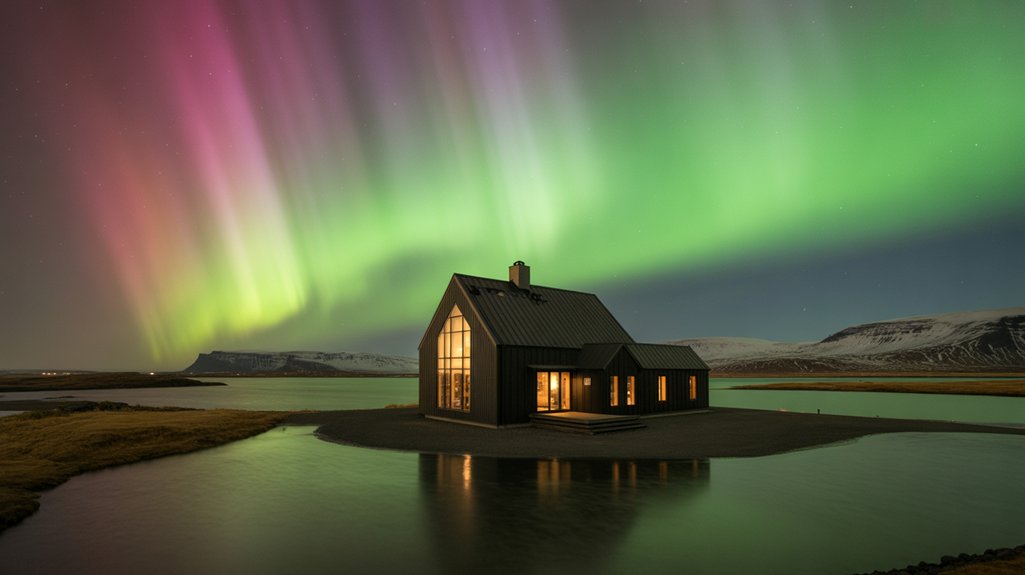
The northern lights, with their mesmerizing dance across the Icelandic sky, offer an experience unlike any other. The aurora borealis captivates visitors, and if you’re keen to witness this stunning spectacle, checking the northern lights forecast is essential.
Iceland is one of the best places to see these magical displays, especially between late September and early April. Dark, clear nights during winter provide the best way to see the vibrant colors—greens, reds, purples, and more—created by atmospheric conditions.
Engaging with the cultural folklore surrounding the northern lights, steeped in Norse mythology, enhances your viewing experience, making seeing the northern lights feel even more enchanting.
Best Times and Conditions for Viewing the Northern Lights in Reykjavík
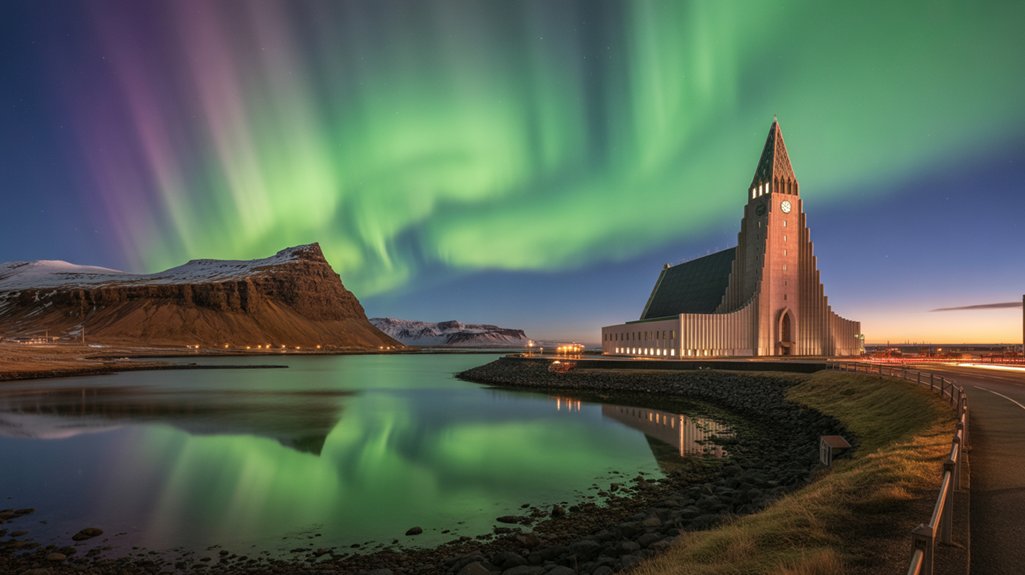
For an unforgettable northern lights experience in Reykjavík, timing and conditions are essential. The best time to see the northern lights is between late September and mid-April, with February standing out for its favorable weather and increased solar activity.
Ideal viewing usually happens from 9 PM to 2 AM, although you might catch auroras as early as dusk. To enhance your experience, seek spots with clear skies and minimal light pollution—Grotta Lighthouse and Öskjuhlíð Hill are excellent choices.
Always check aurora forecasts from the Icelandic Meteorological Office, aiming for a rating above 3 for good visibility. Also, avoid nights with a full moon; darker skies make those breathtaking auroras even more vibrant.
Seltjarnarnes: A Prime Spot in Reykjavík for Aurora Sightings
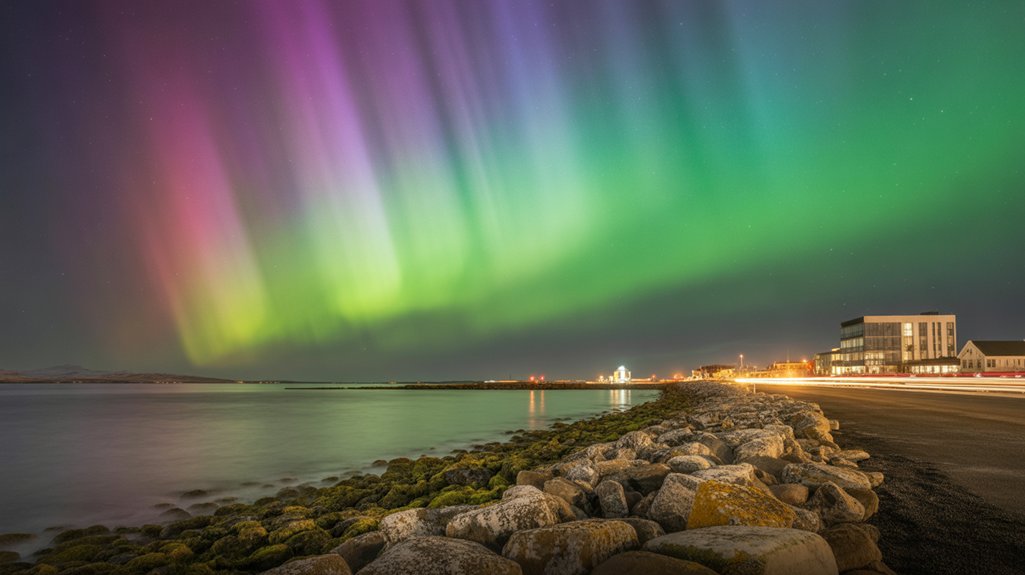
Wondering where to catch the northern lights near Reykjavík? Seltjarnarnes is the perfect spot! This uninhabited peninsula boasts little light pollution, giving you a great chance of seeing the aurora on a clear night. Keep in mind that the elevated viewing areas offer stunning perspectives, especially when conditions are dark enough.
Here are some highlights to take into account:
| Feature | Description |
|---|---|
| Location | Uninhabited peninsula near Reykjavík |
| Light Pollution | Minimal, ideal for aurora sightings |
| Key Site | Grotta Lighthouse for picturesque views |
| Viewing Points | Multiple along the shoreline |
| Additional Activities | Scenic walks and wildlife observation |
Head to Seltjarnarnes for an unforgettable aurora experience!
Thingvellir National Park: Stunning Natural Backdrop for Auroras
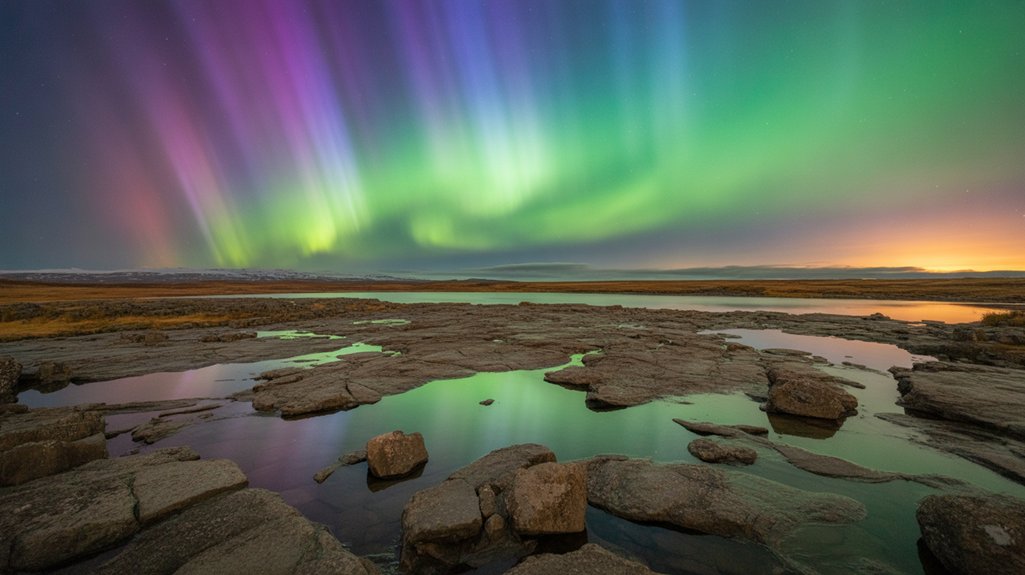
Amidst Iceland’s breathtaking landscapes, Thingvellir National Park stands out as a prime location to witness the mesmerizing northern lights. With expansive dark skies and minimal light pollution, you’ll enjoy vibrant displays of the auroras against the park’s stunning backdrop.
Here are three key highlights:
- Unique Geological Features: Explore the rift valley formed by the separation of the North American and Eurasian tectonic plates, offering a striking setting.
- Scenic Landscapes: Capture the beauty of crystal-clear springs and silvery rivers, perfect for your aurora photography.
- Accessibility: Located just 45 minutes from Reykjavík, it’s ideal for both guided tours and self-driving excursions, making it easy to embrace nature’s wonders.
Experience the magic of the northern lights at Thingvellir National Park!
Jokulsarlon Glacier Lagoon: A Stunning Blend of Ice and Light
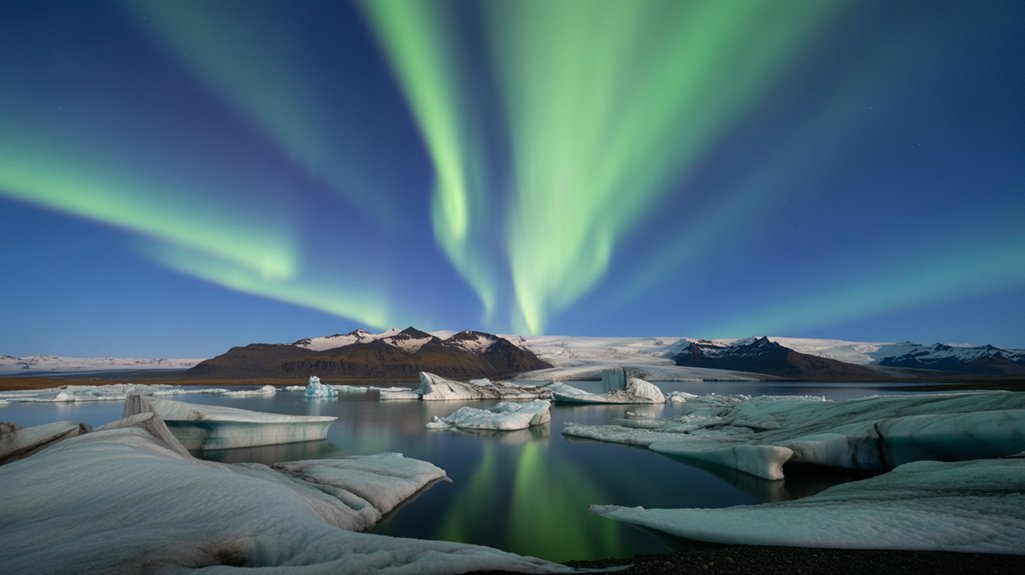
When you visit Jökulsárlón Glacier Lagoon, you’ll be captivated by the unique ice formations that float serenely in the dark waters.
The minimal light pollution here allows for exceptional visibility, making it a fantastic spot for spotting and photographing the northern lights.
You won’t want to miss the scenic photography opportunities as the auroras dance across the sky, reflecting beautifully off the icy surface.
Unique Ice Formations
As you explore the breathtaking landscapes of Iceland, make sure to witness the mesmerizing beauty of Jökulsárlón Glacier Lagoon, where unique ice formations create a stunning canvas for the northern lights.
Here’s what makes this location special:
- Dramatic Backdrop: The dark waters of the lagoon are filled with floating icebergs, providing a striking contrast to the vibrant auroras above.
- Intricate Details: Ice formations reflect a range of blue and white hues, capturing the essence of the northern lights in unforgettable photographs.
- Ideal Viewing Conditions: With minimal light pollution, Jökulsárlón serves as a premier spot for aurora viewing, allowing you to appreciate the surreal atmosphere of this icy landscape.
Don’t miss the unique opportunity to immerse yourself in this magical environment.
Dark Sky Visibility
While exploring Jökulsárlón Glacier Lagoon, you’ll find that its exceptional dark sky visibility makes it one of the best places to witness the northern lights. The lagoon’s low levels of light pollution create an ideal dark sky environment, enhancing your aurora season experience.
From late September to early April, you’re likely to catch peak visibility between 9 PM and 2 AM, when the skies are at their darkest. As you watch the vibrant colors dance across the sky, the floating icebergs reflect the stunning auroras, making the view even more enchanting.
Whether you’re enjoying a scenic boat tour or standing on the shoreline, Jökulsárlón guarantees an unforgettable northern lights experience amidst a breathtaking backdrop.
Scenic Photography Opportunities
Jökulsárlón Glacier Lagoon stands as a photographer’s paradise, especially for capturing the northern lights. With its breathtaking scenery and dark skies, you’ll find stunning photographic opportunities at every turn.
The unique interplay of colorful auroras with the lagoon’s floating icebergs creates unforgettable images.
Here are three reasons to visit Jökulsárlón:
- Dramatic Foregrounds: The glacial ice, ranging from pure white to deep blue, adds striking elements to your shots.
- Reflections: You’ll often catch the reflection of the northern lights on the lagoon’s calm waters, resulting in mesmerizing symmetrical compositions.
- Less Crowded: Visit during the winter months for a more tranquil experience, perfect for aurora enthusiasts looking to photograph the northern lights in peace.
Vík: Your Go-To Coastal Spot for Northern Lights
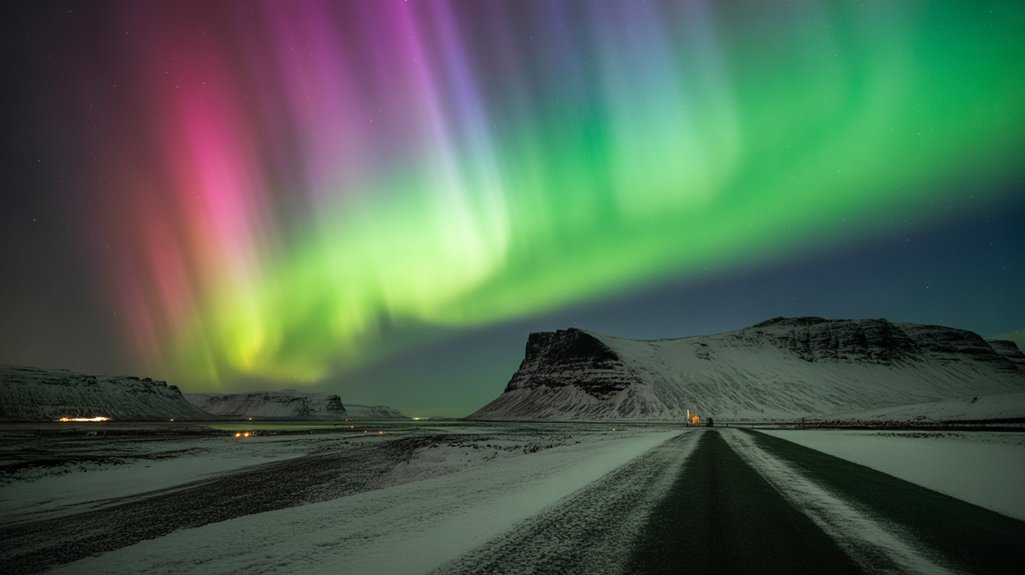
When you visit Vík, you’ll be captivated by its stunning black sand beaches, which create a dramatic setting for the northern lights.
Imagine standing on the shore, with the ethereal glow of the aurora illuminating the waves.
Plus, the photogenic coastal church nearby offers the perfect backdrop to capture those magical moments.
Stunning Black Sand Beaches
If you’re looking for a breathtaking location to witness the northern lights, Vík’s dramatic black sand beaches should be at the top of your list.
The contrast between the auroras and the dark sands creates a unique visual experience that’s hard to forget. Here are three reasons why you should visit:
- Reynisfjara Beach: Famous for its striking basalt columns and Reynisdrangar sea stacks, you’ll capture stunning photos of the auroras here.
- Minimal Light Pollution: Vík’s coastal setting offers dark skies for ideal northern lights visibility from late September to early April.
- Scenic Attractions: Combine aurora chasing with explorations of nearby Dyrhólaey arch and the charming village of Vík, enriching your Iceland experience.
Photogenic Coastal Church Views
Vík offers a stunning backdrop for capturing the northern lights, especially thanks to the iconic Church at Vík. With its striking red roof contrasting against the dark coastal landscape, this church provides a photogenic foreground for photographing the northern lights.
Being far from the city, Vík’s beaches remain relatively free from light pollution, greatly enhancing your odds of seeing the auroras dance across the sky. The best time for spotting the northern lights here is during the winter months, from late September to early April, particularly around midnight when cloud cover is minimal.
You’ll enjoy breathtaking long-exposure shots, showcasing the colorful auroras alongside crashing ocean waves and rugged cliffs, making Vík one of the best spots for an unforgettable experience.
Essential Gear for a Successful Northern Lights Experience
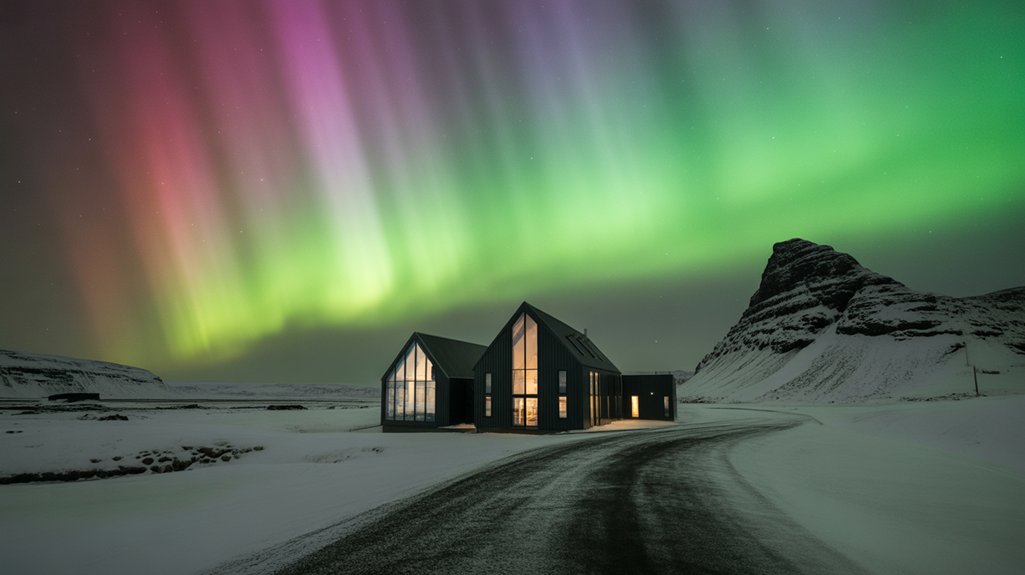
To make the most of your northern lights experience in Iceland, packing the right gear is essential.
Here’s what you’ll need to improve your chances of capturing this stunning phenomenon:
- DSLR Camera: Use a full-frame DSLR with a wide-angle lens for high-quality shots. Set your ISO to about 1,600 and your aperture to f/2.8 or lower.
- Tripod: A sturdy tripod stabilizes your camera, ensuring clear long-exposure photographs of the auroras.
- Remote Shutter Release: This minimizes camera shake during long exposures, enhancing the quality of your images.
Don’t forget to wear thermal base layers to stay warm during those late-night viewing sessions!
With the right gear, you’ll be well-prepared for an unforgettable adventure under the northern lights.
Frequently Asked Questions
Which Part of Iceland Is Best to See the Northern Lights?
Mývatn’s your best bet for spotting the northern lights in Iceland. It offers clear skies and unique microclimates, enhancing your chances of witnessing this stunning natural display in a serene environment.
What Is the Best Month to See the Northern Lights in Iceland?
The best month to see the Northern Lights in Iceland is February. You’ll enjoy ideal darkness with good weather, allowing for breathtaking displays. Just remember, the solar cycle peak in 2026 promises even more spectacular sights!
What I Wish I Knew Before Going to Iceland?
You should’ve researched Iceland’s weather patterns and ideal northern lights viewing times. Packing thermal layers is essential, and knowing about light pollution will help you find the best spots to witness this breathtaking phenomenon.
Which Part of Iceland Is the Most Beautiful?
You’re gonna find the Snæfellsnes Peninsula stunning, with its dramatic landscapes and glaciers. Don’t miss the Jökulsárlón Glacier Lagoon for surreal views. Every corner of Iceland offers breathtaking beauty, so explore widely and enjoy!
Leave a Reply