
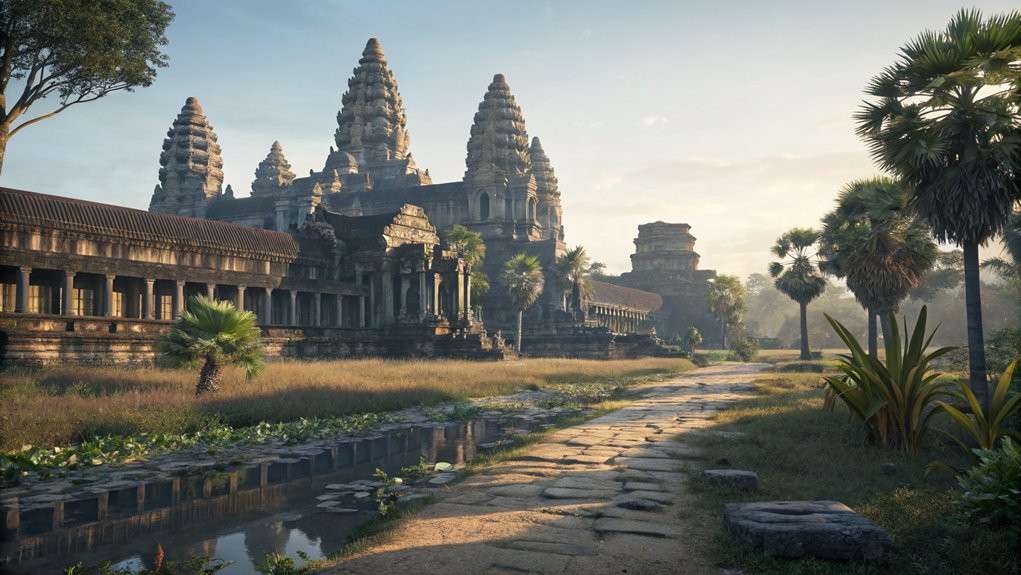
You’re about to begin an incredible journey through Cambodia, where Angkor Wat stands as a timeless reminder of the region’s rich history. This itinerary will guide you through the awe-inspiring temples, cultural experiences, and local flavors that define this unique destination. As you explore the intricate carvings and serene landscapes, you’ll find yourself immersed in a world where ancient traditions meet modern life. But what else awaits you beyond the iconic ruins?
Key Takeaways
- Start your itinerary with sunrise at Angkor Wat, exploring its stunning architecture and historical significance in the Khmer Empire.
- Visit Bayon Temple to admire the iconic stone faces and intricate bas-reliefs depicting Khmer mythology and daily life.
- Explore Ta Prohm, renowned for its massive tree roots intertwined with ancient structures, and learn about its history as a Buddhist monastery.
- Consider Banteay Srei for its exquisite pink sandstone carvings, showcasing the highest level of craftsmanship from the Khmer Empire.
- Incorporate eco-friendly activities like biking tours, cooking classes, and cultural workshops to engage with local traditions and support sustainable tourism.
Understanding Angkor Wat: A Historical Overview
When you explore Angkor Wat, you’re stepping into a monumental piece of history that dates back to the early 12th century. Constructed by the Khmer Empire under King Suryavarman II, it’s the largest religious monument in the world.
Originally dedicated to the Hindu god Vishnu, it evolved into a Buddhist temple by the 17th century, showcasing the region’s evolving spiritual landscape. The majestic complex symbolizes Mount Meru, at the center of Hindu and Buddhist cosmology, representing the peak of Khmer architectural brilliance.
Covering nearly 200 hectares, it boasts three tiers of galleries and an impressive moat system, surrounded by remnants of an ancient city. Declared a UNESCO World Heritage site in 1992, Angkor Wat remains a vibrant cultural icon for Cambodia.
Planning Your Visit to Angkor Wat: Entry Fees and Timings
Planning your visit to Angkor Wat involves understanding the entry fees and timings to make the most of your experience. You’ll need to purchase your tickets at the official ticket office, open daily from 5 AM to 5:30 PM, as online sales aren’t available. A one-day ticket costs $37, while multi-day options include a three-day pass for $62 and a seven-day pass for $72.
If you’re buying a one-day ticket after 5 PM, you can still catch the stunning sunset view. Remember to dress respectfully, covering your shoulders and knees, due to the site’s religious significance.
For the best photos, aim to visit during sunrise or sunset; the lighting beautifully showcases the temple’s architecture.
How to Get to Angkor Wat From Siem Reap
To reach Angkor Wat from Siem Reap, you have several convenient transportation options at your disposal. It’s only about 6 kilometers north of the city, making it easy to get there.
Tuk-tuks are a popular choice, costing around $15 for a half-day and $25 for a full-day rental to explore the complex. If you prefer flexibility, consider hiring a bicycle or motorcycle at affordable rates.
For a more comfortable ride, a private car rental is available for about $45 per day, allowing you to visit nearby temples too.
Just remember to purchase your entry ticket at the official ticket office in Siem Reap, as it’s necessary to access the Angkor Archaeological Park. Enjoy your adventure!
Must-See Temples on the Small Circuit?
When you explore the Small Circuit, don’t miss the breathtaking sunrise at Angkor Wat; it’s a magical experience you won’t forget.
After soaking in the early light, head to Bayon Temple to admire its unique stone faces that tell stories of the past.
Each temple reveals a different aspect of the Khmer Empire’s grandeur, making your journey truly unforgettable.
Angkor Wat Sunrise Experience
Have you ever imagined witnessing a sunrise that transforms the majestic Angkor Wat into a silhouette against a vibrant sky? Arriving early lets you enjoy a breathtaking scene, with the temple’s reflection shimmering in the surrounding lotus ponds.
The best time to explore is just as the sun rises, ensuring you capture the intricate architecture undisturbed by crowds. While you’re on the Small Circuit, take the chance to visit Ta Prohm, where giant trees and roots beautifully entwine with ancient stones.
Bayon Temple’s Unique Faces
What makes Bayon Temple such a fascinating stop on the Small Circuit? Its iconic smiling stone faces might be the first thing that captures your attention.
Located at the heart of Angkor Thom, this late 12th-century temple boasts 216 enigmatic sculptures representing Avalokiteshvara, the Bodhisattva of compassion. Built during King Jayavarman VII’s reign, Bayon merges religious and political themes beautifully.
As you wander through, you’ll discover intricate bas-reliefs that depict both significant historical events and everyday life in ancient Cambodia, featuring over 11,000 carved figures.
With 54 towers showcasing four faces each, Bayon symbolizes the four directions and universal compassion. This architectural marvel is undeniably a must-see, bringing the grandeur of the Khmer Empire vividly to life.
What to Expect at Sunrise in Angkor Wat
When you arrive at Angkor Wat at dawn, you’ll want to secure a prime viewing spot near the reflective pool for stunning photography.
This area offers the best angles to capture the temple’s silhouette as the sky transforms with vibrant colors.
With fewer crowds at this early hour, you can truly soak in the tranquil and spiritual experience of this historic site.
Best Viewing Spots
Ever wondered where to catch the best sunrise view at Angkor Wat? Head to the west-facing reflective pool. This spot creates a breathtaking mirror image of the temple’s silhouette against the vibrant morning sky.
To obtain a prime position, arrive around 4:30 AM. As dawn breaks, the temple bathes in soft hues of orange and pink, enhancing its intricate carvings and multiple tiers. Be prepared for a communal atmosphere, as sunrise usually draws crowds, so getting there early guarantees you won’t miss out.
If you want to deepen your understanding, consider opting for a guided tour. Knowledgeable guides can enhance your experience with valuable insights into Angkor Wat’s history during this magical hour.
Photographic Opportunities Available
A visit to Angkor Wat at sunrise offers incredible photographic opportunities that many travelers treasure.
Arriving by 5:30 AM allows you to capture the iconic silhouette of the temple towers reflecting in the tranquil moat, a scene that draws photographers from around the world. The sky shifts through vibrant hues of orange, pink, and purple, creating a backdrop that’s perfect for your shots.
The soft morning light highlights the detailed carvings and architectural features, enhancing their depth and warmth. Plus, the serene atmosphere lets you take a moment for quiet contemplation.
The Architectural Wonders of Angkor Wat
As you step into the breathtaking domain of Angkor Wat, you can’t help but marvel at its imposing structure and intricate designs.
Covering nearly 200 hectares, this architectural masterpiece features three distinct pyramid levels, symbolizing Mount Meru, the center of the universe in Hindu and Buddhist beliefs. Constructed in the early 12th century by King Suryavarman II, it’s the world’s largest religious monument.
Initially dedicated to the Hindu god Vishnu, it later transformed into a Buddhist temple. The stunning sandstone carvings and bas-reliefs showcase the artistry of the Khmer Empire, narrating tales from epic texts like the Ramayana and Mahabharata.
Its lotus-bud-shaped towers create a sense of vertical harmony, making Angkor Wat a true wonder of architecture.
The Unique Faces of Bayon Temple
As you explore the Bayon Temple, you can’t help but notice the distinctive stone carvings that make it so unique.
Each face, with its serene smile, conveys powerful symbolism and invites you to ponder its meaning. These expressions not only reflect the spirituality of the Khmer Empire but also the artistry of its time.
Distinctive Stone Carvings
While exploring the Bayon temple, you’ll be captivated by its distinctive stone carvings, especially the 216 serene faces that adorn its towers. These towering representations, believed to depict the bodhisattva Avalokiteshvara or possibly King Jayavarman VII, stand about 4 meters tall. Their enigmatic smiles enhance the temple’s mystical aura, showcasing the advanced artistic techniques of the Khmer civilization. The architecture uniquely combines large towers with intricate bas-reliefs that narrate historical events and daily life in the Khmer Empire.
| Feature | Description |
|---|---|
| Number of Faces | 216 |
| Height of Each Face | Approximately 4 meters |
| Key Symbolism | Possibly Avalokiteshvara or King Jayavarman VII |
| Architectural Style | Towers and intricate bas-reliefs |
| Historical Context | Originally a Buddhist temple |
Symbolism of Facial Expressions
The unique faces of Bayon Temple aren’t just artistic features; they embody profound symbolism reflective of Khmer culture. Constructed in the late 12th century, Bayon hosts 216 stone faces, believed to represent Avalokiteshvara, the bodhisattva of compassion. Each serene smile depicts the harmonious balance of strength and compassion central to Khmer philosophy.
As you explore, you’ll notice the faces facing all cardinal directions, symbolizing the protective roles of Avalokiteshvara and perhaps King Jayavarman VII himself.
Beyond the faces, intricate carvings tell stories from Khmer mythology and daily life, enriching your understanding of the era. This unique combination of spiritual significance and artistic expression showcases the ingenuity of Khmer architecture in harmonizing with nature.
The Enigmatic Ta Prohm: Nature Meets History
Nestled within the lush jungles of Cambodia, Ta Prohm captivates visitors with its remarkable blend of history and nature. Originally built as a Buddhist monastery and university in the late 12th century, this temple covers around 60 hectares and is often dubbed the “Tomb Raider” temple due to its iconic appearance in the film.
As you explore, you’ll marvel at the massive tree roots intertwined with ancient stone structures, demonstrating nature’s reclamation. Once home to over 12,000 monks and students, Ta Prohm was a major center of learning in its prime.
The intricate carvings and depictions of Buddhist icons showcase the artistic brilliance of the Khmer civilization, making it a perfect spot for reflection and unforgettable photography.
Banteay Srei: Intricate Carvings and Pink Sandstone
When you visit Banteay Srei, you’ll be captivated by its unique architecture and stunning pink sandstone.
This temple not only showcases intricate carvings but also holds significant historical importance as one of the oldest sites in the Angkor complex.
Exploring its delicate details offers a glimpse into the artistry of the Khmer Empire from the 10th century.
Unique Architecture Features
Renowned for its breathtaking beauty, Banteay Srei stands out among the Angkor temples with its intricate carvings and unique pink sandstone. This temple’s craftsmanship features some of the finest examples of Khmer art, showcasing superb detailing that’s simply mesmerizing.
Here’s a quick look at its unique architectural features:
| Feature | Description | Significance |
|---|---|---|
| Carvings | Intricate depictions of Hindu mythology | Displays creativity of artisans |
| Pink Sandstone | Unique material used in construction | Provides a warm hue and detailed designs |
| Size | Smaller than most Angkor temples | High concentration of artistry |
As you explore Banteay Srei, you’ll appreciate how beauty and devotion are deeply intertwined in its design.
Historical Significance Explained
Although often overshadowed by larger temples, Banteay Srei‘s historical significance is profound, reflecting a unique aspect of Khmer culture. Known as the “Citadel of Women,” this temple features exquisite carvings, showcasing the finest examples of Khmer art, with depictions of Hindu deities and mythology.
Constructed in the late 10th century by Yajnavaraha, a scholar and priest, it’s dedicated to Shiva and stands out for its use of vibrant pink sandstone. Despite its relatively small size, the temple reveals exceptional craftsmanship that highlights the artisans’ skill from the Khmer Empire.
Uniquely built by a learned individual rather than a king, Banteay Srei’s cultural importance is further solidified as a UNESCO World Heritage site since 2008.
Eco-Adventures: Cycling and Nature Exploration in Cambodia
Exploring Cambodia’s countryside by bike not only reveals breathtaking landscapes but also lets you experience the vibrant local culture firsthand.
Cycling through scenic routes along rice paddies and wheat fields immerses you in the everyday life of locals. Guided biking tours, like those from Camouflage Adventure, take you to lesser-known areas while sharing insights about Cambodian culture and history.
The warm Siem Reap climate makes early mornings and late afternoons perfect for cycling, providing comfortable temperatures and stunning views.
For added excitement, combine your biking with activities like quad biking and zip lining.
Engaging in eco-friendly tourism practices helps you discover the rich biodiversity of Cambodia while promoting sustainability and conservation efforts, making your adventure even more meaningful.
Hands-On Cultural Experiences: Cooking and Craft Workshops
Hands-on cultural experiences in Cambodia provide a unique opportunity to connect with the country’s rich heritage. You can immerse yourself in cooking classes, learning to whip up traditional dishes like Khmer Amok curry and Chicken Lok Lak using fresh, local ingredients.
Artisans d’Angkor offers engaging workshops where you can try your hand at stone carving, woodwork, and silk-making, gaining insights into local craftsmanship. Pottery classes let you create your own ceramics while exploring the historical significance of pottery in Cambodian culture.
Additionally, Apsara dance workshops introduce you to graceful movements that showcase Khmer mythology. By participating in these experiences, you support local artisans and help preserve the traditional skills essential to Cambodia’s cultural identity.
Dining Near Angkor Wat: Traditional Khmer Cuisine
When you dine near Angkor Wat, you’re not just enjoying a meal; you’re indulging in the rich tapestry of Cambodian culture through traditional Khmer cuisine. The fragrant flavors, highlighted by fresh herbs and local ingredients, make each bite a delight.
Signature dishes like Amok, a coconut-based curry, and Lok Lak, stir-fried beef, are must-tries. Restaurants in the area offer a unique experience, allowing you to savor authentic dishes against a backdrop of picturesque views and cultural ambiance.
Whether you choose casual eateries or fine dining establishments, many feature enchanting Apsara dance performances. Don’t forget to check out the night markets for tasty street foods like skewered meats and spring rolls.
Reservations are a good idea during peak seasons to secure your spot.
Where to Stay for the Best Siem Reap Experience?
After enjoying the delicious flavors of Khmer cuisine near Angkor Wat, finding the right place to stay can enhance your Siem Reap experience.
The city offers a wide range of accommodations, from luxury resorts to budget hostels, catering to various preferences and budgets. For a memorable stay, consider the Khmer Mansion Boutique Hotel, which blends traditional style with modern comforts and exceptional hospitality.
If you’re eco-conscious, Jaya House features refillable water bottles and eco-friendly amenities. Staying in the Central area near Pub Street is perfect for those seeking vibrant nightlife and easy access to attractions and restaurants.
Plus, many hotels provide complimentary airport transfers, making your arrival smooth and hassle-free. Enjoy your perfect Siem Reap getaway!
Tips for Responsible Travel in Cambodia
While exploring the breathtaking sites and rich culture of Cambodia, it’s essential to travel responsibly to guarantee your experience is both enjoyable and respectful.
Always respect local customs and dress modestly at sacred sites like Angkor Wat—cover your shoulders and knees to honor their significance.
Support local economies by purchasing handmade crafts directly from artisans at places like Artisans d’Angkor, empowering communities while preserving traditional arts.
Minimize plastic waste by carrying a reusable water bottle, as many places offer refill stations.
Opt for eco-friendly transportation like cycling tours to explore the countryside and reduce your carbon footprint.
Finally, practice responsible wildlife tourism by supporting ethical sanctuaries that focus on conservation instead of attractions that exploit animals.
Frequently Asked Questions
What Is the Best Time of Year to Visit Cambodia?
The best time to visit Cambodia is from November to February. During these months, you’ll enjoy cooler temperatures and less rainfall, making it perfect for exploring the stunning temples and vibrant culture without discomfort.
Are There Any Health Precautions Needed Before Traveling to Cambodia?
Yes, you should take health precautions before traveling to Cambodia. Get vaccinated for diseases like hepatitis A and typhoid. Also, consider anti-malarial medication and make sure your routine vaccinations are up to date for safe travel.
What Language Is Primarily Spoken in Cambodia?
The primary language spoken in Cambodia is Khmer. You’ll find that most locals communicate in Khmer, but English is also widely understood in tourist areas. Learning a few Khmer phrases can enhance your travel experience.
Is It Safe to Travel Solo in Cambodia?
Yes, it’s generally safe to travel solo in Cambodia. You’ll encounter friendly locals and vibrant culture. Just stay aware of your surroundings, avoid risky areas, and respect local customs to guarantee a positive experience.
What Currency Is Used in Cambodia, and Are Credit Cards Widely Accepted?
Cambodia uses the Cambodian riel, but the US dollar is widely accepted. While many places accept credit cards, it’s a good idea to carry cash for smaller vendors and local markets. Enjoy your trip!
Leave a Reply