
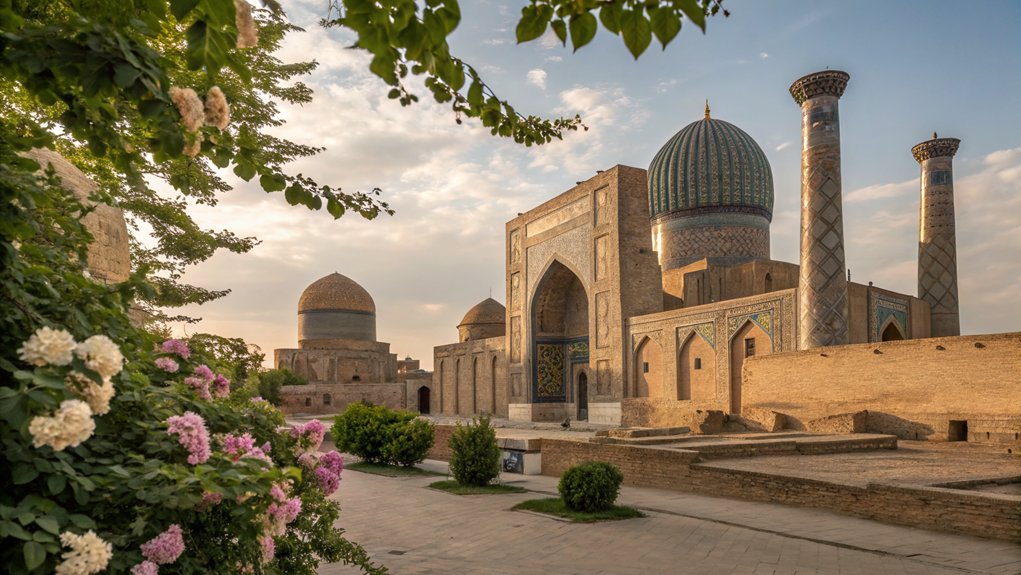
When planning your Uzbekistan travel itinerary, you’ll find the Silk Road offers a unique blend of history and culture. From the bustling streets of Tashkent to the enchanting architecture of Samarkand and Bukhara, each city tells its own story. You’ll also experience the vast Kyzilkum Desert and the traditions that define this region. Curious about what must-see attractions and culinary delights await you on this journey? Let’s explore further.
Key Takeaways
- Explore Uzbekistan’s rich Silk Road history through iconic cities like Tashkent, Samarkand, and Bukhara with a well-planned itinerary.
- Visit UNESCO World Heritage Sites, including Ichan Kala in Khiva, showcasing preserved architecture and cultural heritage.
- Sample traditional Uzbek cuisine, such as plov and non, for an authentic culinary experience reflecting local customs.
- Travel comfortably using high-speed trains between cities, enhancing your exploration of Uzbekistan’s diverse attractions.
- Enjoy mild weather during the ideal travel months of March to May and September to October for the best sightseeing experience.
Your Essential Day-by-Day Itinerary for Exploring Uzbekistan’s Silk Road
As you commence your journey through Uzbekistan’s Silk Road, you’ll find each day packed with unique experiences that highlight the country’s rich history and culture.
On Day 1, you’ll land in Tashkent and explore the Old City, visiting the stunning Khast Imam Complex and the bustling Chorsu Bazaar.
By Day 2, you’re off to Samarkand on a high-speed train, marveling at iconic sites like Registan Square and the Guri Emir Mausoleum.
Your Day 3 adventure takes you to Khiva, a UNESCO World Heritage site, where you’ll walk through Ichan Kala’s breathtaking architecture.
Then, enjoy a scenic drive through the Kyzilkum Desert to Bukhara on Day 4, concluding your trip with shopping and a farewell dinner in Tashkent on Day 9.
Travel Logistics: Getting Around the Silk Road in Uzbekistan
How do you navigate the vast landscapes and historic cities of Uzbekistan’s Silk Road? High-speed trains efficiently connect major cities like Tashkent, Samarkand, and Bukhara, making travel quick and comfortable. If you’re exploring rural areas, consider the domestic flights, such as a 1.5-hour trip between Urgench and Tashkent. For local excursions, private bus transportation enhances your comfort while soaking in scenic views. Local guides can enrich your experience by informing you about historical sites and cultural interactions. When you’re in urban areas, taxi services and ride-sharing apps provide convenient and affordable city travel.
| Transportation Option | Benefits |
|---|---|
| High-speed trains | Fast and efficient |
| Domestic flights | Time-saving for rural travel |
| Private buses | Comfort and scenic views |
| Taxis/Ride-sharing | Affordable city transport |
Top Attractions to Visit in Tashkent
When you’re in Tashkent, exploring the Historic Old City will transport you back in time with its stunning mosques and ancient sites.
You can also experience the vibrant atmosphere of Chorsu Bazaar, where local flavors and crafts come to life.
Let these attractions give you a true taste of Uzbekistan’s rich heritage.
Historic Old City Exploration
Exploring Tashkent’s historic Old City is like stepping into a vibrant tapestry of culture and tradition. You’ll want to visit the Khast Imam Complex, home to the ancient Uthman Quran—one of the oldest copies in existence.
Just a short stroll away is the Tello Shayh Mosque, renowned for its stunning wooden columns and intricate tile work.
Don’t miss the Medresseh of Abulkasim, where craftsmen demonstrate traditional arts like silk weaving and ceramics.
For a taste of local life, roam through the lively Chorsu Bazaar, filled with fresh produce, spices, and colorful handicrafts.
Cap off your adventure at Independence Square, a symbol of Tashkent’s modern history, surrounded by grand monuments and lush gardens.
Vibrant Bazaar Experiences
Tashkent boasts several vibrant bazaars, and Chorsu Bazaar stands out as a must-visit for anyone wanting to immerse themselves in the heart of local culture. Here, you’ll find colorful stalls brimming with fresh produce, fragrant spices, and traditional crafts.
It’s the perfect spot for an authentic experience, where you can watch local artisans skillfully creating pottery and textiles, deepening your appreciation for Uzbekistan’s heritage. The hustle and bustle of locals and tourists creates an energetic atmosphere, making it easy to join in on the action.
Be sure to sample local dishes like fresh non and plov while chatting with friendly vendors, and don’t miss the Independence Square market, where you can pick up unique souvenirs like handmade carpets and jewelry.
Unforgettable Highlights of Samarkand
Samarkand offers five unforgettable highlights that capture the essence of its rich history and stunning architecture. You’ll definitely want to explore:
- Registan Square: Framed by three magnificent madrasahs, this vibrant heart of the city showcases extraordinary architectural brilliance.
- Gur Emir Mausoleum: Visit this breathtaking example of Timurid architecture, where Tamerlane and his descendants lie in splendor, adorned with intricate tiles.
- Shah-i-Zinda Ensemble: Marvel at this revered site, featuring stunning turquoise-tiled mausoleums that embody the spiritual significance of Central Asia.
Don’t miss the grandeur of the Bibi Khanum Mosque or the groundbreaking Ulugbek Observatory, which together weave a fascinating narrative of Samarkand’s historical significance and cultural marvels.
The Rich History of Bukhara
Bukhara, often regarded as the jewel of the Silk Road, boasts a rich tapestry woven from centuries of trade, culture, and scholarship. As a key city, it’s renowned for over 140 architectural monuments that highlight its historical significance.
During the Islamic Golden Age, Bukhara flourished as a major center for trade, religion, and education, deeply influenced by Persian and Arab civilizations. You’ll be captivated by the Ark Citadel, a massive fortress dating back to the 5th century, reflecting the city’s royal heritage.
Don’t miss the Labi Hauz complex, a picturesque gathering place, and the Poi-Kalon Ensemble, featuring the stunning Kalyan Minaret and mosque—a demonstration of Bukhara’s standing as a hub of Islamic architecture and learning.
What Makes Khiva Enchanting?
When you wander through Khiva, you’re stepping into a UNESCO World Heritage Site filled with architectural marvels that tell stories of its rich past.
The stunning Ichan Kala, with its intricate designs, showcases the city’s unique blend of Islamic and local artistry.
As you explore, you’ll truly feel the heartbeat of Khiva’s vibrant traditions and history.
UNESCO World Heritage Site
Although many cities boast historical significance, Khiva stands out as a UNESCO World Heritage Site that fascinates visitors with its remarkably preserved Ichan Kala. This ancient city exemplifies the rich cultural tapestry of the Silk Road.
Here are three reasons why you’ll find Khiva enchanting:
- Stunning Monuments: Marvel at the Kalta Minar and the Tash Hauli Palace, showcasing exquisite craftsmanship and architectural brilliance.
- Cultural Exchange: Experience the city’s history as a crucial trading post, where Islamic and Persian styles blend beautifully in its architecture.
- Lively Bazaar: Immerse yourself in the vibrant atmosphere of Khiva’s bazaar, where local craftsmanship and traditional crafts celebrate its Silk Road heritage.
With each step, you’ll feel the magic of Khiva’s storied past.
Architectural Marvels and Traditions
Khiva’s enchanting atmosphere goes beyond its status as a UNESCO World Heritage Site, revealing a remarkable blend of architectural marvels and rich traditions. As you stroll through Ichan Kala (Old City), marvel at Kalta Minar and Tash Hauli Palace, alongside the stunning Juma Mosque.
| Landmark | Highlights |
|---|---|
| Kalta Minar | Iconic minaret with striking turquoise tiles |
| Tash Hauli Palace | Grand residence featuring beautiful courtyards |
| Juma Mosque | Unique wooden columns showcasing craftsmanship |
| Tim Bazaar | Vibrant marketplace reflecting Silk Road history |
| Madrasahs | Intricate tile work demonstrating artistic flair |
Don’t miss the vibrant bazaars and a traditional dinner with sweeping views, enhancing the magic of Khiva’s illuminated structures.
Engaging Cultural Activities to Experience in Uzbekistan
Uzbekistan offers a wealth of engaging cultural activities that let you immerse yourself in its rich heritage.
Here are some must-do experiences:
- Cooking Demonstrations: Join local families for hands-on cooking lessons where you’ll learn to prepare traditional dishes like Plov, deepening your connection to Uzbek culture.
- Traditional Music Performances: While dining in local restaurants, enjoy vibrant music that showcases Uzbekistan’s diverse rhythms and sounds, enhancing the atmosphere of your meal.
- Artisan Visits: Explore Tashkent and Khiva to witness traditional crafts such as ceramic making and silk weaving, gaining insight into techniques passed down through generations.
These activities not only entertain but also enrich your understanding of Uzbekistan’s vibrant culture.
Must-Try Foods That Make Uzbekistan Unique
When you’re in Uzbekistan, you can’t miss the chance to try the incredible plov, a dish that’s packed with flavor and culture.
Pair it with freshly baked non and unique fermented drinks for a true taste of the region.
Each bite reveals the heart of Uzbekistan’s culinary traditions.
Traditional Uzbek Plov
One dish you absolutely can’t miss in Uzbekistan is traditional plov, often referred to as “osh.” This hearty meal combines rice, tender meat—usually lamb or beef—and a medley of aromatic spices, all cooked in a large, deep pan called a kazan.
Plov isn’t just food; it’s a culinary experience best enjoyed communally.
Here are three ways to enhance your plov experience:
- Taste regional variations: Explore different local versions, which might include dried fruits or nuts.
- Join a cooking class: Learn how to make plov using traditional methods, deepening your appreciation for this dish.
- Enjoy it at special occasions: Participate in gatherings where plov is served to truly embrace Uzbek culture.
Freshly Baked Non
After savoring a hearty serving of traditional plov, you won’t want to miss trying freshly baked non. This delightful Uzbek flatbread is a staple, often enjoyed straight from the tandoor oven, where it develops a rich flavor and distinct texture. Round and adorned with beautiful patterns, non is a reflection of the skill of local bakers. Each region offers its unique take on this beloved bread, showcasing diverse thicknesses and styles. More than just food, non embodies hospitality and community in Uzbek culture, making it essential at social gatherings. Experience the warmth and tradition as you savor this culinary treasure in local homes and vibrant markets.
| Style of Non | Description |
|---|---|
| Tashkent Non | Thin, crisp crust, slightly chewy |
| Samarkand Non | Thicker, soft, fluffy texture |
| Fergana Non | Large, flat, often served with meals |
Unique Fermented Drinks
Exploring Uzbekistan’s culinary landscape wouldn’t be complete without tasting its unique fermented drinks, each offering a glimpse into the country’s rich traditions.
These beverages not only quench your thirst but also connect you to Uzbekistan’s cultural heritage.
Here are three must-try drinks:
- Kefir – A nutritious, tangy beverage made from fermented milk, loaded with probiotics.
- Kumis – A traditional drink made from fermented mare’s milk, slightly alcoholic and cherished by nomadic cultures for its health benefits.
- Sharbat – A sweet, rejuvenating drink crafted from fermented fruits or herbs, showcasing the country’s agricultural diversity.
These unique beverages truly enhance your dining experience and celebrate the flavors of Uzbekistan!
Preparing for Your Journey: Essential Travel Tips
When preparing for your journey to Uzbekistan, it’s essential to take care of a few key details ahead of time.
First, make sure to obtain the necessary visas for both Uzbekistan and Turkmenistan well in advance, as they’re required for entry.
Pack for warm weather, with daytime temperatures often in the 80s-90s°F, but bring layers for cooler evenings that can drop to the 50s°F.
Keep a doctor’s prescription handy for any medications you may need, as it can be required by authorities.
Booking your trip at least six months ahead will help you secure your preferred luxury accommodations.
Finally, familiarize yourself with local customs and cultural practices to enrich your immersive experience while exploring the Silk Road.
Weather Insights and Best Travel Months for Uzbekistan
Uzbekistan’s weather can considerably impact your travel experience, so it’s wise to plan your visit accordingly.
The best months to enjoy this beautiful country are:
- March to May: These spring months feature mild temperatures and stunning landscapes, ideal for sightseeing without the summer heat.
- September and October: Autumn offers pleasant weather and vibrant foliage, making it another perfect time to explore. You’ll also face fewer crowds at popular attractions during these shoulder seasons.
- June to August: While summer can be scorching with highs in the 80s and 90s°F (27-37°C), evenings cool down to the 50s°F (10-15°C).
Consider your comfort when choosing your travel dates to maximize your experience.
Sustainable and Meaningful Travel Along the Silk Road
Experiencing the rich tapestry of culture along the Silk Road offers travelers a unique opportunity to connect deeply with local communities. By engaging with artisans and enjoying authentic experiences, you can support sustainable tourism. Participating in hands-on cooking demonstrations and local family dinners fosters understanding of Uzbek culture, enriching your journey. Prioritize family-run accommodations and local restaurants to boost local economies.
Here’s a glimpse of how you can engage meaningfully:
| Activity | Benefits | Impact |
|---|---|---|
| Cooking with locals | Learn traditional recipes | Support family-run businesses |
| Visiting artisan markets | Purchase handmade crafts | Promote local artisans and their skills |
| Eco-friendly transport | Reduce carbon footprint | Encourage sustainable travel practices |
Frequently Asked Questions
What Is the Best Time to Visit Uzbekistan?
The best time to visit Uzbekistan is during spring (April to June) or fall (September to October). You’ll enjoy mild temperatures and vibrant landscapes, making your experience more comfortable and enjoyable while exploring the region.
Are There Any Visa Requirements for Visiting Uzbekistan?
Yes, you’ll need a visa to visit Uzbekistan unless you’re from a visa-exempt country. Check the specific requirements for your nationality, as they can vary. It’s essential to apply beforehand for a smooth entry.
Is It Safe to Travel Alone in Uzbekistan?
Yes, it’s generally safe to travel alone in Uzbekistan. You’ll find friendly locals and a rich culture. Just stay aware of your surroundings, follow local customs, and keep your belongings secure while exploring.
What Language Is Spoken in Uzbekistan?
In Uzbekistan, the primary language is Uzbek. Russian is also widely spoken, especially in urban areas. You’ll find that knowing a few basic phrases in both can enhance your travel experience greatly.
Are Credit Cards Widely Accepted in Uzbekistan?
Credit cards aren’t widely accepted in Uzbekistan, so it’s best to carry cash for most transactions. You’ll find better acceptance in larger cities, but rural areas primarily deal in cash. Always have some local currency on hand.
Leave a Reply