
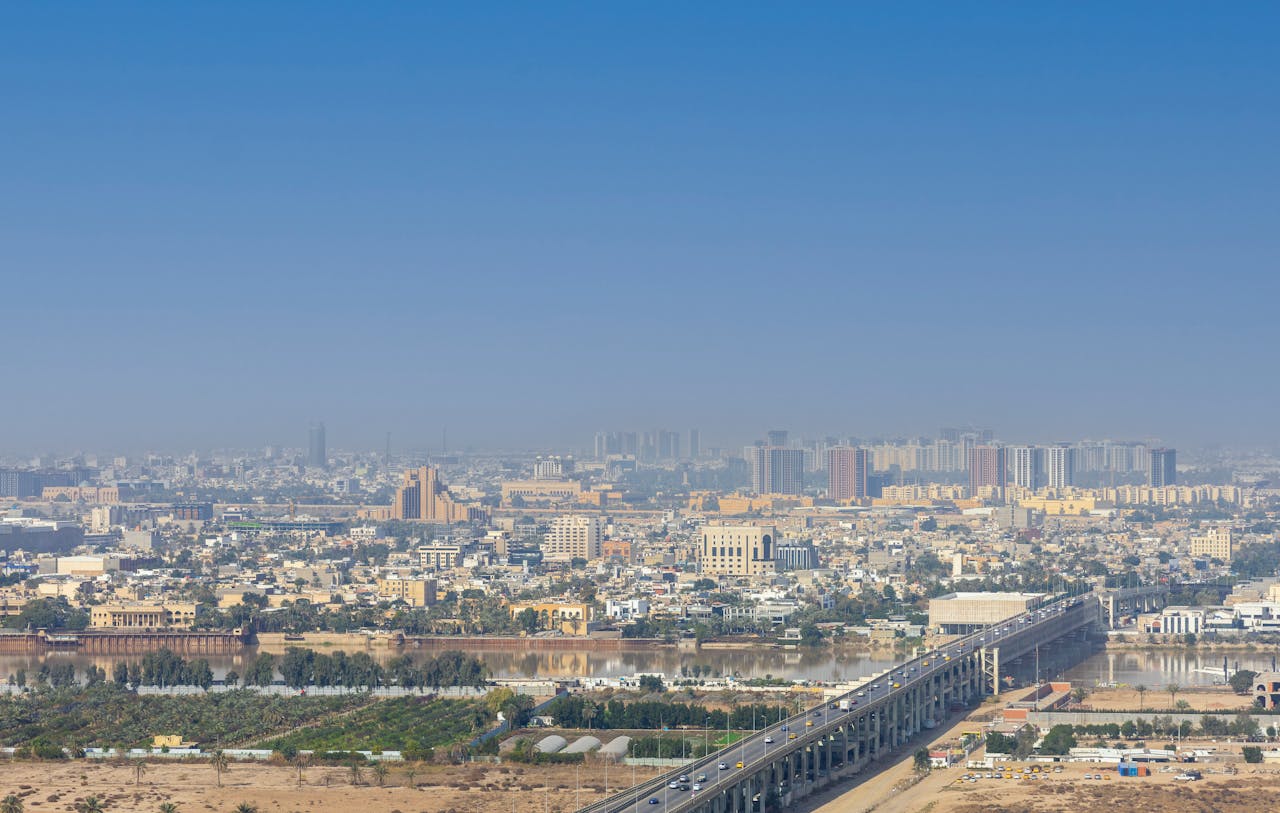
You may not think of Iraq as a travel destination, yet you will find ancient cities, sacred shrines, mountain views, and wetlands that reflect thousands of years of history. From high plateaus in the north to historic desert sites in the south, you can explore places that shaped early civilization and still hold deep cultural value today.
You will discover 14 beautiful places across Iraq that highlight its history, faith, landscapes, and living traditions in one clear guide.
1. Erbil Citadel, Erbil
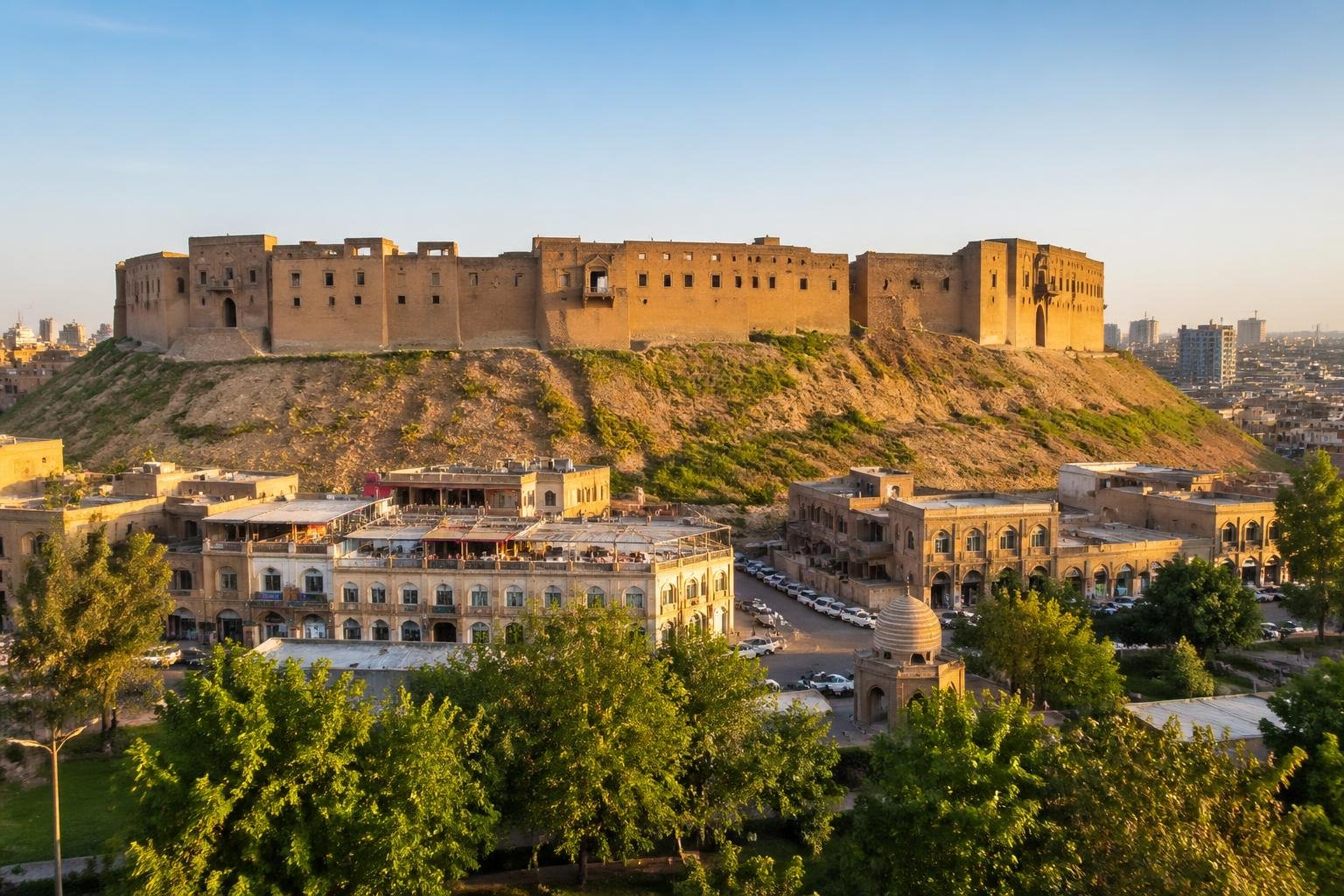
You see Erbil Citadel rise above the city on a large mound at the center of town. This ancient site forms the historic heart of Erbil in the Kurdistan Region of Iraq.
Many experts consider it one of the oldest continuously inhabited places in the world. The Citadel of Erbil sits on a tell, a man‑made hill built up over thousands of years of settlement.
You walk through narrow lanes lined with restored houses and cultural buildings. Ongoing work aims to protect the site and bring life back to the area, as noted by the Erbil Citadel UNESCO listing.
Plan to spend at least one to two hours exploring. A practical Erbil Citadel guide for 2026 explains what to see and when to visit.
From the edge of the citadel, you get wide views over Erbil’s main square and bazaars below. The mix of ancient walls and modern city life makes this stop both historic and active.
2. Al-Askari Shrine, Samarra
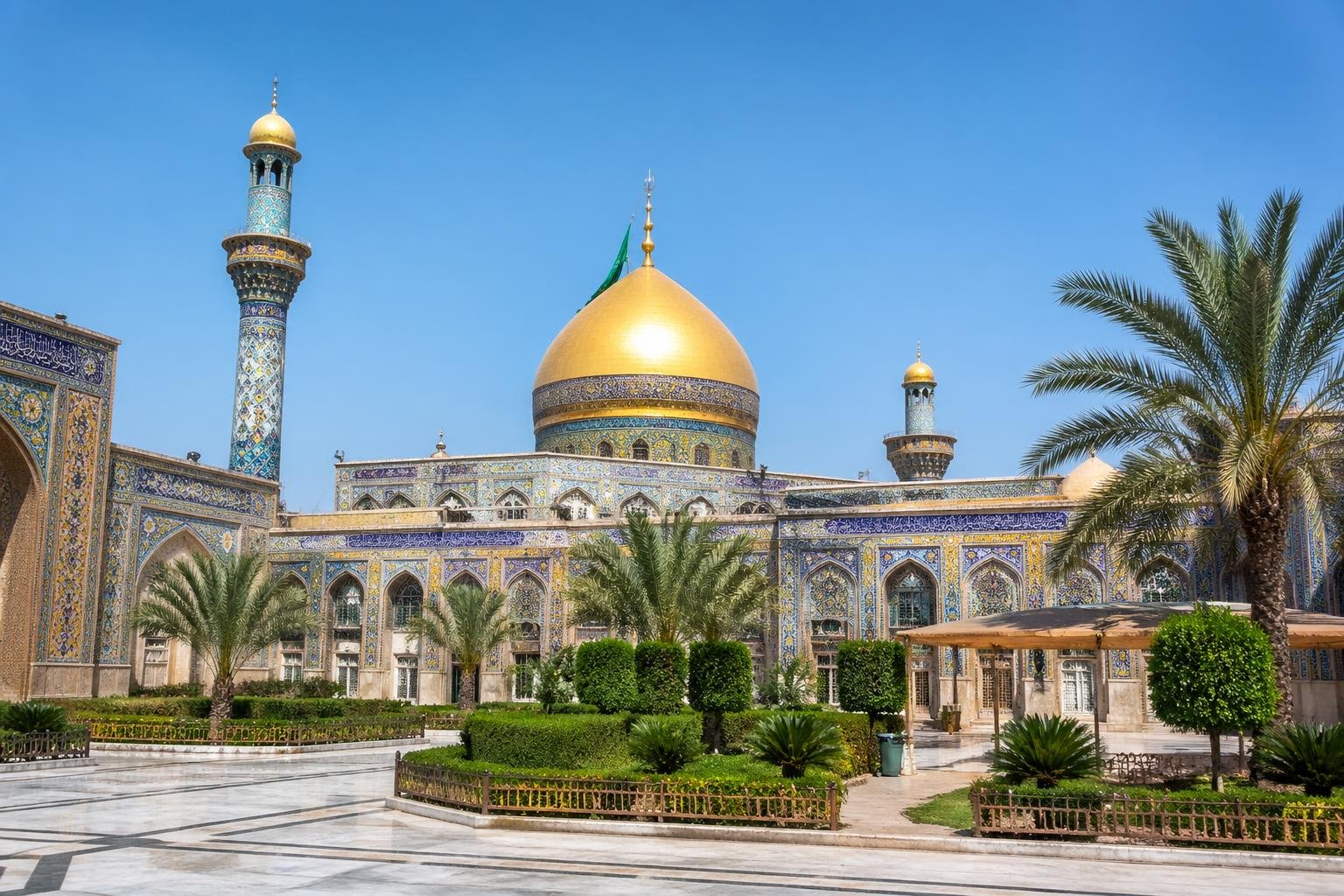
You find the Al-Askari Shrine in the city of Samarra, about 60 miles north of Baghdad. This site holds deep meaning for Shia Muslims. It serves as the resting place of two Shia Imams, Ali al-Hadi and Hasan al-Askari, as described on the Al-Askari Shrine Wikipedia page.
The shrine dates back to 944 CE. Over time, builders restored and expanded it. Its large golden dome stands out and has become a symbol of the city, as noted by Iraq Heritage’s overview of Al Askari shrine- Samarra.
You will notice detailed tile work and careful design throughout the complex. The mosque also connects to the belief in the twelfth Imam, Muhammad al-Mahdi, who Shia Muslims believe is in occultation, as explained in this guide to the Al-Askari Mosque in Samarra.
When you visit, you enter a space of prayer and reflection. Dress modestly and follow local customs to show respect.
3. Holy Shrine of Imam Hussain, Karbala
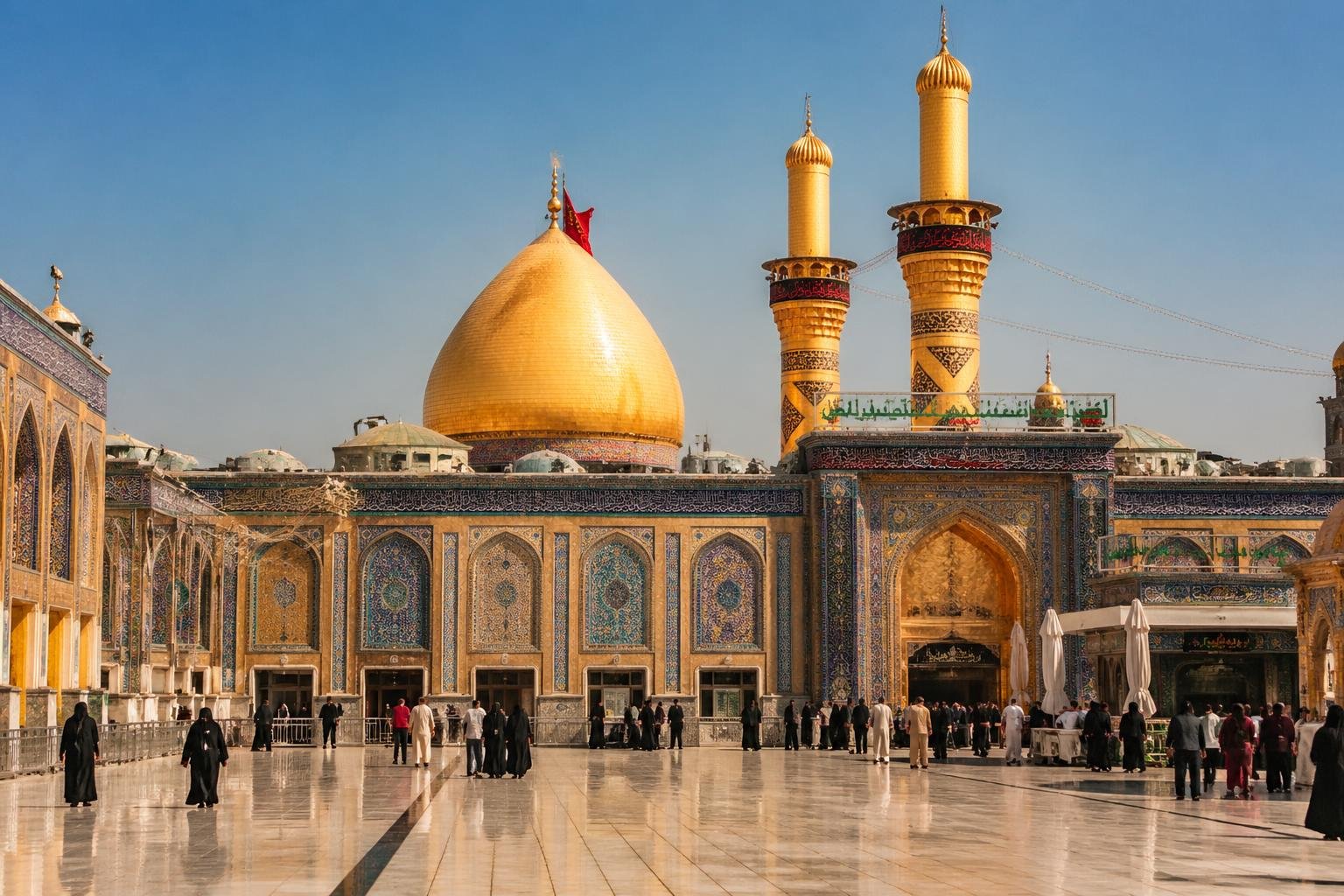
You will find the Holy Shrine of Imam Hussain in the city of Karbala, about 100 kilometers southwest of Baghdad. The shrine marks the burial place of Imam Hussain ibn Ali, who was killed in the Battle of Karbala in 680. This event shaped Islamic history and still holds deep meaning for many Muslims.
Millions of pilgrims visit the site each year, especially during Ashura and Arbaeen. You can learn more about the site through the official Imam Hussain Visitors Guide to Karbala, which explains its layout and history.
When you enter the shrine complex, you will see a large courtyard, golden domes, and detailed tile work. The mosque and tomb form one of the most important religious sites in Iraq, as described by Explore Iraq – Imam Hussain Shrine.
You do not need to be Muslim to visit, but you should dress modestly and follow local customs. The area around the shrine also connects to the nearby Al-Abbas Shrine, making this part of Karbala a key stop during your visit.
4. Great Mosque of Kufa
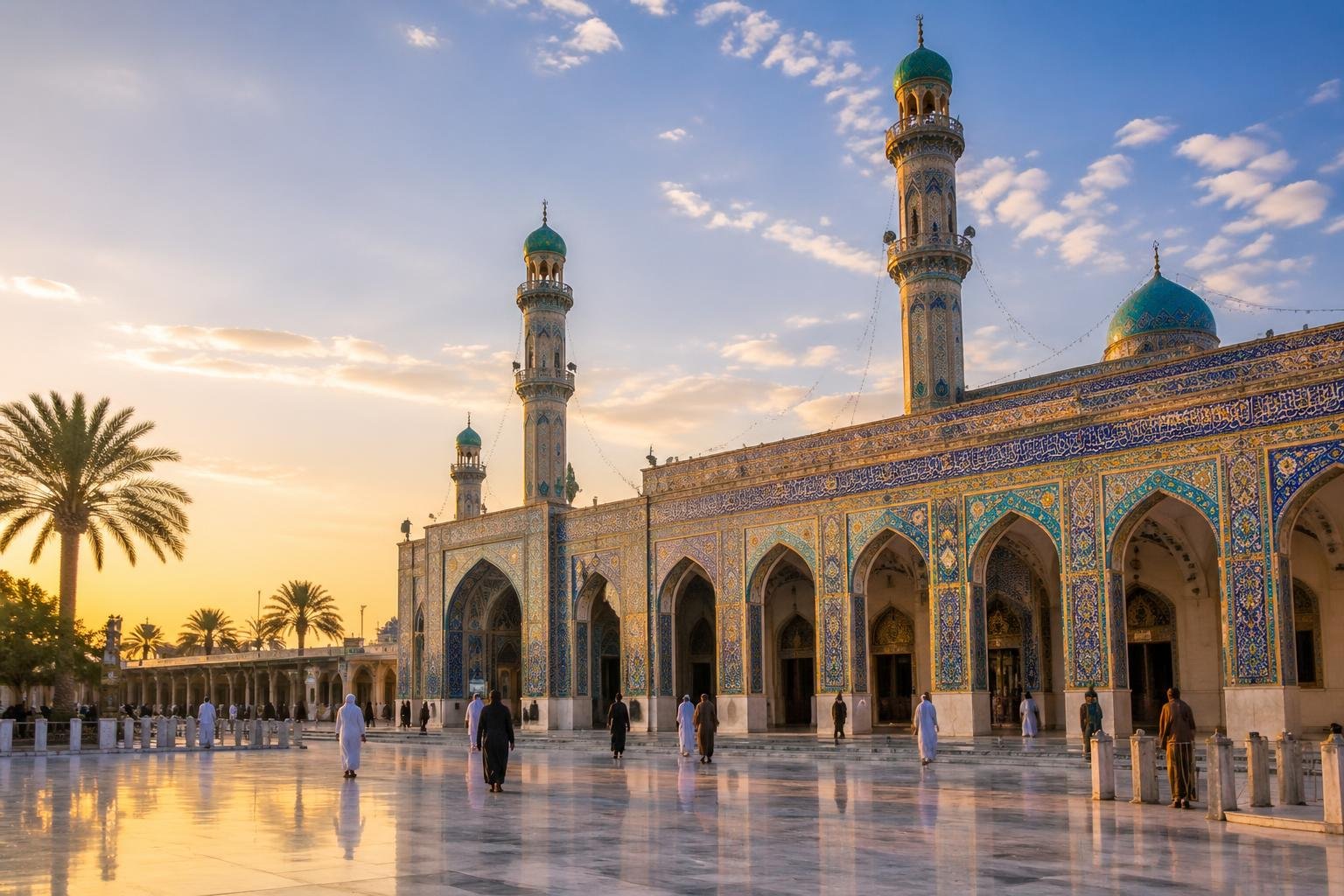
You find the Great Mosque of Kufa in the city of Kufa, near Najaf. Many historians rank it among the earliest mosques in Islam. Learn more about its long history on the Great Mosque of Kufa – Wikipedia.
Builders first constructed the mosque in the 7th century, soon after the city was founded. Imam Ali ibn Abi Talib prayed here, which gives the site deep meaning for many Muslims. Today, many Shia pilgrims visit throughout the year.
When you walk inside, you see wide courtyards and detailed arches. Recent renovations added marble floors and gold accents along the pillars. Visitors often mention these features in reviews of the Great Mosque of Kufa.
The mosque stands as both a place of worship and a historic landmark. You can explore the prayer halls, reflect in the open courtyard, and observe daily religious life. If you want to understand Iraq’s early Islamic history, you should include this site on your visit.
5. Amadiya Plateau, Dohuk
You reach Amadiya by climbing onto a flat mountain plateau in northern Iraq. The town sits in Dohuk province and rises high above the surrounding valleys. From the edge, you see wide views of hills and farmland below.
This mountain town has deep roots. Many travelers visit Amadiya (Amedi) in Duhok for its historic setting and cooler summer weather. The old city gate and narrow streets show signs of its long past.
You can walk across the plateau in a short time. Stone houses, small shops, and local markets line the streets. The pace feels calm, and you move around on foot with ease.
Many people plan a day trip to Amedi from Duhok because the drive is direct and scenic. You spend a few hours exploring viewpoints and historic sites, then return before evening.
Nature surrounds you on every side. Mountains frame the plateau, and the high position gives you steady breezes and clear views throughout the day.
6. Lalish Temple, Nineveh Plains
You find Lalish Temple in a quiet mountain valley in the Nineveh Plains of northern Iraq. It stands as the holiest site of the Yazidi faith. Many travelers describe Lalish as a sacred pilgrimage site for the Yazidi people.
You enter the valley by a single road, surrounded by low mountains. The temple complex includes stone buildings and cone-shaped shrines. You walk barefoot inside, because visitors must remove their shoes before stepping onto the sacred ground.
Lalish sits in the Kurdistan Region of Iraq, as noted in this overview of Lalish in the Nineveh Plains. Pilgrims visit for prayer, festivals, and important religious rites. During special events, families camp near the temple grounds.
When you visit, you see oil lamps, sacred springs, and carved stone details. The setting feels calm and ordered. You observe a living religious center that still shapes daily life for the Yazidi community.
7. Hatra Ruins, Ninawa
You find the Hatra Ruins in northern Iraq, in Ninawa province. This ancient city stands in Upper Mesopotamia and dates back to the Parthian period. Learn more about the city’s background on the Hatra Wikipedia page.
You walk through the remains of thick walls and large temples that once protected an important desert city. Hatra served as a religious and trade center. UNESCO recognizes it as a World Heritage Site because of its strong fortifications and unique temple design.
Inside the main sacred area, you see tall iwans, which are large open halls with high vaulted roofs. These structures show a mix of Greek and Eastern building styles. The city layout still feels clear, even in ruins.
You can reach Hatra from Mosul with planning and local guidance. Before you go, review travel advice from a practical Hatra visitor guide.
8. Ziggurat of Ur, Dhi Qar
You stand before one of the most important monuments of ancient Mesopotamia at the Ziggurat of Ur in Dhi Qar Province. This massive stepped structure rises from the flat desert near Nasiriyah. Builders constructed it around 2100 BCE under King Ur-Nammu of the Third Dynasty of Ur, as noted in this overview of the Ziggurat of Ur.
You can still see its broad staircases and thick mudbrick core. The upper levels no longer survive, but the base shows the scale and design of a Sumerian religious temple.
You reach the site near the modern city of Nasiriyah, which sits along the Euphrates River and serves as a gateway to major archaeological sites in the region, including the ancient city of Ur near Nasiriyah. The landscape feels open and dry, with little to block your view of the structure.
You walk across ground that once formed the heart of a powerful city. The ziggurat reflects careful planning, strong engineering, and the deep religious life of early urban societies in Iraq.
9. Mar Mattai Monastery, Nineveh
You find Mar Mattai Monastery high on Mount Alfaf, about 20 kilometers northeast of Mosul. This ancient complex stands as one of the oldest Christian monasteries still in existence. It remains the oldest monastery of the Syriac Orthodox Church, as noted by Mor Mattai Monastery – Wikipedia.
The monastery dates back to the 4th century and continues to serve as an active religious site. Over time, it has faced invasions and damage, yet it has remained in use. Today, it stands as one of the region’s oldest surviving Christian monastic communities, according to TravelDojo’s Mar Mattai monastery overview.
When you visit, you see stone chapels, narrow passageways, and simple monastic cells built into the mountainside. The hilltop location gives you wide views across the Nineveh Plains, a feature highlighted by Mesopotamia Heritage’s Mar Mattai Monastery page.
You experience a place shaped by centuries of prayer and daily life. The setting feels quiet and remote, yet it remains closely tied to the surrounding communities of Nineveh.
10. Mesopotamian Marshes (Al-Ahwar)
You find the Mesopotamian Marshes in southern Iraq, where the Tigris and Euphrates rivers meet. People also call this region Al‑Ahwar. It is one of the country’s most important natural areas.
UNESCO lists the Ahwar of Southern Iraq as a World Heritage Site. The site includes wide wetland marshes and ancient Sumerian cities such as Uruk, Ur, and Eridu. These ruins show where some of the world’s earliest urban societies grew between the 4th and 3rd millennium BCE.
When you visit, you travel by small boat through calm waterways lined with tall reeds. You may see water buffalo, birds, and fish that depend on this wetland habitat. The marshes support strong biodiversity in a dry region.
You also meet the Marsh Arabs, who build traditional reed houses and live closely with the water. Their way of life has lasted for generations. A trip here gives you both natural scenery and deep history in one place.
11. Dukan Lake, Sulaymaniyah
You find Dukan Lake about 70 kilometers northwest of Sulaymaniyah. The lake formed after the Dukan Dam was built on the Little Zab River between 1954 and 1959, creating a large reservoir in the mountains.
Many travelers visit Dukan Lake in Sulaymaniyah for a calm day by the water. You can walk along the shore, enjoy a picnic, or sit at one of the nearby restaurants. Local spots often serve masgouf, a grilled fish dish popular in Iraq.
The lake sits under the Sara Mountain range, which gives you wide views of hills and open water. On warm days, you may see small boats moving across the calm surface.
If you prefer outdoor activity, you can explore rough shoreline areas around Lake Dukan in Iraqi Kurdistan. Some visitors hike or camp in less developed spots away from the main road.
You reach the lake in about 40 minutes from Sulaymaniyah and around 1.5 hours from Erbil. That short drive makes it an easy weekend trip.
12. Kurdistan Mountains – Gali Ali Beg
You find Gali Ali Beg in the Kurdistan Region, about 130 km north of Erbil. The site sits between Erbil and Soran, where the road cuts through a steep mountain gorge. Water flows through the canyon and forms the well-known waterfall.
Many people stop for photos, but you can do more than that. You can follow a canyon trail that takes you over large rocks and through shallow water. The hike feels short, yet the uneven ground and cold stream slow your pace.
The waterfall appears on Iraq’s former 5-dinar banknote, which shows its national value. You can read more about its background at Geli Ali Beg Waterfall in Rawanduz.
You can also explore nearby viewpoints and winding rivers in the Rawanduz area. The deep canyons and mountain roads give you wide views, as described in this guide to the canyons of Rawanduz.
If you want a simple route, you can take a taxi to the waterfall and walk along Hamilton Road toward Bekhall, as noted in this Gali Ali Bag travel overview.
13. Samarra Archaeological City
When you visit Samarra Archaeological City, you walk through the remains of a former Abbasid capital. The city lies about 125 kilometers north of Baghdad along the Tigris River. It served as the capital of the Abbasid Caliphate in the 9th century.
You can explore the vast ruins that make up the Samarra Archaeological City UNESCO World Heritage site. The area preserves the layout of a large ancient city. Many sections remained untouched for centuries, which helps you see how it once looked.
One of the main landmarks is the Great Mosque of Samarra. Its spiral minaret, known as Al‑Malwiya, rises about 52 meters high and stands out across the flat landscape, as noted in guides to tourist places to visit in Samarra. You can see the bold design that marked early Islamic architecture.
As you move through the site, you notice wide avenues, palace remains, and old city walls. The scale of the ruins shows how powerful and organized the Abbasid state was at its peak.
14. Ashur (Qal’at Sherqat)
You find Ashur on the west bank of the Tigris River in northern Iraq. This ancient city once served as the first capital of the Assyrian Empire. Today, its ruins rise above the river plain near the town of Sherqat.
Ashur dates back to the 3rd millennium BCE and held political and religious power for centuries. You can still see remains of temples, city walls, and the famous ziggurat. UNESCO recognizes its value as a cultural site, as noted on the UNESCO World Heritage listing for Ashur (Qal’at Sherqat).
When you walk through the site, you move across layers of Assyrian history. The city honored the god Ashur, who gave the empire its name. Kings built and rebuilt parts of the city over time, leaving clear signs of change in stone and brick.
Ashur stands in a zone between rain-fed and irrigation farming, which helped it grow in ancient times. Its position along the Tigris supported trade and travel. You visit a place that shaped early Mesopotamian history and still shows the scale of Assyrian power.
Cultural Significance of Iraq’s Hidden Gems
Iraq’s lesser-known sites carry deep meaning shaped by ancient empires, faith, and daily life. When you visit these places, you see how history and living traditions still guide local identity.
Historical Context
Many hidden sites in Iraq sit on land that supported some of the world’s earliest cities. In places like Babylon and other ancient centers, you walk through areas tied to early writing, law, and trade. These sites reflect thousands of years of human settlement.
Beyond major landmarks, smaller ruins and historic districts also matter. Lists such as 26 cool and unusual things to do in Iraq highlight lesser-known monuments, memorials, and cultural spaces that show how different eras shaped the country.
You also find layers of Islamic, Christian, and older Mesopotamian history in one region. Mosques, shrines, churches, and citadels often stand close together. This mix shows how empires rose and fell, yet communities remained.
When you explore these places, you see that Iraq functions as a living record of human development, not just a collection of ruins.
Local Traditions and Customs
Hidden gems are not only ancient stones. They are active communities where people keep customs alive through daily life.
In northern cities like Erbil, areas around the citadel and bazaar still center on trade and family business. Guides often describe this region as one of the most interesting and beautiful places to visit in Iraq, where markets and neighborhoods reflect Kurdish culture and hospitality, as noted in this guide to the most interesting and beautiful places to visit in Iraq.
You will notice traditions such as:
- Serving tea to guests before business begins
- Gathering for evening walks in public squares
- Celebrating religious holidays with shared meals
In rural villages and desert towns, tribal ties and family networks remain strong. Hospitality is not a slogan; people often invite visitors to sit, eat, and talk.
These customs give meaning to the landscapes you see. The culture continues to shape each hidden place you visit.
Tips for Visiting Lesser-Known Destinations
Remote ruins, mountain villages, and marsh towns offer strong rewards, but they require careful planning. Focus on safety, timing, and local conditions before you go.
Travel Safety Advice
Check official travel advisories before you book flights or cross internal checkpoints. Conditions can change by province, especially outside major cities like Baghdad, Erbil, and Basra.
Hire a local driver or guide when visiting rural sites such as desert ruins or mountain valleys. Many roads lack clear signs, and mobile service can drop without warning.
Keep these steps in mind:
- Carry a copy of your passport and visa at all times.
- Register with your embassy if your country offers that service.
- Avoid traveling at night between cities.
- Ask locals or hotel staff about current road conditions.
Dress modestly in smaller towns. Long pants and covered shoulders help you blend in and show respect.
Use registered taxis or drivers arranged by your hotel. In Iraqi Kurdistan, security checks are common, so allow extra travel time and stay patient at checkpoints.
Best Times to Visit
Plan your trip around the weather. Iraq has very hot summers and mild winters.
The best months for most regions are:
- March to May – Spring brings cooler air and green landscapes.
- October to November – Fall offers warm days without extreme heat.
In southern cities like Basra and the marshlands, summer temperatures often rise above 45°C (113°F). Sightseeing becomes difficult and sometimes unsafe in peak heat.
In northern areas such as Iraqi Kurdistan, winters can bring snow to mountain roads. If you plan to visit remote valleys or villages, confirm road access in advance.
Visit early in the morning when exploring open sites like ancient ruins. You avoid strong sun, crowds, and limited shade.
Frequently Asked Questions
You will find ancient cities, major religious shrines, busy markets, and mountain views across Iraq. These answers focus on specific cities, historic landmarks, local food, and current travel concerns so you can plan with clear facts.
Which city is considered the most beautiful in Iraq?
Many travelers point to Erbil as one of the most beautiful cities in Iraq. You can walk around the ancient Erbil Citadel and then explore modern streets filled with cafes and parks.
Erbil also feels organized and easy to navigate. Its mix of old stone walls and newer buildings gives you both history and comfort in one place.
Some travelers also praise scenic areas across the country in lists like these most beautiful places in Iraq, which often include both cities and natural spots.
What are the top historical sites to visit in Iraq?
You should start with the Erbil Citadel, one of the oldest continuously inhabited settlements in the world. You can walk its narrow lanes and see views across the city.
In Samarra, visit the Al-Askari Shrine, which holds deep religious meaning for many Shia Muslims. The Holy Shrine of Imam Hussain in Karbala also draws millions of pilgrims each year.
The Great Mosque of Kufa is another key stop. It played an important role in early Islamic history and still serves as a major place of worship.
Travel guides that outline the best attractions and things to do in Iraq often list these historic and religious landmarks as top priorities.
What are the best things to do in Baghdad for first-time visitors?
You can begin at the Iraqi Museum. It holds artifacts from ancient Mesopotamia, including items from Babylon and Assyria.
Walk along the Tigris River to see daily life in the capital. Visit traditional markets such as Al-Mutanabbi Street, known for its book stalls and cafes.
Many travel platforms that highlight the best things to do in Iraq include the Iraqi Museum and Baghdad’s cultural sites as key stops for first-time visitors.
What are two lesser-known places in Iraq that are worth visiting?
The Amadiya Plateau in Dohuk offers wide mountain views and a quiet setting. You can explore its narrow streets and look out over steep cliffs.
You might also consider visiting smaller towns and natural areas featured in guides to the most interesting and beautiful places to visit in Iraq. These lists often include remote valleys and historic villages that receive fewer visitors.
These spots give you a slower pace and a chance to see daily life outside major cities.
Is Iraq safe and welcoming for American tourists right now?
Security conditions vary by region. Iraqi Kurdistan, including Erbil and Dohuk, has more stable security compared to other areas.
You should check official travel advisories from your government before booking a trip. Conditions can change quickly, especially in certain provinces.
Many visitors report strong local hospitality. Iraqis often welcome guests warmly, especially in cities that see regular tourism.
What are the most popular Iraqi foods and local specialties to try?
You should try masgouf, a traditional grilled fish often cooked over an open fire. Restaurants in Baghdad commonly serve it along the river.
Dolma is another favorite. It includes vegetables stuffed with rice, herbs, and sometimes meat.
Kebab, samoon bread, and lentil soup also appear on most menus. These dishes reflect simple ingredients and strong regional flavors that you can find across the country.
Leave a Reply