
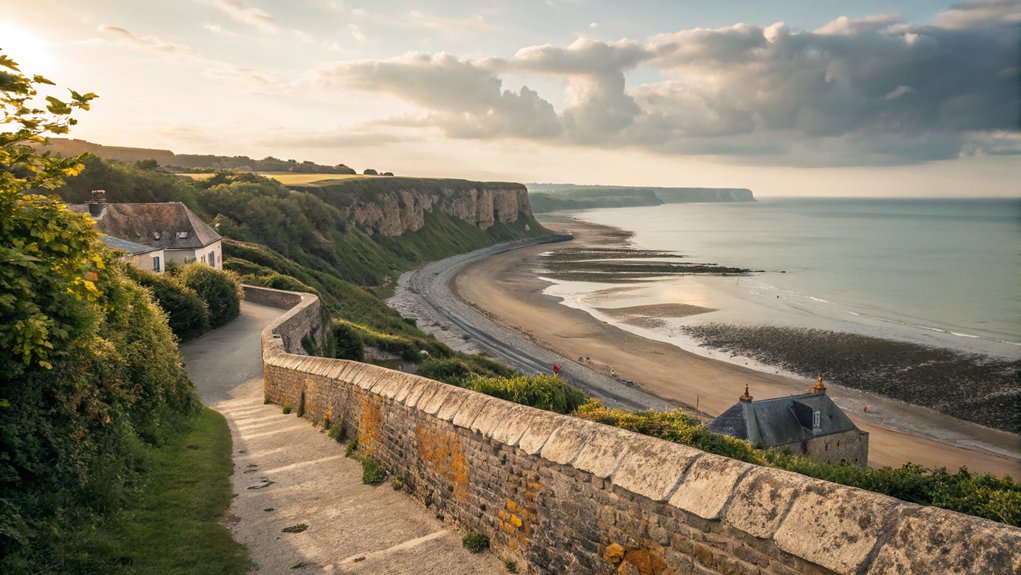
As you plan your visit to Normandy, you’ll find a unique blend of history and charm waiting for you. Starting at the iconic D-Day beaches, you can pay tribute to those who served, then explore picturesque towns that offer a taste of local culture. Each stop reveals another layer of this remarkable region. Ready to trace the footsteps of history while savoring Normandy’s delights? Let’s chart out your journey together.
Key Takeaways
- Start your itinerary at Omaha Beach and the American Cemetery for a poignant introduction to D-Day history.
- Schedule visits to Utah Beach and the Airborne Museum in Sainte-Mère-Église to explore airborne troop narratives.
- Base your stay in Bayeux for easy access to attractions like the Bayeux Tapestry Museum and nearby D-Day sites.
- Incorporate culinary experiences at local eateries like Les Vapeurs and La Reine Mathilde to savor Normandy’s flavors.
- Visit during spring or early autumn for mild weather and fewer tourists; avoid D-Day anniversaries for a more relaxed trip.
Top Historical Sites to Visit in Normandy
When you explore Normandy, there are five essential historical sites you can’t miss.
First, visit the American Cemetery and Memorial at Omaha Beach, where nearly 10,000 American soldiers are honored—don’t miss the poignant visitors center exhibit that tells their stories.
Next, the Bayeux Tapestry Museum captivates with its iconic 70-meter embroidery recounting the Norman conquest of England in 1066, offering a glimpse into medieval history.
Then, head to Arromanches to see the remains of the Port Winston Artificial Harbor, vital for the Allied landings, and explore the D-Day Landing Museum for detailed accounts of the events.
Finally, the Caen Memorial Museum provides an informative overview of World War II, highlighting its long-lasting impact.
Must-See D-Day Beaches: A Comprehensive Overview
When you explore the D-Day beaches, you’ll encounter significant sites that tell powerful stories of bravery and sacrifice.
Each location, from Utah Beach’s immersive museum to the solemn American Cemetery at Omaha Beach, offers a unique visitor experience.
Get ready to reflect on history while enjoying the beautiful Normandy coastline.
Key Sites Overview
Exploring the D-Day beaches of Normandy offers a profound glimpse into history, revealing the bravery and sacrifice of those who fought for freedom.
At Omaha Beach, you’ll honor nearly 10,000 fallen soldiers at the Normandy American Cemetery and Memorial.
Visit Utah Beach to see the Utah Beach Landing Museum, which showcases a well-preserved German bunker, highlighting its strategic importance.
At Juno Beach, the Juno Beach Centre pays tribute to Canada’s essential role, accompanied by a nearby cemetery.
Don’t miss Arromanches, where the remains of the Port Winston artificial harbor are located, along with a compelling D-Day film.
Finally, at Pointe du Hoc, witness the dramatic cliffs scaled by U.S. Rangers and the lasting impact of their bravery.
Visitor Experience Recommendations
Visiting the D-Day beaches of Normandy provides an unforgettable opportunity to connect with history and honor the sacrifices made during World War II.
Start at Omaha Beach, where you can explore the Normandy American Cemetery and Memorial, home to nearly 10,000 fallen soldiers.
Next, head to Utah Beach, where the Utah Beach Landing Museum in a former German bunker details the daring invasion operations.
Don’t miss Pointe du Hoc, where you’ll witness the Ranger Monument and bomb craters, stark reminders of the past.
In Arromanches, see remnants of the Port Winston Artificial Harbor and enjoy a powerful film at the 360 Theater.
Finally, visit the Juno Beach Centre, celebrating Canada’s crucial contributions to the D-Day effort.
Engaging Museums That Bring History to Life
Immerse yourself in the rich history of Normandy by visiting its engaging museums, each bringing the dramatic events of World War II to life.
Begin at the Utah Beach Museum, located in a former German bunker, where interactive exhibits detail the invasion’s planning and execution.
Next, head to the Airborne Museum in Sainte-Mère-Église to explore the lives of American paratroopers through artifacts and immersive dioramas.
Don’t miss the D-Day Landing Museum in Arromanches, showcasing the significance of artificial harbors used during the landings.
The Caen Memorial Museum offers a thorough overview of WWII, filled with artifacts and films.
Finally, visit the Commonwealth Cemetery in Bayeux, a poignant site honoring the sacrifices made by British soldiers during the invasion.
Explore Scenic Towns: Rouen and Honfleur
As you wander through the charming streets of Normandy, Rouen and Honfleur stand out as must-visit towns that beautifully showcase the region’s rich history and vibrant culture.
In Rouen, admire the well-preserved medieval architecture, including the stunning Gros Horloge and the iconic Notre-Dame Cathedral, which is deeply connected to Joan of Arc’s legacy.
Meanwhile, Honfleur enchants you with its picturesque Vieux Port and art-filled streets, a source of inspiration for countless artists.
Don’t miss the Ethnography and Norman Popular Arts Museum to discover local crafts that define Normandy’s character.
Both towns also offer delightful culinary experiences, featuring fresh local markets and traditional dishes, including delicious Camembert cheese.
Explore these scenic gems for a perfect blend of culture and history.
Discover Normandy’s Artisan Culture
As you explore Normandy, you’ll uncover a rich artisan culture that showcases local cheese production, like the beloved Camembert.
Don’t miss the chance to wander through farmers’ markets brimming with fresh, artisanal goods, or visit charming workshops dedicated to traditional crafts.
Each stop offers a taste of Normandy’s heritage, making your journey truly memorable.
Local Cheese Production
Exploring Normandy’s artisan cheese culture reveals a rich tapestry of flavors and traditions that have shaped this region’s culinary identity. Home to famous varieties like Camembert, Livarot, and Pont l’Évêque, Normandy’s lush pastures and ideal climate foster high-quality milk production.
You’ll find local cheese-making families preserving traditional methods passed down through generations, resulting in authentic, flavorful cheeses. Many artisans welcome visitors with open doors, offering guided tours and tastings that illuminate the cheese-making process.
As you stroll through local markets and shops, you can sample and purchase a diverse array of artisanal cheeses. Each bite reflects the dedication and craftsmanship embedded in Normandy’s cheese heritage, making it a true delight for any cheese enthusiast.
Traditional Crafts and Artisans
While wandering through Normandy, you’ll quickly discover a vibrant artisan culture that thrives on tradition and craftsmanship. From exquisite lace-making in Bayeux to the traditional umbrella making at H2O Parapluies, every craft tells a story. In Villedieu-les-Poêles, local artisans continue centuries-old copper pot techniques, and at the Cornille-Havard Bell Foundry, you can witness the intricate bell-making process firsthand.
Here’s a glimpse of some traditional crafts you can explore:
| Craft Type | Location | Notable Features |
|---|---|---|
| Cheese Making | Various Family Dairies | Camembert, Livarot |
| Lace-Making | Bayeux | Heritage for Fashion Industry |
| Copper Pot Crafting | Villedieu-les-Poêles | Centuries-old Techniques |
Embrace the rich artisan heritage that defines Normandy.
Farmers’ Markets Experience
Farmers’ markets in Normandy burst with life and flavor, offering a delightful way to experience the region’s artisan culture. In towns like Honfleur, these vibrant markets present local produce and crafts every Wednesday morning.
You can savor famous cheeses like Camembert, Livarot, and Pont l’Évêque, all crafted by dedicated local cheesemakers. Don’t miss handmade goods as well, such as exquisite laces from Bayeux and unique umbrellas from family-run businesses like H2O Parapluies.
To enrich your visit, stop by the Ethnography and Norman Popular Arts Museum in Honfleur, which showcases the traditional crafts and lifestyles of the region. Engaging with local artisans here helps you appreciate Normandy’s rich heritage and culinary diversity beyond its historical significance.
Local Cuisine and Dining Options in Normandy
When you visit Normandy, you can’t miss the extraordinary local cuisine that showcases the region’s rich culinary heritage. Here are some must-try dining options:
- Les Vapeurs in Trouville-sur-Mer: Savor fresh langoustines, whelks, oysters, and shrimp at this cozy coastal eatery.
- La Reine Mathilde in Bayeux: Experience traditional French fare paired with local cheeses like Camembert and Livarot.
- Le Bistrot d’à Côté in Port-en-Bessin: Enjoy reasonably priced seafood towers, a hit with both locals and tourists.
- Bakery in Asnelles: Don’t leave without trying tinned shortbread cookies, a delightful taste of Normandy’s artisanal baking.
Dive into these culinary delights to truly capture the essence of Normandy!
Unique Places to Stay in Normandy
When you think of unique places to stay in Normandy, charming château accommodations and boutique hotels in Honfleur should top your list.
Imagine waking up in a stunning estate or enjoying a cozy inn with local character. These options promise not just a place to rest but an unforgettable experience during your trip.
Château Accommodations
If you’re dreaming of a unique getaway, staying in a château in Normandy might be just what you need. These stunning accommodations blend historical charm with modern comfort, making your stay unforgettable.
Here are a few exceptional options:
- Château d’Audrieu: Perfect for families, it features a treehouse, with doubles starting from $275.
- Château La Chenevière: Located near the D-Day landing beaches, doubles start at $350, offering luxury and historical proximity.
- Unique Dining: Many châteaux provide on-site dining experiences, showcasing local cuisine and regional wines.
- Beautiful Grounds: Enjoy leisurely strolls in picturesque gardens, ideal for relaxation after exploring Normandy’s rich history.
Staying in these châteaux heightens your travel experience in Normandy’s enchanting landscape.
Boutique Hotels in Honfleur
Exploring Honfleur’s boutique hotels offers you a chance to experience the charm and character of this picturesque town.
Hôtel des Loges greets you with organic breakfasts and rustic décor, while the scenic Vieux Port area showcases various options with traditional architecture and local art that enhance your stay.
If you’re keen on history, Château La Chenevière is near the D-Day landing beaches and combines elegance with a sense of the past.
For a relaxing retreat, Hôtel l’Ecrin boasts a beautiful garden and convenient access to local shops and dining.
Many of these boutique hotels prioritize personalized service with a touch of local flair, making them perfect for immersing yourself in the rich culture and history of the region.
Best Times to Visit Normandy
Wondering when to experience the beauty of Normandy without the hustle of large crowds? The best times to visit are during the shoulder seasons of spring and early autumn. Here’s what you should consider:
- Spring (April to June) – Enjoy mild weather and fewer tourists.
- Early Autumn (September to October) – Experience lovely fall colors with less competition for sites.
- Avoid D-Day anniversaries – Traveling before or after these dates lessens stress and costs while enhancing your experience.
- Plan for off-peak years – These years usually offer better availability and pricing on accommodations.
Visiting during these times lets you fully appreciate Normandy’s rich history and culture without being overwhelmed.
Plus, you’ll find it much easier to connect with the beautiful landscapes!
Navigating Normandy: Car Rentals and Transportation Tips
After planning your visit during the best times to enjoy Normandy’s beauty, you’ll want to think about how to get around the region.
Renting a car is your best bet for exploring Normandy, with Caen serving as a central hub for car rentals. You’ll find major companies like Hertz ready to help you secure your wheels upon arrival.
If you prefer public transport, trains from Paris to Caen or Pontorson offer comfortable travel, and bus services link to popular spots like Mont St Michel.
Keep in mind that Normandy’s roads are well-maintained, but strict speed limits require cautious driving. To navigate effectively, download offline maps or use apps like What3Words for precise directions throughout your adventure.
Packing Essentials for Your Normandy Adventure
As you prepare for your Normandy adventure, packing wisely can make all the difference in your experience. The weather can be unpredictable, so it’s best to come prepared.
Here’s a short list of essentials you shouldn’t forget:
- Rain Jacket with Hood: Stormy weather is common, especially in autumn and spring.
- Comfortable Walking Shoes: You’ll want sturdy footwear for exploring cobblestone streets and historical sites like Bayeux and the D-Day beaches.
- Local Currency: Bring cash for markets and dining, as many places may not accept credit cards.
- Travel Guide: A guide, such as Rick Steves’ Normandy Pocket Guide, will help you navigate and enhance your cultural experience.
With these items, you’ll be set for an unforgettable trip!
Family-Friendly Activities Along the D-Day Route
With your bags packed and your sense of adventure ready, exploring the D-Day route in Normandy offers families a chance to engage with history in meaningful ways.
At the D-Day Experience/Dead Man’s Corner museum, kids can immerse themselves in the story of the 101st Airborne Division, making history exciting. The Normandy American Cemetery at Omaha Beach invites reflection, paired with its lovely visitor center.
Don’t miss Mont Saint-Michel; its stunning views and medieval architecture provide open space for children to play. At Utah Beach, the Utah Beach Landing Museum, set in a former German bunker, enhances their learning with engaging exhibits.
Finally, the charming town of Bayeux, featuring the famous Tapestry, combines history and local culture for a delightful day out.
Understanding the Impact of D-Day at Memorials
Visiting D-Day memorials in Normandy immerses you in the profound sacrifices made during one of history’s pivotal moments.
Each memorial tells a unique story about courage, strategy, and the heavy costs of freedom.
Here are some must-see sites:
- Normandy American Cemetery – Pay your respects to nearly 10,000 fallen American soldiers and explore a moving visitor center detailing their sacrifices.
- Pointe du Hoc – Walk the cliffs where U.S. Army Rangers displayed incredible bravery under fire, observing the bomb craters that mark the landscape.
- Longues-sur-Mer Gun Battery – Discover Hitler’s coastal defenses through this historic cluster of bunkers.
- D-Day Landing Museum – Learn about the Port Winston harbor’s crucial role in supply transport during the landings.
Crafting Your Itinerary: A Day-by-Day Guide to Normandy
Crafting an itinerary for your trip to Normandy can enhance your experience, ensuring you capture the essence of both its historical significance and cultural charm.
Aim for a 3 to 5-day adventure. Start your first day at D-Day landmarks like Omaha Beach and the American Cemetery to grasp the gravity of history.
On the second day, discover Utah Beach and Sainte-Mère-Église, immersing yourself in the airborne troop narrative.
Use Bayeux as your base, offering access to major sites and highlights such as the Bayeux Tapestry Museum.
Don’t forget to indulge in fresh seafood at local bistros and explore artisan markets.
This blend of history, culture, and gastronomy will make your Normandy trip unforgettable.
Frequently Asked Questions
What Are the Best Transportation Options to Get Around Normandy?
You can rent a car for flexibility, use trains for convenient regional travel, or hop on local buses for budget-friendly options. Biking’s also popular, letting you explore at your own pace while enjoying the scenery.
Are There Guided Tours Available for the D-Day Sites?
Yes, there are several guided tours available for the D-Day sites. You can choose from bus tours, walking tours, or themed experiences, letting you explore the history and significance of Normandy’s landmarks with an expert guide.
What Is the Average Duration of a Visit to Each Site?
You’ll typically spend about two to four hours at each D-Day site. It depends on your interest level and the specific site, so plan accordingly to guarantee you fully appreciate the history and significance.
Are There Any Accommodations Near the D-Day Beaches?
Yes, there’re several accommodations near the D-Day beaches. You’ll find hotels, bed and breakfasts, and campsites catering to various budgets. Booking in advance can help guarantee you secure a great place during your visit.
What Time of Year Experiences the Least Tourist Crowds?
If you want to avoid crowds, visit during late fall or early spring. You’ll enjoy milder weather and fewer tourists, allowing you to explore the area more peacefully and appreciate its history without the hustle.
Related posts:

Single Trip Travel Ideas for Independent Explorers

Michigan Travel Itinerary: Great Lakes and Motor City

Goa Travel Itinerary: Beaches, Parties, and Portuguese

Best Travel Itinerary App: Plan Your Next Adventure

Mexico Travel Itinerary: Ancient Ruins to Beach Towns

Leave a Reply